Yellow horned poppy (Glaucium flavum)
Care, watering, light and tips for Yellow horned poppy on Floravia.
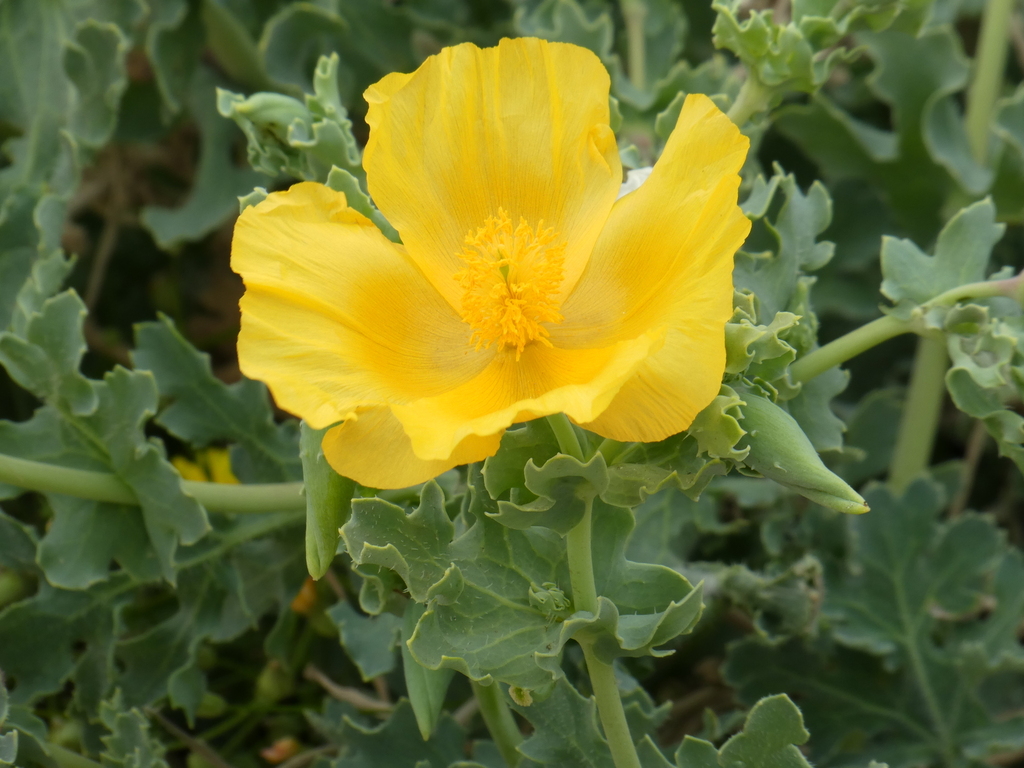
Quick facts
- Family: Papaveraceae
- Difficulty: Easy to care for
- Watering: every 7 days
- Light: Partial shade
- Temperature: 10–30 °C
- Toxicity: Toxic to pets
About Yellow horned poppy
Glaucium flavum, commonly known as yellow horned poppy, is a perennial or biennial plant native to European and North African coastlines. It stands out for its bright yellow flowers and distinctive long, curved seed pods resembling horns. It is ideal for coastal gardens, rockeries, or as an ornamental plant in sunny borders, adding a wild and vibrant touch.
Native range
Coastal regions of Europe and North Africa
Care tips
This plant thrives in full sun and well-drained soils, preferably sandy or stony, tolerating salinity. Watering should be moderate, allowing the substrate to dry out between waterings, as it is sensitive to waterlogging. Avoid over-fertilization, as it prefers poor soils and can become leggy; a common mistake is planting it in rich, moist soils, which reduces its flowering and resilience.
How to save a dying Yellow horned poppy
- Warning signs
- Yellowish or whitish leaves, soft stems, general wilting.
- First aid
- Move it to a spot with more direct sunlight and good drainage. Reduce watering significantly.
- What kills it
- Overwatering and lack of direct sun. It doesn't tolerate shade or constant moisture.
- Can it be saved?
- Yes, if the roots are not rotted. It's very resistant to drought and sun.