February daphne (Daphne mezereum)
Care, watering, light and tips for February daphne on Floravia.
Quick facts
- Family: Thymelaeaceae
- Difficulty: Demanding
- Watering: every 7 days
- Light: Partial shade
- Temperature: 10–30 °C
- Toxicity: Toxic to pets
About February daphne
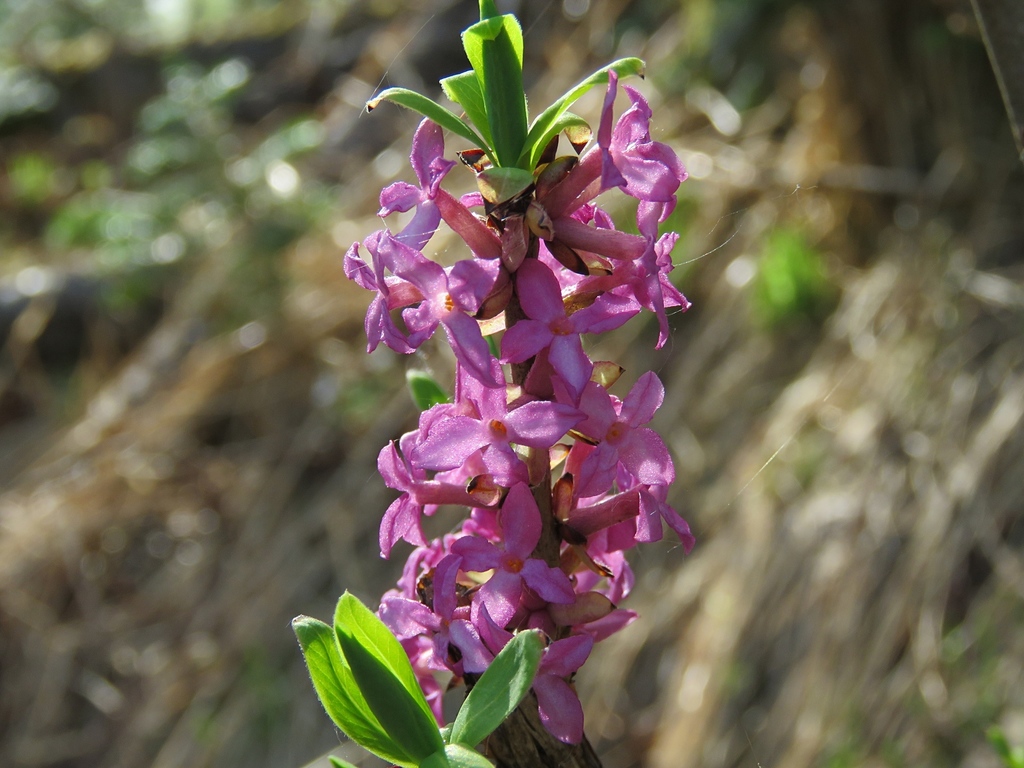
Daphne mezereum, commonly known as Mezereon, is a deciduous shrub from the Thymelaeaceae family, valued for its early, fragrant pink or purple flowers that emerge on bare stems in late winter or early spring. Its small, highly poisonous red berries add further appeal. It is ideal for partial shade gardens, woodland edges, or as an ornamental plant in large pots, where its winter bloom can be fully appreciated.
Native range
Europe and Western Asia
Care tips
It prefers partial shade or filtered light and well-drained soil, rich in organic matter and slightly alkaline. Watering should be regular during dry periods, avoiding waterlogging, as it is sensitive to excessive moisture at the roots. A common mistake is attempting to transplant it once established, as it does not tolerate root disturbance well; choose its final location carefully. All parts of the plant are toxic if ingested, so caution should be exercised in gardens with small children or pets.
How to save a dying February daphne
- Warning signs
- Yellowing or dropping leaves, soft shoots, no flowering.
- First aid
- Check drainage, water if soil is dry, protect from direct sun and waterlogging.
- What kills it
- Overwatering causing root rot or exposure to strong direct sun.
- Can it be saved?
- Yes, if you act quickly to remove the problem before irreversible root damage.