Tall evening primrose (Oenothera elata)
Care, watering, light and tips for Tall evening primrose on Floravia.
Quick facts
- Family: Onagraceae
- Difficulty: Easy to care for
- Watering: every 7 days
- Light: Partial shade
- Temperature: 10–30 °C
About Tall evening primrose
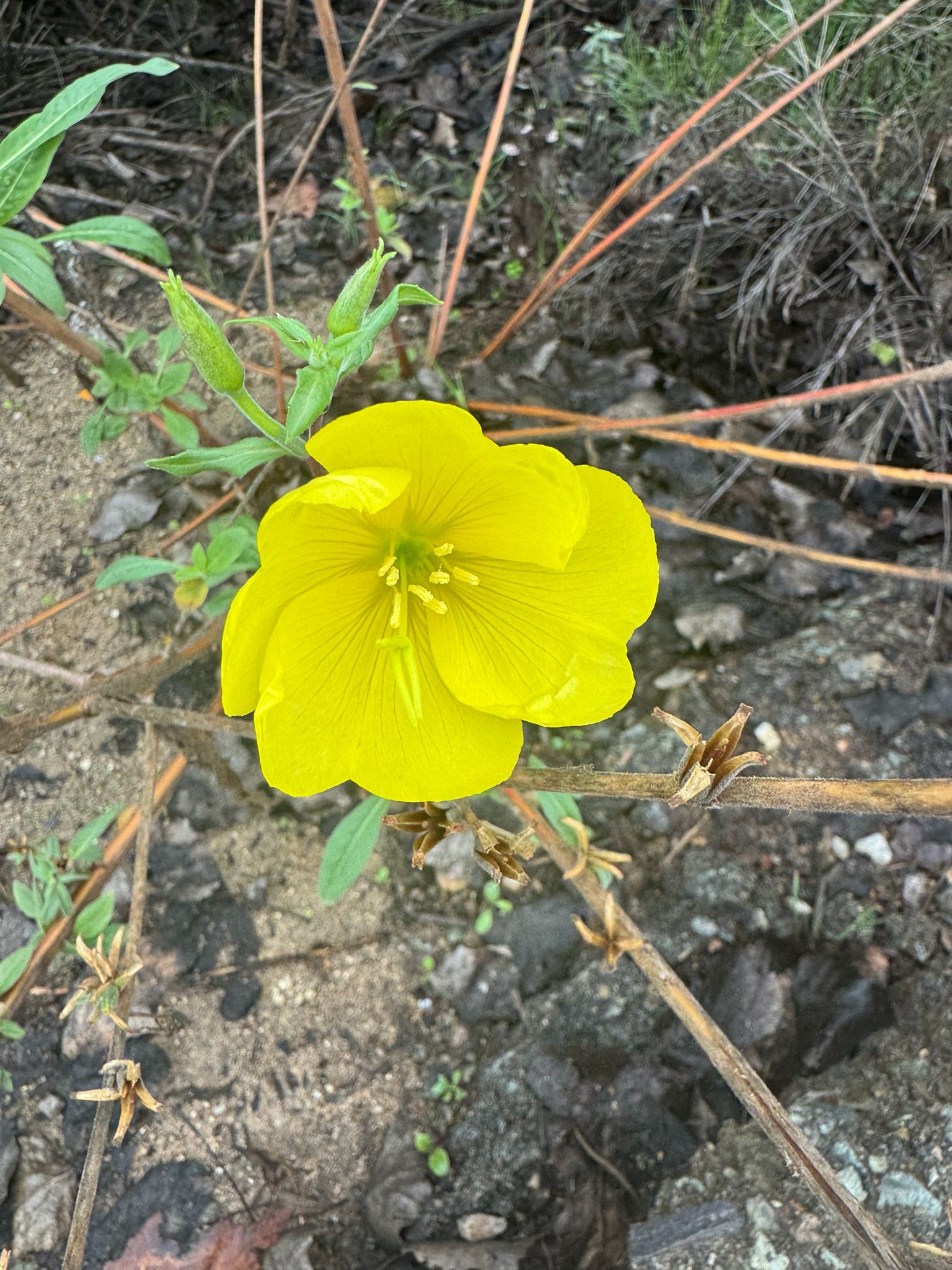
Oenothera elata, commonly known as the western evening-primrose, is a perennial or biennial plant native to North America, valued for its large, fragrant yellow flowers that open at dusk. Its robust, branched stems, which can reach significant heights, make it ideal for the back of borders or naturalistic gardens, where its nocturnal bloom adds a magical touch. It attracts nocturnal pollinators like sphinx moths, enriching garden biodiversity.
Native range
North America (United States and Mexico)
Care tips
It prefers full sun to light partial shade and well-drained soils, even poor or sandy ones, as it does not tolerate waterlogging. Watering should be moderate once established, as it is quite drought-tolerant; water only when the substrate is dry to the touch. Avoid over-fertilization, as this can promote leafy growth at the expense of flowering and make it more prone to toppling. A common mistake is planting it in very rich, moist soils, which reduces its vigor and longevity.
How to save a dying Tall evening primrose
- Warning signs
- Yellowing or wilting leaves, soft stems, poor or no flowering. Indicates water or nutrient stress.
- First aid
- Check watering; prefers well-drained soil. If potted, consider repotting to a larger one with fresh substrate. Fertilize lightly.
- What kills it
- Overwatering (root rot) or prolonged drought (weakens it). Also, inadequate light or nutrient-poor soil.
- Can it be saved?
- Yes, often resilient. Act quickly by correcting watering and providing nutrients. If damage is severe, it can regrow from the roots.