Tropical almond (Terminalia catappa)
Care, watering, light and tips for Tropical almond on Floravia.
Quick facts
- Family: Combretaceae
- Difficulty: Moderate care
- Watering: every 3 days
- Light: Partial shade
- Temperature: 10–30 °C
About Tropical almond
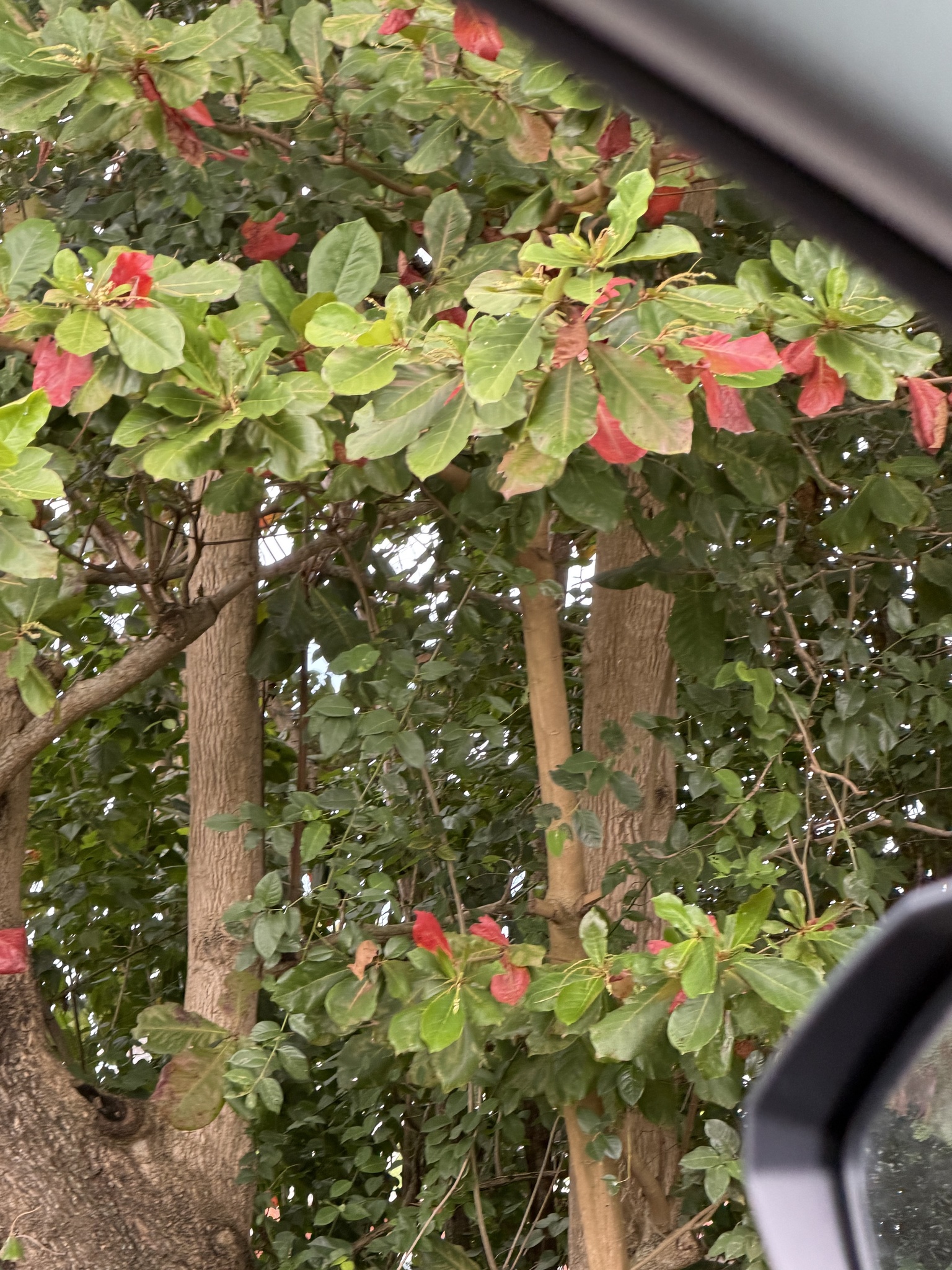
Terminalia catappa, commonly known as Indian almond or tropical almond, is a deciduous tree that can reach significant heights, characterized by its tiered, horizontal branches and large obovate leaves that turn red or yellow before falling. It is ideal for providing shade in large tropical gardens, parks, or as an ornamental tree along avenues, thanks to its distinctive silhouette and striking foliage.
Native range
Tropical regions of Asia and Oceania
Care tips
It requires full sun for optimal growth and well-draining soil, preferably sandy or loamy-sandy, which can be slightly acidic to neutral. Watering should be regular during its first few years to establish the root system, reducing it once mature, as it is quite drought-tolerant. Avoid waterlogging, as its roots are sensitive to excessive moisture, which can lead to rot. It is not demanding in terms of fertilization, but a light application of organic compost in spring can be beneficial.
How to save a dying Tropical almond
- Warning signs
- Yellow or reddish leaves falling massively, dry and brittle tips, stunted growth.
- First aid
- Check drainage and watering. If potted, consider repotting to a larger one with well-draining substrate. Place in full sun.
- What kills it
- Prolonged lack of direct sunlight; constant waterlogging rotting roots; insufficient root space.
- Can it be saved?
- Yes, it's a resilient species. With sun, good drainage, and space, it recovers. Patience is key.