Black-fruited almond (Terminalia melanocarpa)
Care, watering, light and tips for Black-fruited almond on Floravia.
Quick facts
- Family: Combretaceae
- Difficulty: Moderate care
- Watering: every 7 days
- Light: Partial shade
- Temperature: 10–30 °C
- Toxicity: Toxic to pets
About Black-fruited almond
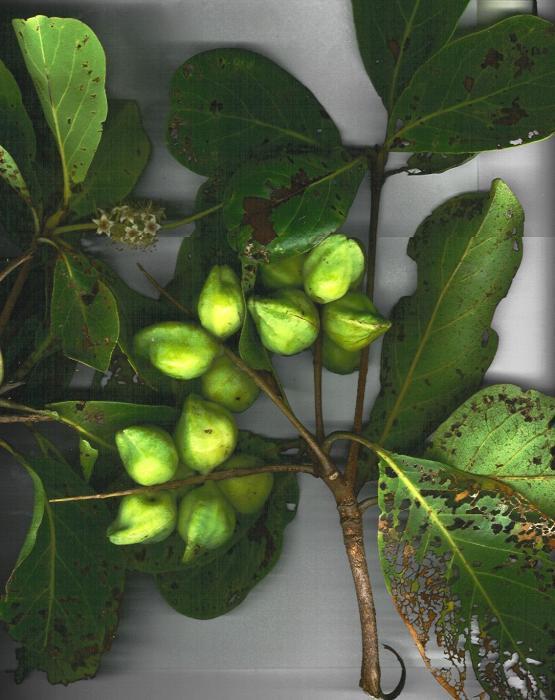
Terminalia melanocarpa, commonly known as the beach almond, is a medium to large tropical tree noted for its dense canopy and large, leathery leaves that often turn reddish before dropping. It is ideal for coastal gardens or as a shade tree in parks and wide avenues, adding an exotic and robust touch to the landscape. Its fruits, while edible, are secondary to its ornamental value.
Native range
Southeast Asia, including the Malay Peninsula and Western Pacific islands
Care tips
This tree thrives in full sun and is highly salt-tolerant, making it perfect for coastal areas. It requires regular watering during its first few years to establish, but once mature, it is quite drought-resistant. The ideal substrate is well-drained and sandy, although it adapts to a variety of soils. Avoid waterlogging, as it can lead to root rot.
How to save a dying Black-fruited almond
- Warning signs
- Yellowing or browning leaves dropping in mass, dry and brittle branches.
- First aid
- Move to a sheltered spot from intense direct sun, reduce watering if soil is wet, or water deeply if dry. Check drainage.
- What kills it
- Constant waterlogging leading to root rot or prolonged extreme drought. Also intense cold.
- Can it be saved?
- Yes, if roots are not completely rotted and there are green shoots. Act quickly and patiently.