Texas sage (Salvia texana)
Care, watering, light and tips for Texas sage on Floravia.
Quick facts
- Family: Lamiaceae
- Difficulty: Easy to care for
- Watering: every 7 days
- Light: Full sun
- Temperature: 5–35 °C
About Texas sage
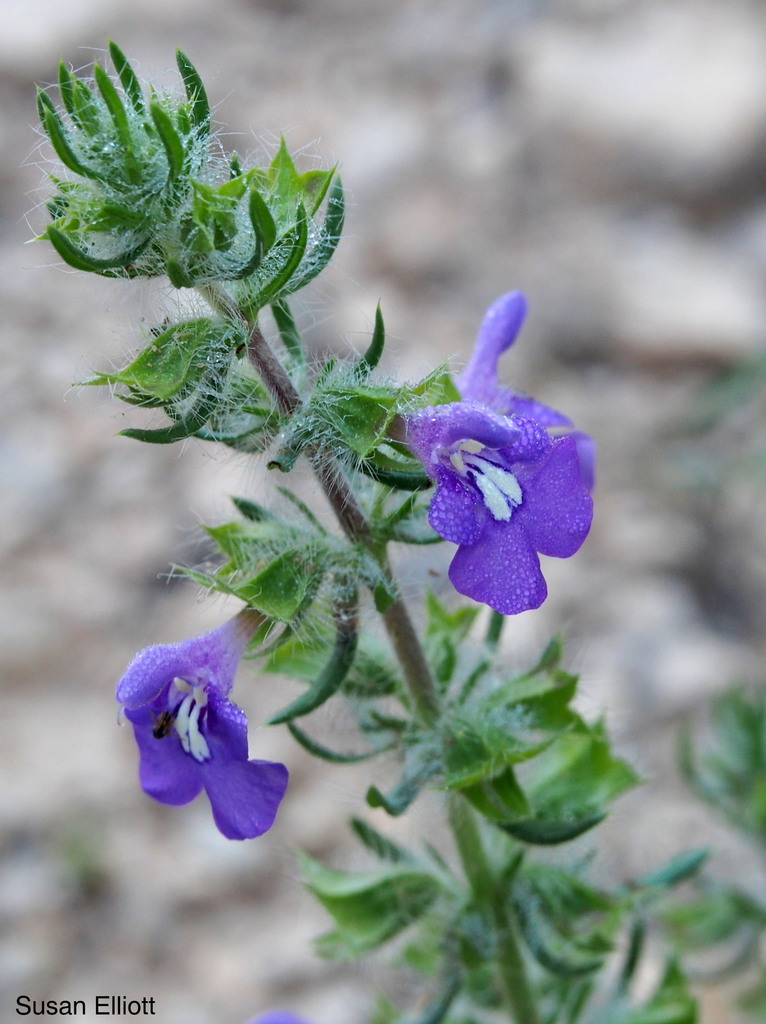
Salvia texana, also known as Texas Sage, is a perennial plant native to the arid and semi-arid regions of Texas and adjacent states. It is characterized by its vibrant scarlet-red tubular flowers that attract hummingbirds and butterflies, and its aromatic grayish-green foliage. It is ideal for xeriscape gardens, rockeries, or as an accent plant in pots, bringing color and life with its prolonged blooming.
Native range
Southwestern United States (mainly Texas) and northeastern Mexico.
Care tips
It requires full sun for optimal flowering and healthy development. Watering should be infrequent once established, as it tolerates drought well; overwatering is the most common mistake to avoid. It prefers well-drained, sandy or rocky soils, and does not require frequent fertilization. To maintain a compact growth habit and encourage more blooms, light pruning after the main flowering period is recommended.
How to save a dying Texas sage
- Warning signs
- Wilting, dry, brittle leaves, or yellow, soft leaves at the base. Lack of flowering.
- First aid
- Check soil moisture. If dry, water deeply. If waterlogged, improve drainage. Prune dry branches.
- What kills it
- Overwatering (root rot) or complete lack of water. Insufficient light or heavy soil.
- Can it be saved?
- Yes, if roots are not fully rotted or the main stem is still green and flexible.