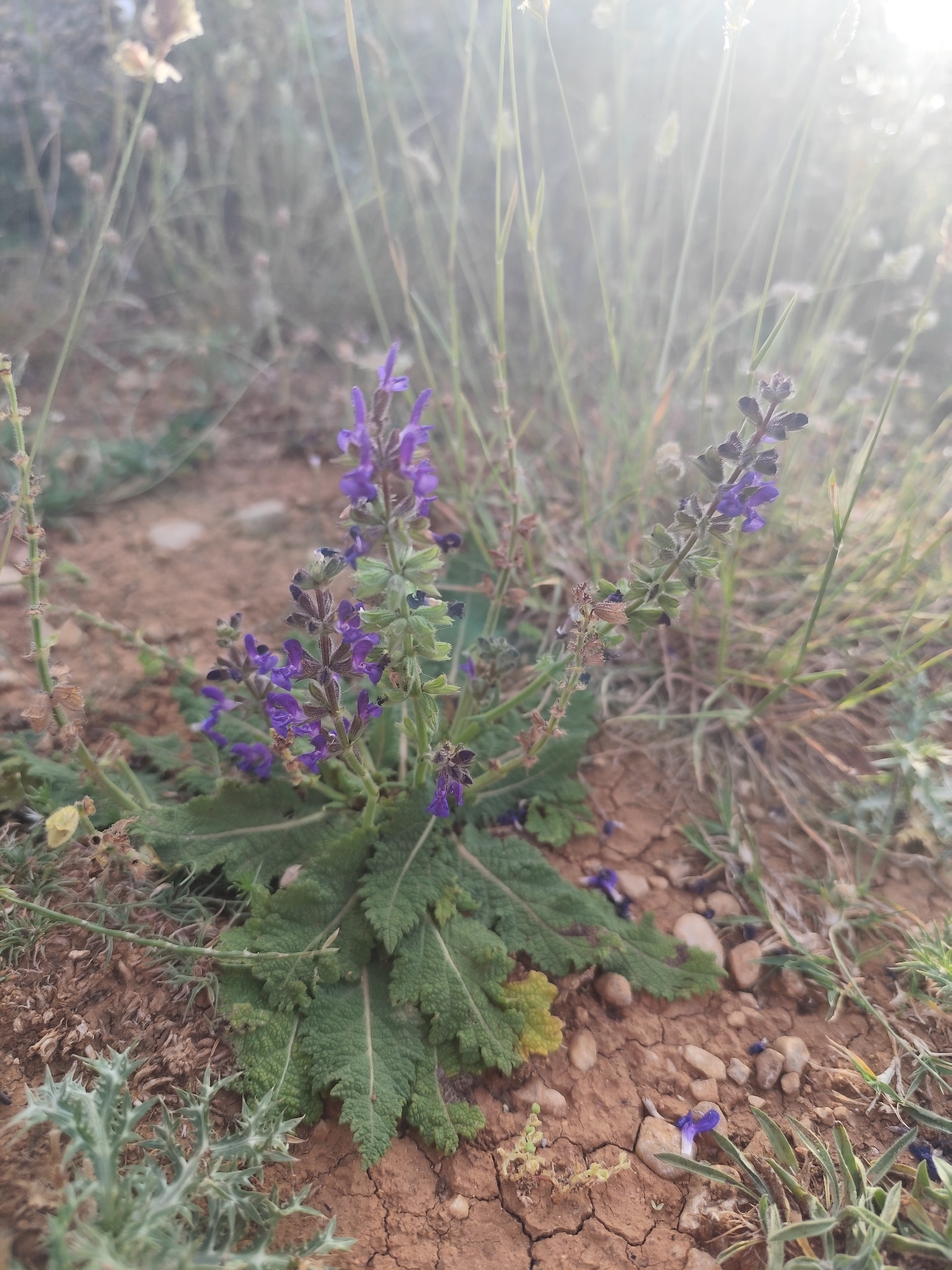
Woodland sage (Salvia sylvestris)
Care, watering, light and tips for Woodland sage on Floravia.
Quick facts
- Family: Lamiaceae
- Difficulty: Easy to care for
- Watering: every 7 days
- Light: Full sun
- Temperature: 5–35 °C
About Woodland sage
Salvia sylvestris, commonly known as woodland sage or hybrid sage, is a herbaceous perennial from the Lamiaceae family, prized for its spikes of intense violet or blue flowers that bloom profusely from late spring to autumn. Its leaves are medium green, often wrinkled, and aromatic when touched. It is ideal for garden borders, rockeries, or large pots, adding a vibrant splash of color and attracting pollinators.
Native range
Europe and Western Asia
Care tips
It prefers full sun exposure for optimal flowering, although it can tolerate some partial shade in very hot climates. Watering should be moderate, allowing the substrate to dry out slightly between waterings; it is quite drought-tolerant once established. It needs well-drained soil, preferably sandy or loamy, and benefits from deadheading to prolong flowering. Avoid waterlogging, as it is susceptible to root rot.
How to save a dying Woodland sage
- Warning signs
- Yellowish or brown, wilted, lifeless leaves. No blooms or fallen flowers.
- First aid
- Move to partial shade. Check soil moisture: if dry, water deeply; if waterlogged, aerate and reduce watering. Prune severely damaged stems.
- What kills it
- Overwatering causing root rot, or complete lack of water during dry spells. Too much direct sun and intense heat without protection.
- Can it be saved?
- Yes, if roots aren't completely rotted and some green stems remain. It's resilient and recovers well with proper care.