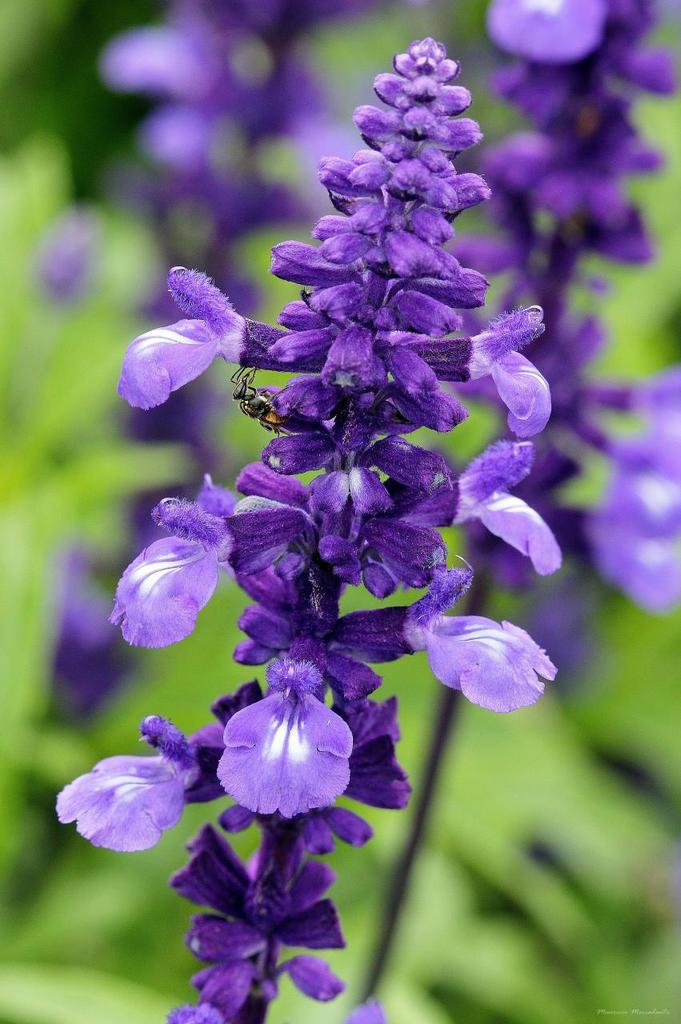
Mealycup sage (Salvia farinacea)
Care, watering, light and tips for Mealycup sage on Floravia.
Quick facts
- Family: Lamiaceae
- Difficulty: Easy to care for
- Watering: every 7 days
- Light: Full sun
- Temperature: 5–35 °C
About Mealycup sage
Salvia farinacea, commonly known as Mealycup Sage or Blue Salvia, is a perennial herbaceous plant from the Lamiaceae family, often grown as an annual in colder climates. It is characterized by its spikes of intense blue or violet flowers, growing on stems covered with a fine white 'meal', giving it an ethereal appearance. It is ideal for garden borders, containers, and as a cut flower, attracting pollinators such as butterflies and bees.
Native range
Mexico and the southern United States
Care tips
This salvia thrives in full sun, requiring at least 6 hours daily for abundant flowering. It prefers well-drained soils, from slightly acidic to neutral, and tolerates some drought once established, although regular watering during dry periods will promote its development. Avoid overwatering, as it can lead to root rot; ensure the substrate dries out slightly between waterings. A common mistake is planting it in partial shade or heavy soils, which drastically reduces flowering and increases the risk of diseases.
How to save a dying Mealycup sage
- Warning signs
- Wilting or yellowing leaves, sparse or no blooms, soft stems. Can indicate over/underwatering or poor light.
- First aid
- Check soil moisture. If dry, water deeply. If soggy, repot with fresh, well-draining soil. Ensure full sun.
- What kills it
- Overwatering and shade. Salvia farinacea loves sun and well-drained soil; waterlogging rots its roots.
- Can it be saved?
- Yes, if roots aren't completely rotted. Act fast by correcting watering and providing full sun.