Sideritis marmorea
Care, watering, light and tips for Sideritis marmorea on Floravia.
Quick facts
- Family: Lamiaceae
- Difficulty: Demanding
- Watering: every 4 days
- Light: Full sun
- Temperature: 5–35 °C
About Sideritis marmorea
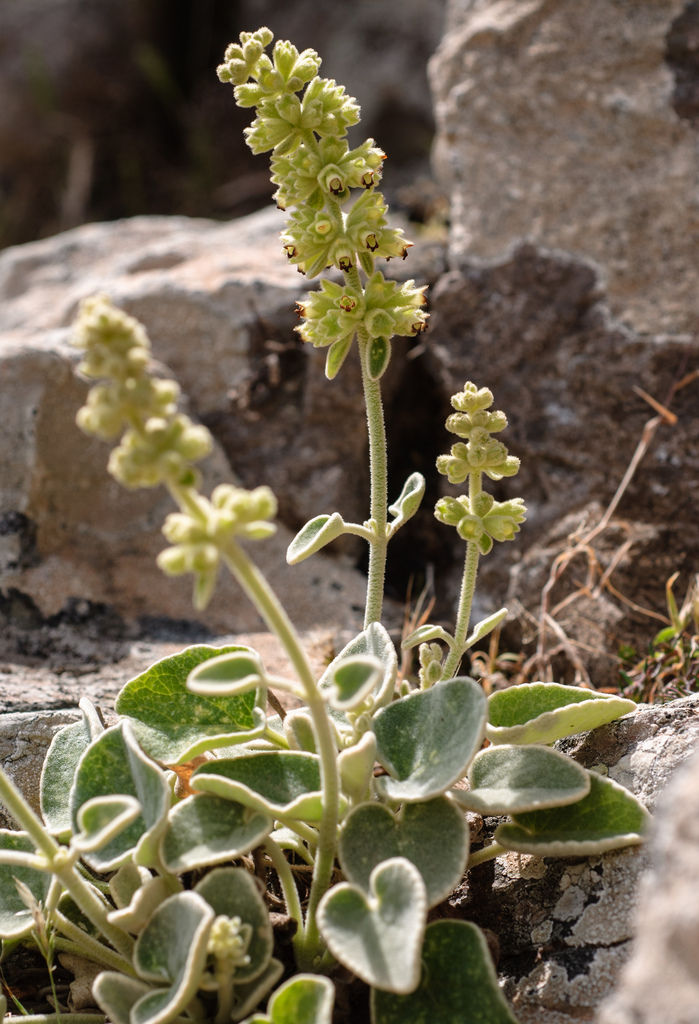
Sideritis marmorea, commonly known as Chajorra de Aluce, is a perennial herbaceous plant endemic to certain mountainous areas of the Iberian Peninsula, notable for its velvety leaves and yellow flowers clustered in spikes. Its compact habit and silvery foliage make it ideal for rock gardens, low-maintenance landscapes, or as an aromatic potted plant. It brings a rustic and natural touch, especially in Mediterranean climates.
Native range
Spain (Sierra de Alcaraz y Segura, Albacete)
Care tips
It requires full sun exposure for optimal growth and abundant flowering. Watering should be moderate, allowing the substrate to dry out completely between waterings, as it is very susceptible to overwatering. It prefers well-drained soils, preferably calcareous and poor in nutrients; a sandy or stony substrate is ideal. Absolutely avoid waterlogging and excessive fertilization, as this can rot its roots and weaken the plant.
How to save a dying Sideritis marmorea
- Warning signs
- Yellowish or whitish leaves, soft stems, general wilting.
- First aid
- Remove damaged leaves and stems. Check drainage and substrate moisture.
- What kills it
- Overwatering or poor-draining substrate, leading to root rot.
- Can it be saved?
- Yes, if the problem is corrected in time and there's no extensive root damage.