Hyssop (Hyssopus officinalis)
Care, watering, light and tips for Hyssop on Floravia.
Quick facts
- Family: Lamiaceae
- Difficulty: Easy to care for
- Watering: every 7 days
- Light: Full sun
- Temperature: 5–35 °C
- Toxicity: Toxic to pets
About Hyssop
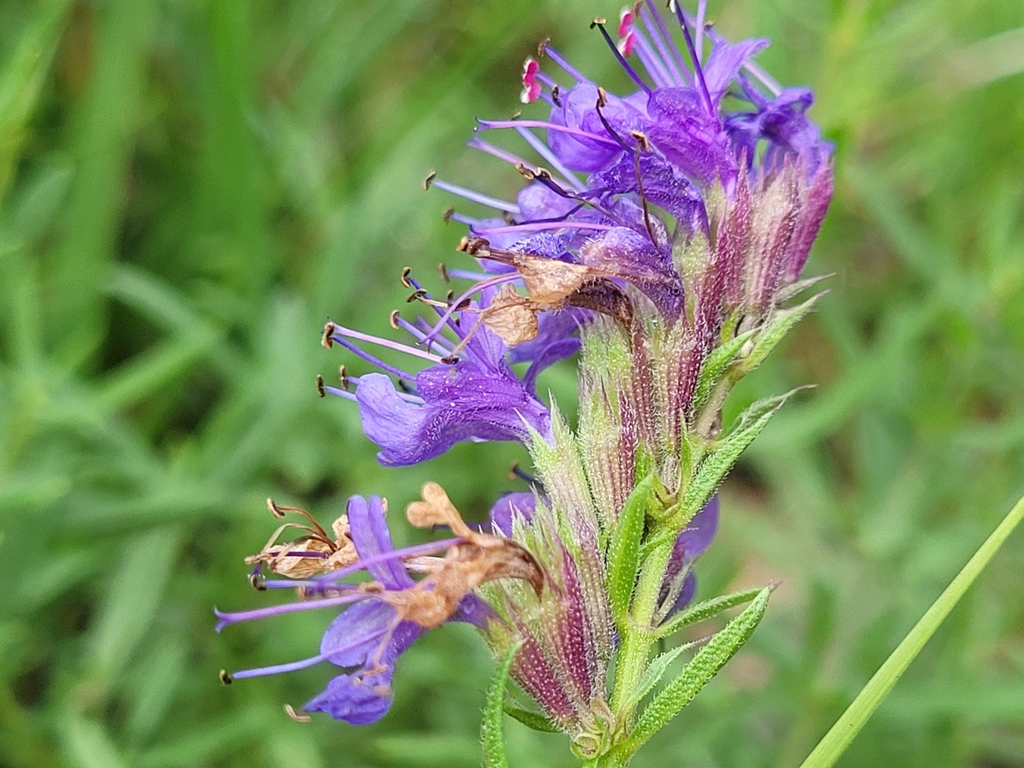
Hyssopus officinalis, commonly known as hyssop, is a perennial aromatic herb of the Lamiaceae family, prized for its blue or purple flowers and fragrant foliage. It forms dense, small shrubs reaching between 30 and 60 cm in height, making it ideal for garden borders, rockeries, or as part of a medicinal and culinary herb garden. Its ornamental appeal and utility make it an excellent addition to any green space.
Native range
Southern Europe, Middle East, and the Caspian Sea region
Care tips
Hyssop thrives in full sun, requiring at least 6 hours of direct sunlight daily for optimal flowering. It prefers well-drained soils, slightly alkaline to neutral, and is quite drought-tolerant once established, so watering should be moderate, allowing the substrate to dry out between waterings. Avoid waterlogging, as it can lead to root rot; a common mistake is overwatering, especially in humid climates. Light pruning after flowering helps maintain its shape and promotes new growth.
How to save a dying Hyssop
- Warning signs
- Yellowing or browning leaves, general wilting. Stems soft or blackened from the base (rot).
- First aid
- Remove the hyssop from the soil. If there is rot, prune affected roots. Replant in fresh, well-draining soil. Water only when substrate is dry.
- What kills it
- Overwatering and heavy soil. Hyssop prefers dry conditions and well-drained soils. Constant moisture rots its roots.
- Can it be saved?
- Yes, if you act quickly. If rot hasn't advanced too far and healthy roots remain, it can recover with good drainage and moderate watering.