Catmint (Nepeta faassenii)
Care, watering, light and tips for Catmint on Floravia.
Quick facts
- Family: Lamiaceae
- Difficulty: Easy to care for
- Watering: every 7 days
- Light: Full sun
- Temperature: 5–35 °C
About Catmint
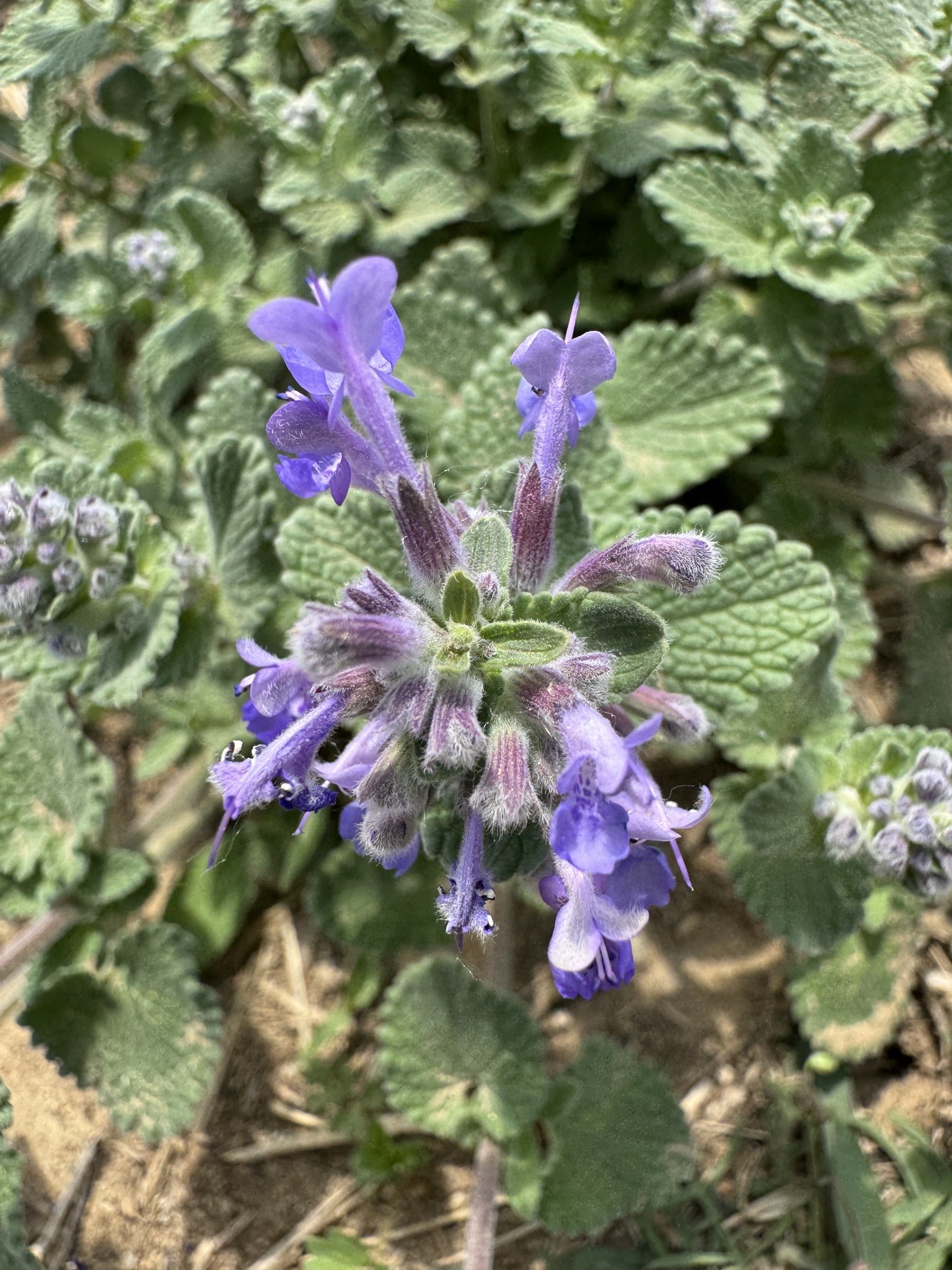
Nepeta × faassenii, commonly known as catmint or Faassen's catnip, is a highly popular herbaceous perennial valued for its aromatic, silvery-green foliage and spikes of lavender-blue flowers. It forms dense, mounding clumps that look stunning along pathways, in rock gardens, or as ground cover, attracting butterflies and bees. Its ethereal appearance and hardiness make it ideal for low-maintenance gardens and Mediterranean landscapes.
Native range
Hybrid cross between Nepeta racemosa and Nepeta nepetella, native to the Caucasus, Turkey, and Iran regions.
Care tips
It thrives in full sun for abundant flowering, although it can tolerate some partial shade. This plant is very drought-tolerant once established, so watering should be moderate, allowing the substrate to dry out completely between waterings to prevent waterlogging. It thrives in well-drained, even poor soils, and a common mistake is overwatering, which can lead to root rot. Pruning after the first flush of flowers will encourage a second wave of blooms.
How to save a dying Catmint
- Warning signs
- Yellowish or brown, wilted, lifeless leaves. Lack of flowering or dried flowers.
- First aid
- Check drainage and substrate moisture. Repot if waterlogged or compacted. Prune damaged stems.
- What kills it
- Overwatering (root rot), too much shade (no flowers), or lack of pruning (weakens).
- Can it be saved?
- Yes, often recovers well if conditions are corrected promptly. It's quite resilient.