Houndstongue (Cynoglossum officinale)
Care, watering, light and tips for Houndstongue on Floravia.
Quick facts
- Family: Boraginaceae
- Difficulty: Easy to care for
- Watering: every 7 days
- Light: Partial shade
- Temperature: 10–30 °C
- Toxicity: Toxic to pets
About Houndstongue
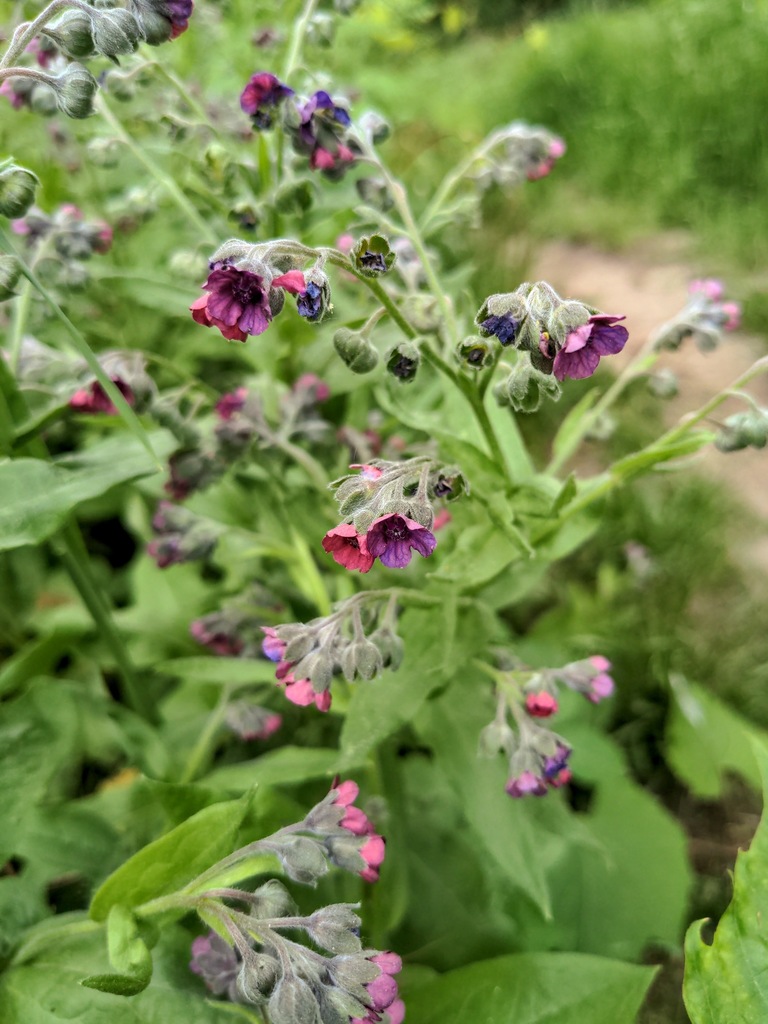
Cynoglossum officinale, commonly known as "houndstongue" or "woolmat" due to its soft, hairy leaves, is a biennial plant forming a basal rosette in its first year and a flowering stem in its second. Its small, reddish-purple flowers attract pollinators and can be an interesting addition to natural or wild-style gardens, though its spread should be managed. It is particularly striking for its foliage texture and flower spikes.
Native range
Europe and temperate Asia
Care tips
This plant prefers full sun to partial shade and well-drained soils, even poor or calcareous ones, making it quite adaptable. It tolerates drought once established, so watering should be moderate, avoiding waterlogging which can lead to root rot. A common mistake is not controlling its spread, as it can become invasive in some areas due to its sticky seeds. It does not require regular fertilization and benefits from deadheading to prevent excessive self-seeding.
How to save a dying Houndstongue
- Warning signs
- Wilted or yellowing leaves, soft stems, stunted growth. May indicate excess moisture or poor ventilation.
- First aid
- Check drainage. If potted, repot into one with good drainage. If in soil, improve aeration. Reduce watering.
- What kills it
- Waterlogging and lack of soil aeration are its worst enemies. Prefers dry, well-drained soils.
- Can it be saved?
- Yes, if you act quickly. Remove damaged parts, improve drainage and ventilation. It's hardy but sensitive to excessive moisture.