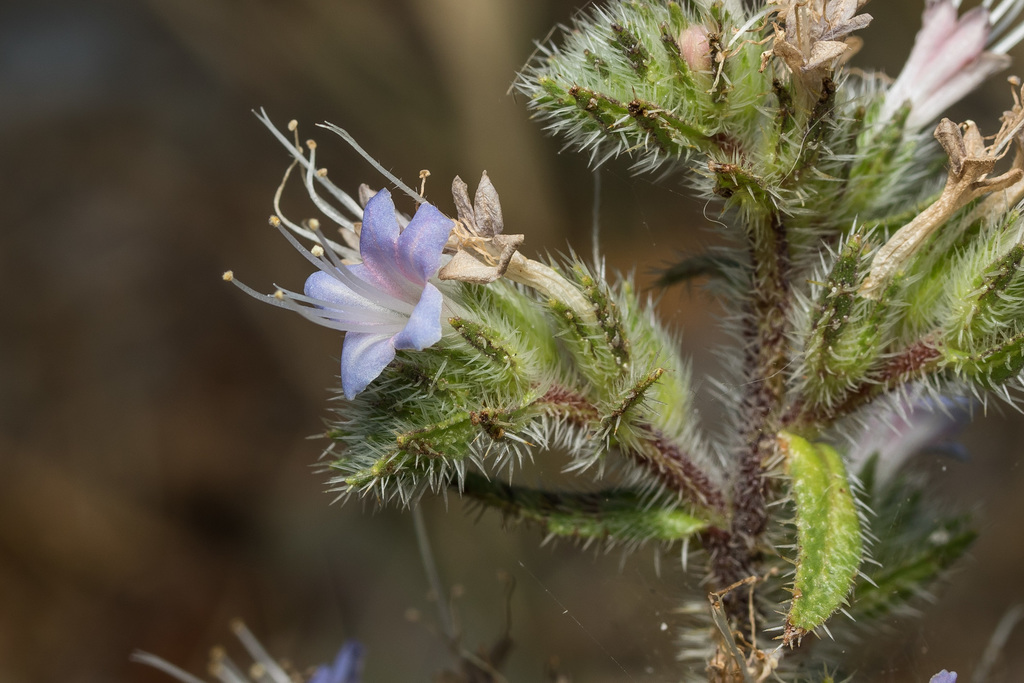
Italian bugloss (Echium italicum)
Care, watering, light and tips for Italian bugloss on Floravia.
Quick facts
- Family: Boraginaceae
- Difficulty: Easy to care for
- Watering: every 7 days
- Light: Partial shade
- Temperature: 10–30 °C
- Toxicity: Toxic to pets
About Italian bugloss
Echium italicum, also known as Italian Viper's-bugloss, is a striking biennial or short-lived perennial plant renowned for its tall, sturdy floral spikes. During spring and summer, it produces numerous small white or pale blue flowers, densely clustered in conical inflorescences that can reach up to 2 meters in height. It is ideal for Mediterranean-style gardens, roadside plantings, or as a focal point in naturalized meadows, offering spectacular verticality and attracting pollinators.
Native range
Mediterranean region, from Southern Europe to North Africa and Western Asia.
Care tips
It thrives in full sun and well-drained soils, even poor or rocky ones, as it is very drought-tolerant once established. Watering should be infrequent, especially in summer, as it tolerates dryness better than waterlogging, which can cause root rot. A sandy or well-draining substrate is crucial for its development, avoiding heavy clay soils. A common mistake is attempting to transplant it once established, as its deep taproot makes it difficult and often causes stress.
How to save a dying Italian bugloss
- Warning signs
- Yellow, soft basal leaves, drooping stems, no flowering.
- First aid
- Move to partial shade, check drainage, space out watering, apply fungicide if rot is present.
- What kills it
- Overwatering in heavy soils, leading to root rot.
- Can it be saved?
- Yes, if roots aren't completely rotted and action is swift.