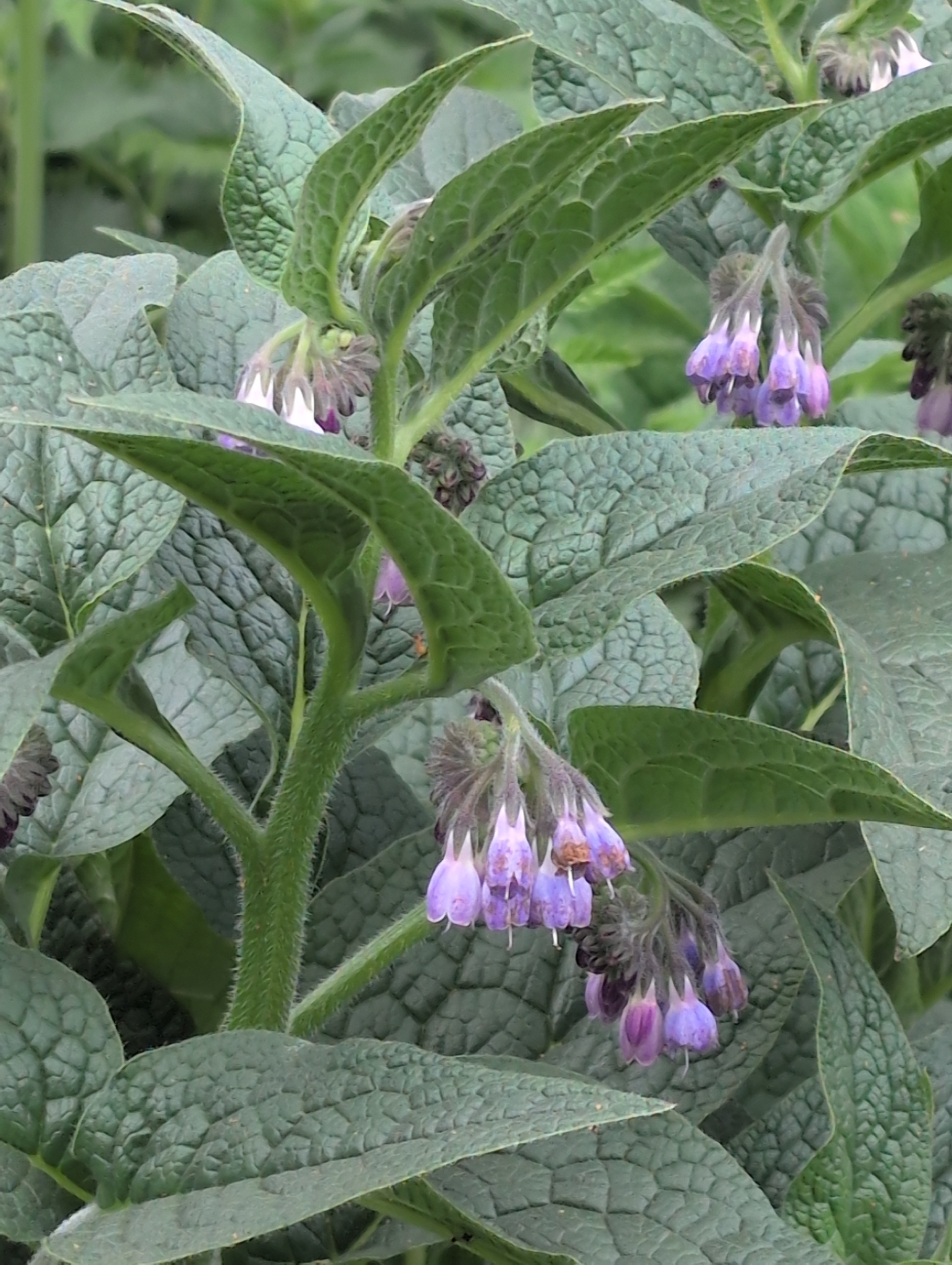
Russian comfrey (Symphytum uplandicum)
Care, watering, light and tips for Russian comfrey on Floravia.
Quick facts
- Family: Boraginaceae
- Difficulty: Easy to care for
- Watering: every 7 days
- Light: Partial shade
- Temperature: 10–30 °C
- Toxicity: Toxic to pets
About Russian comfrey
Symphytum uplandicum, commonly known as Uppland comfrey, is a vigorous perennial herbaceous plant belonging to the Boraginaceae family. It is characterized by its large, lance-shaped leaves and bell-shaped flowers ranging from pink to purple, clustered in terminal spikes. This plant is ideal for naturalistic gardens, woodland edges, or as ground cover in moist, shady areas where its lush foliage can thrive.
Native range
Europe, hybrid of horticultural origin.
Care tips
It prefers partial to full shade, though it can tolerate some sun if the soil is kept consistently moist. Regular and abundant watering is essential, especially during dry periods, as it does not tolerate drought; the substrate should be rich in organic matter and well-drained. Avoid planting it in poor or dry soils, as this will severely limit its growth and vigor. It's important to be aware of its spreading habit, as it may require management to prevent it from outcompeting other plants.
How to save a dying Russian comfrey
- Warning signs
- Yellowish or brown, wilting and soft leaves; weak, drooping stems; stunted growth.
- First aid
- Repot to a larger container or ground if root-bound, with good drainage. Ensure consistent watering without waterlogging. Place in partial shade if sun is too intense.
- What kills it
- Prolonged drought, insufficient root space, excessive direct sun in hot climates, and nutrient deficiency.
- Can it be saved?
- Yes, if roots are still firm and no severe rot. It's a tough plant, recovers with proper care.