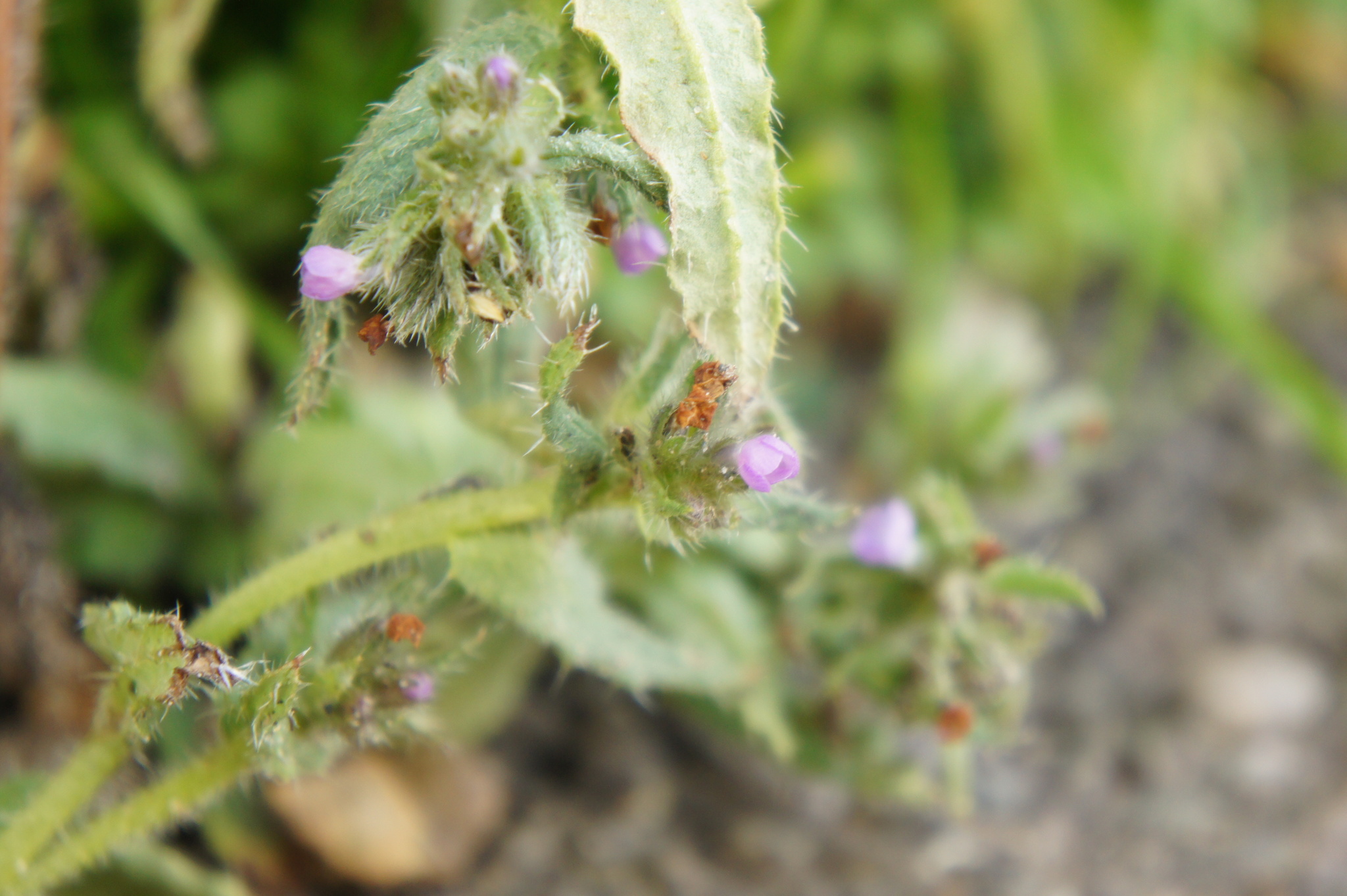
Small bugloss (Lycopsis arvensis)
Care, watering, light and tips for Small bugloss on Floravia.
Quick facts
- Family: Boraginaceae
- Difficulty: Easy to care for
- Watering: every 7 days
- Light: Partial shade
- Temperature: 10–30 °C
- Toxicity: Toxic to pets
About Small bugloss
Lycopsis arvensis, commonly known as Small Bugloss or Field Bugloss, is an annual wild plant belonging to the Boraginaceae family, characterized by its small blue or purplish flowers arranged in spikes and its rough, hairy leaves. Although often considered a 'weed' in cultivated areas, it can be an interesting addition to naturalistic gardens, wildflower meadows, or rustic borders, providing a touch of country color. Its low, sprawling habit makes it suitable for ground cover or for mixing with other early-flowering species.
Native range
Europe and temperate Asia
Care tips
This species prefers full sun to partial shade exposures and well-drained soils, even poor or sandy ones, showing remarkable adaptability. Watering should be moderate, allowing the substrate to dry out between waterings, as it tolerates drought well once established. It does not require regular fertilization and propagates easily by seed. A common mistake is trying to cultivate it in very rich or moist soils, which can lead to excessive vegetative growth and less flowering.
How to save a dying Small bugloss
- Warning signs
- Wilting, yellowing, or necrotic spots on leaves. Stunted or weak growth.
- First aid
- Repot to well-drained soil if in a container. Amend poor soil with compost. Ensure moderate watering and full sun.
- What kills it
- Excessive shade, waterlogging, or very compact soils. Sensitive to transplanting if roots are damaged.
- Can it be saved?
- Yes, if addressed promptly. It's a hardy plant that recovers well with proper conditions.