Comfrey (Symphytum officinale)
Care, watering, light and tips for Comfrey on Floravia.
Quick facts
- Family: Boraginaceae
- Difficulty: Easy to care for
- Watering: every 5 days
- Light: Partial shade
- Temperature: 10–30 °C
- Toxicity: Toxic to pets
About Comfrey
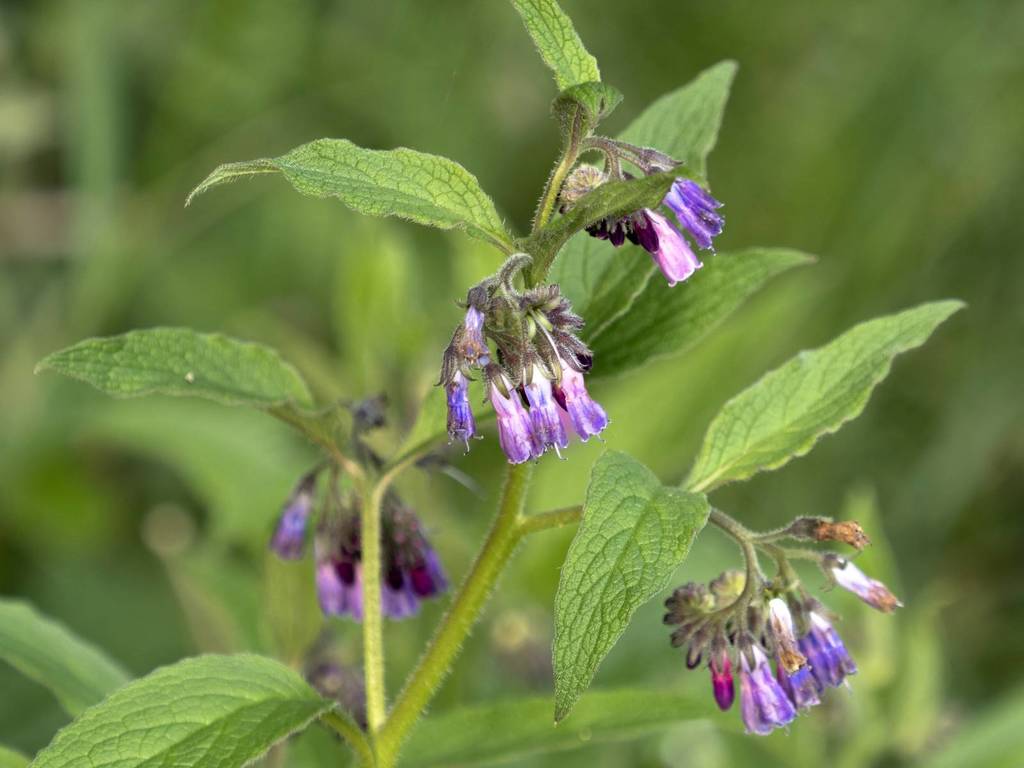
Symphytum officinale, commonly known as comfrey, is a perennial herbaceous plant from the Boraginaceae family, valued for both its traditional medicinal properties and its utility as a green manure. It features robust stems and large, hairy, lance-shaped leaves, with tubular flowers ranging from purple to pink or cream, clustered in drooping cymes. It is ideal for rustic-style gardens, woodland edges, or as part of a vegetable patch, where its dense foliage can act as ground cover and its flowers attract pollinators.
Native range
Europe and Western Asia
Care tips
Comfrey prefers a location in full sun to partial shade and moist, organically rich, well-drained soils, although it is quite tolerant of different soil types. It requires regular watering to keep the substrate consistently moist, especially during dry periods, but avoid waterlogging. A common mistake is planting it in small pots, as it develops a deep and extensive root system; it is better to plant it directly in the ground or in very large containers. It is a vigorous plant that can become invasive if not managed.
How to save a dying Comfrey
- Warning signs
- Wilting, yellowing, or brown-spotted leaves. Stunted growth. Basal rot.
- First aid
- Transplant to rich, well-draining soil. Water if substrate is dry. Remove damaged leaves.
- What kills it
- Extreme dryness or prolonged waterlogging. Comfrey needs consistent moisture but not drowning.
- Can it be saved?
- Yes, it's a resilient plant. Act fast at the first signs of water stress.