English walnut (Juglans regia)
Care, watering, light and tips for English walnut on Floravia.
Quick facts
- Family: Juglandaceae
- Difficulty: Demanding
- Watering: every 7 days
- Light: Partial shade
- Temperature: 10–30 °C
- Toxicity: Toxic to pets
About English walnut
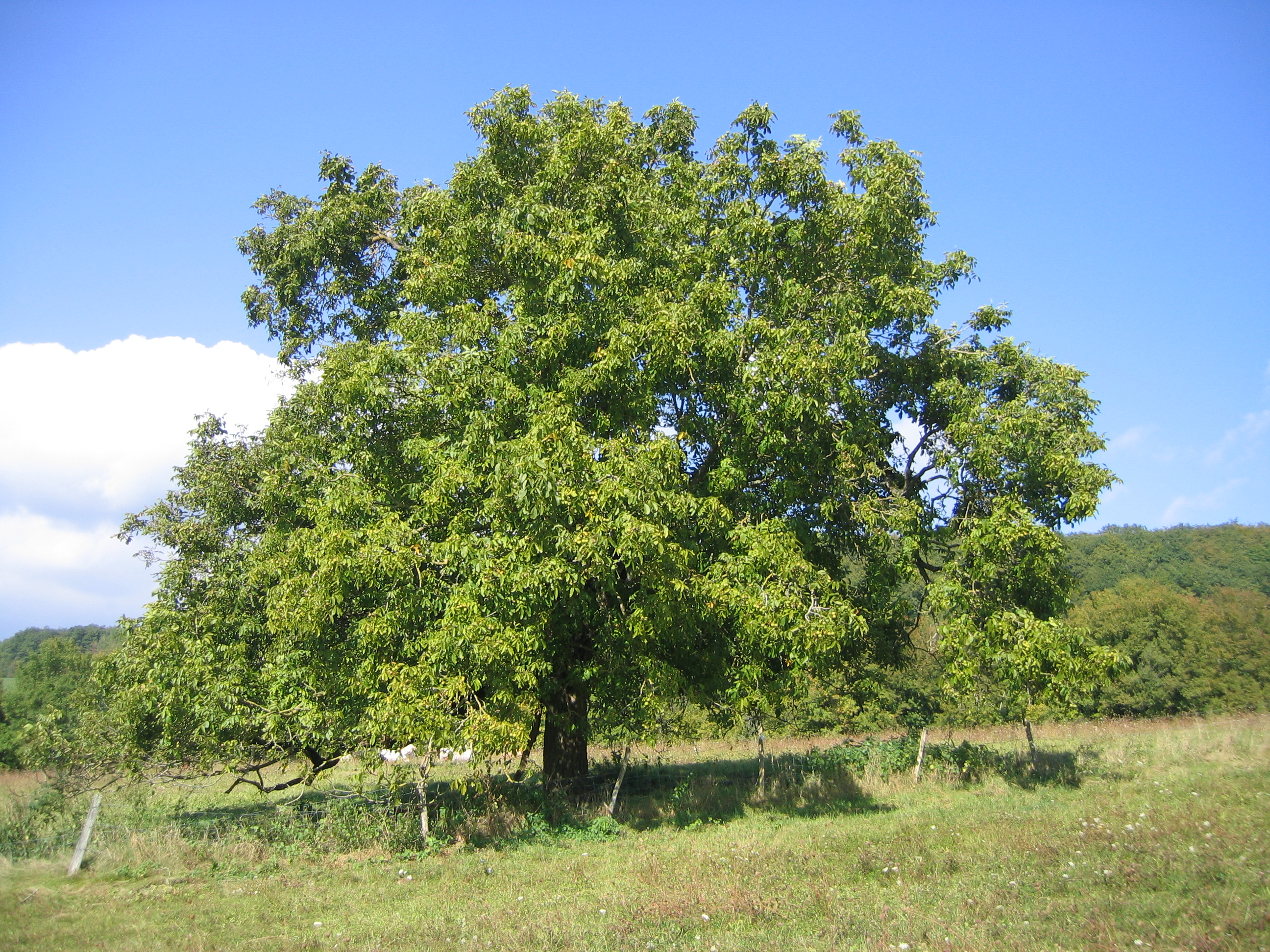
Juglans regia, commonly known as the Persian walnut or common walnut, is a large deciduous tree valued for both its high-quality timber and its fruit, walnuts. It features a broad, rounded canopy with large, compound leaves that turn yellowish in autumn. It is ideal for large gardens, parks, or as a shade tree on estates.
Native range
Central Asia and Southwest Asia
Care tips
It requires full sun for optimal walnut production, although it tolerates some partial shade. Watering should be regular during the first few years and in dry periods, ensuring consistently moist but well-drained soil. It prefers deep, fertile, and well-drained soils, avoiding very clayey or excessively compacted soils. A common mistake is planting it in confined spaces, as it needs ample room to develop its large root system and canopy.
How to save a dying English walnut
- Warning signs
- Yellow or brown leaves falling prematurely, weak shoots, cankers on bark.
- First aid
- Check drainage, prune dry branches, apply fungicide if cankers present, ensure adequate watering.
- What kills it
- Constant waterlogging, lack of sanitary pruning, poor or compacted soils, uncontrolled pests.
- Can it be saved?
- Yes, if acted upon quickly. Recovery depends on the cause and extent of damage.