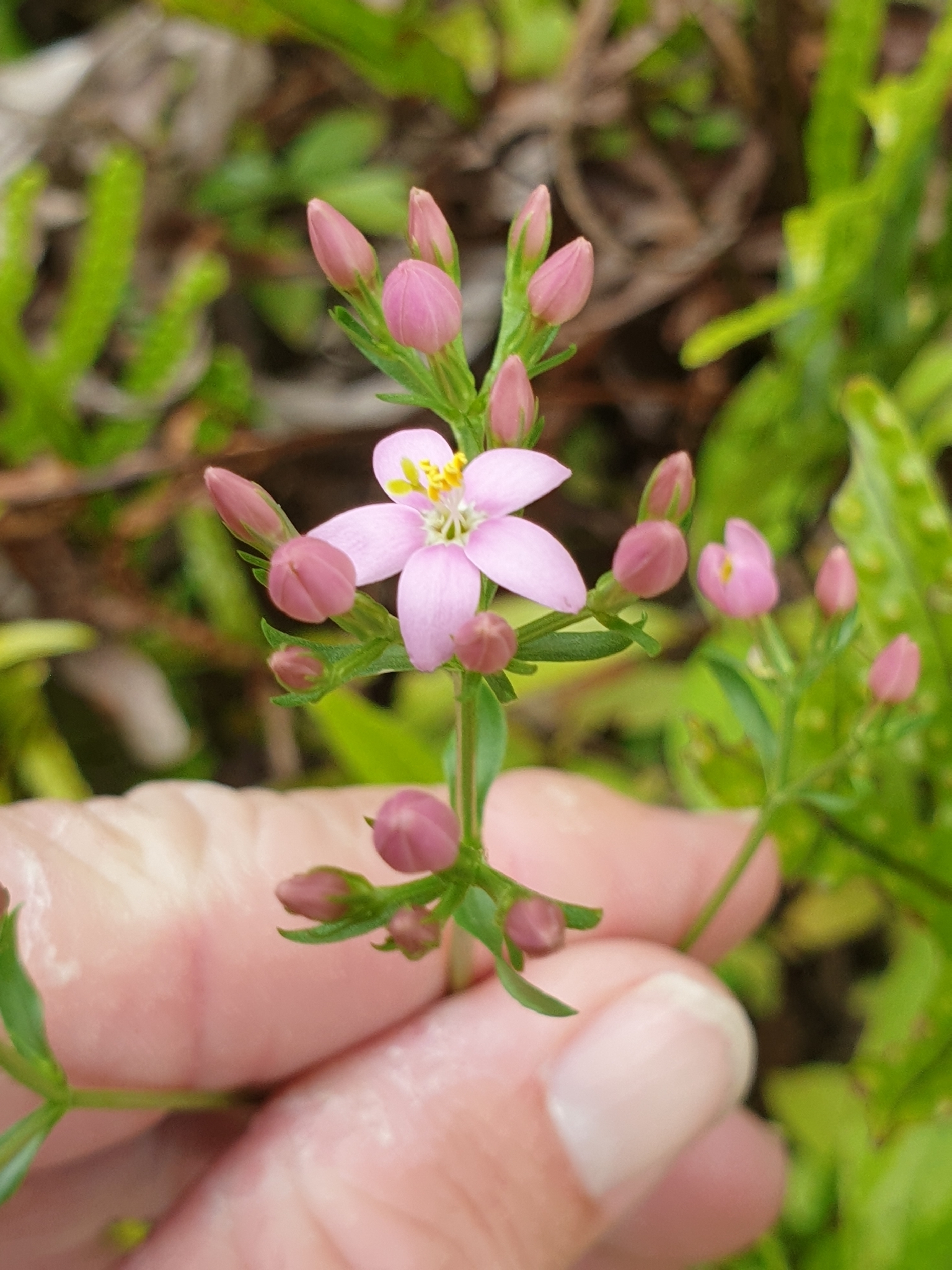
Common centaury (Centaurium erythraea)
Care, watering, light and tips for Common centaury on Floravia.
Quick facts
- Family: Gentianaceae
- Difficulty: Demanding
- Watering: every 7 days
- Light: Partial shade
- Temperature: 10–30 °C
About Common centaury
Centaurium erythraea, commonly known as Common Centaury, is a small annual or biennial herbaceous plant, cherished for its delicate, star-shaped pink or purple flowers that bloom in summer. It is a charming addition to rock gardens, wild meadows, or path edges, bringing a natural and rustic touch. Its modest stature and bright blooms make it ideal for understated compositions and for attracting pollinators.
Native range
Europe and Western Asia
Care tips
It prefers full sun exposure or light partial shade for abundant flowering. Watering should be moderate, allowing the substrate to dry out slightly between waterings, as it is sensitive to waterlogging. It thrives in well-drained soils, preferably calcareous or neutral, and is not demanding in terms of nutrients. A common mistake is overwatering, which can lead to root rot, so ensure optimal drainage.
How to save a dying Common centaury
- Warning signs
- Yellowing basal leaves, general wilting, scarce or no flowering. Waterlogged or very dry soil.
- First aid
- Adjust watering, avoid waterlogging. Repot if substrate is compacted. Place in partial shade.
- What kills it
- Overwatering rotting roots or prolonged drought. Lack of adequate light or strong direct sun.
- Can it be saved?
- Yes, if roots aren't fully rotted and conditions are quickly corrected.