Western azalea (Rhododendron occidentale)
Care, watering, light and tips for Western azalea on Floravia.
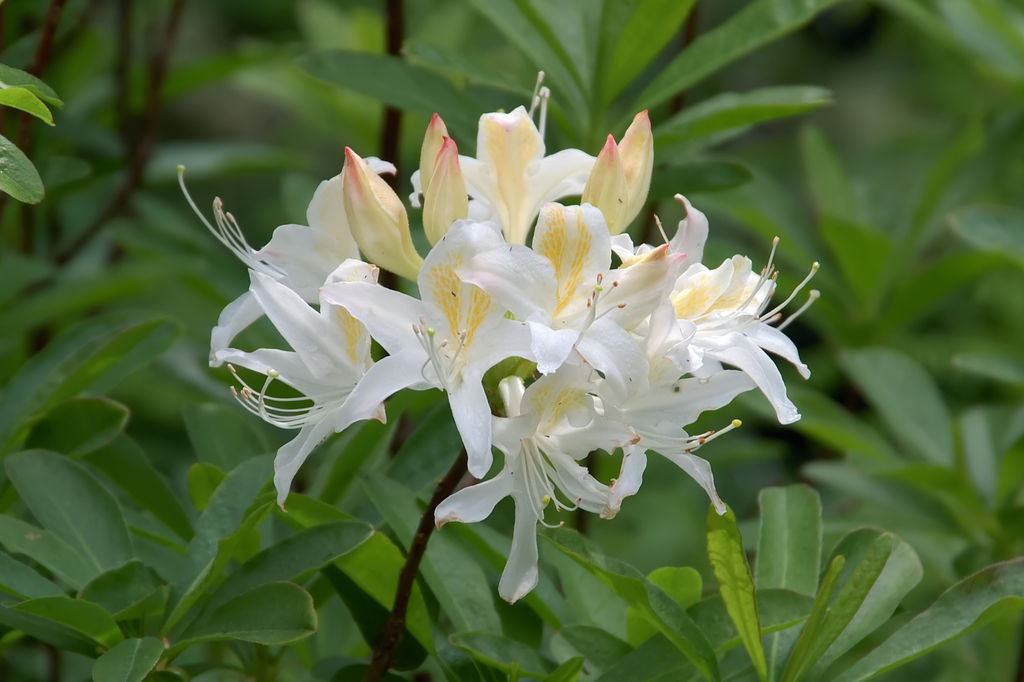
Quick facts
- Family: Ericaceae
- Difficulty: Demanding
- Watering: every 4 days
- Light: Partial shade
- Temperature: 10–30 °C
- Toxicity: Toxic to pets
About Western azalea
The Western Azalea (Rhododendron occidentale) is a deciduous shrub native to the west coast of North America, renowned for its fragrant white, pink, and yellow flowers, often with a golden blotch. Its attractive spring blooms and bright green foliage make it ideal for woodland edges, native gardens, or as a focal point in shaded garden settings. It brings a touch of wild elegance and an intoxicating scent to any landscape.
Native range
Western North America, from Oregon to southern California
Care tips
It prefers partial shade or filtered sunlight, avoiding direct afternoon sun which can scorch its leaves. Keep the soil consistently moist but well-drained, especially during dry periods and bloom time, using rainwater or demineralized water if possible. It requires acidic soil (pH 4.5-6.0), rich in organic matter, and well-drained; amendments with peat moss or leaf mold are beneficial. A common mistake is planting it in alkaline or poorly drained soils, which can lead to chlorosis and root rot.
How to save a dying Western azalea
- Warning signs
- Wilting, yellowing leaves or brown edges, bud drop. Constantly wet or very dry soil.
- First aid
- Check substrate. If dry, water deeply with acidic water. If waterlogged, aerate and consider repotting into draining mix.
- What kills it
- Alkaline soil/water, compacted soil, too much direct sun, or constant waterlogging.
- Can it be saved?
- Yes, if you act fast. Good drainage and acidic water are key for recovery.