Japanese azalea (Rhododendron japonicum)
Care, watering, light and tips for Japanese azalea on Floravia.
Quick facts
- Family: Ericaceae
- Difficulty: Demanding
- Watering: every 4 days
- Light: Partial shade
- Temperature: 10–30 °C
- Toxicity: Toxic to pets
About Japanese azalea
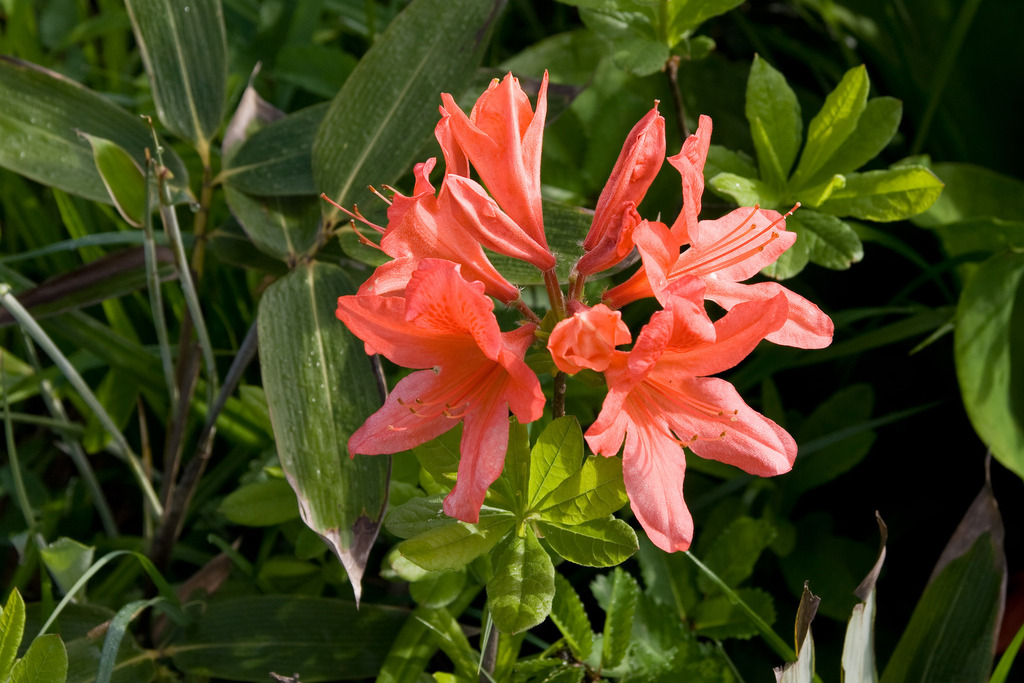
Rhododendron japonicum, also known as the Japanese Azalea, is a deciduous ornamental shrub prized for its spectacular spring blooms. Its large, showy flowers, varying in shades of orange, red, and yellow, create a stunning visual impact in gardens, shrub borders, and large containers. It's an excellent choice for adding vibrant color to shaded or partially shaded landscapes.
Native range
Japan
Care tips
It prefers bright indirect light or partial shade, avoiding intense direct afternoon sun. Consistent watering is required to keep the soil moist but never waterlogged, especially during flowering and summer. The substrate must be acidic, rich in organic matter, and well-draining; a specific mix for azaleas and rhododendrons is ideal. A common mistake is planting it in alkaline or heavy soils, which can lead to chlorosis and poor growth.
How to save a dying Japanese azalea
- Warning signs
- Yellowish or brown, wilting leaves even if soil is moist, bud or flower drop. Brown tips/edges mean low humidity or direct sun.
- First aid
- Check drainage. If potted, consider repotting into a larger pot with specific acidic soil. Protect from direct sun, water with soft water.
- What kills it
- Hard water, non-acidic soil, waterlogging or extreme dryness, intense direct sun, low air humidity.
- Can it be saved?
- Yes, if addressed promptly. It's sensitive but responds well to correct care and an acidic, humid environment.