Common rhododendron (Rhododendron ponticum)
Care, watering, light and tips for Common rhododendron on Floravia.
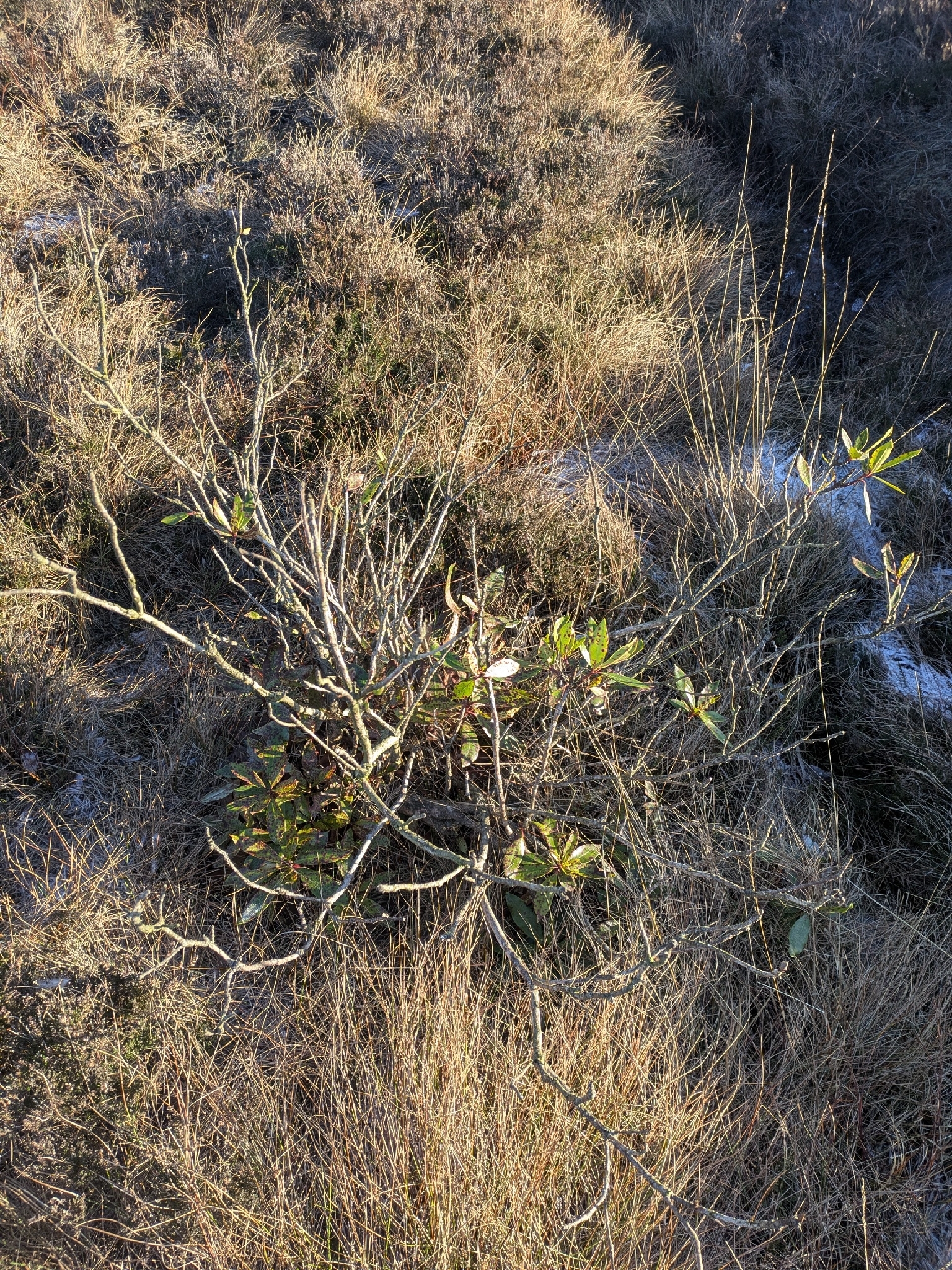
Quick facts
- Family: Ericaceae
- Difficulty: Demanding
- Watering: every 4 days
- Light: Partial shade
- Temperature: 10–30 °C
- Toxicity: Toxic to pets
About Common rhododendron
Rhododendron ponticum is a robust evergreen shrub, renowned for its large clusters of lilac to purple flowers, often featuring yellow or brown spots on the upper petal. Native to the Black Sea regions and the southern Iberian Peninsula, its glossy dark green foliage makes it an excellent choice for informal hedges or as a background plant in woodland gardens, providing a burst of vibrant color in spring. Its size and density make it ideal for creating natural screens or for planting in large beds where a significant visual impact is desired.
Native range
Southwestern Europe (Iberian Peninsula) and Asia Minor (Black Sea region)
Care tips
It prefers partial shade or filtered sunlight, as direct sun exposure can scorch its leaves. It requires an acidic soil (pH 4.5-5.5), well-drained, and rich in organic matter; avoid chalky soils. Keep the substrate consistently moist, especially during dry periods and flowering, but without waterlogging. A common mistake is planting it in alkaline or poorly drained soils, which leads to chlorosis and root rot.
How to save a dying Common rhododendron
- Warning signs
- Yellowing/browning, wilting, dropping leaves. Stunted growth. Fungi on substrate.
- First aid
- Repot into acidic, well-draining soil. Prune dead branches. Water with lime-free water when topsoil is dry.
- What kills it
- Lime in water/alkaline soil, overwatering, strong direct sun, heavy non-draining soil.
- Can it be saved?
- Yes, if roots aren't completely rotted and growing conditions are corrected promptly.