Bog bilberry (Vaccinium uliginosum)
Care, watering, light and tips for Bog bilberry on Floravia.
Quick facts
- Family: Ericaceae
- Difficulty: Moderate care
- Watering: every 3 days
- Light: Partial shade
- Temperature: 10–30 °C
- Toxicity: Toxic to pets
About Bog bilberry
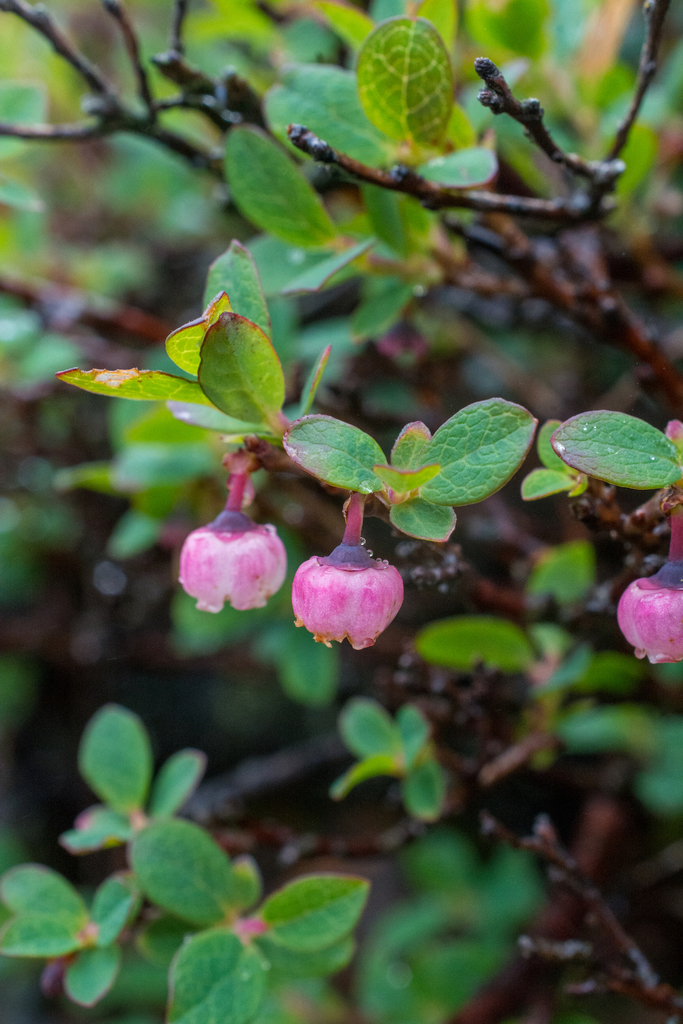
Vaccinium uliginosum, commonly known as bog bilberry or 'blokkebær' in Norwegian, is a deciduous shrub belonging to the Ericaceae family, valued for its edible berries and foliage that turns reddish in autumn. Its small, oval leaves and bell-shaped, pinkish-white flowers make it ideal for naturalistic gardens, moist rockeries, or as part of a low hedge in cold and temperate climates. It's an excellent choice for attracting wildlife and adding a wild touch to the landscape.
Native range
Arctic and subarctic regions of the Northern Hemisphere
Care tips
It requires full sun to partial shade and a very acidic (pH 4.0-5.5), moist but well-drained soil, rich in organic matter such as peat or conifer compost. Watering should be consistent to maintain soil moisture, especially during flowering and fruiting, preferably using rainwater or demineralized water to avoid altering the pH. Avoid soil compaction and locations with lime or salinity, as these are extremely detrimental to its development. A common mistake is planting it in alkaline or neutral soils, which quickly leads to chlorosis and plant decline.
How to save a dying Bog bilberry
- Warning signs
- Reddish or yellowish, withered, dropped leaves. Stunted growth, dry branches.
- First aid
- Check soil pH (needs acidic), improve drainage if waterlogged. Protect from excessive direct sun. Water with lime-free water.
- What kills it
- Alkaline or poorly drained soil. Excessive sun or prolonged drought. Lack of mycorrhizae.
- Can it be saved?
- Yes, if acted upon quickly. Correcting pH and watering/light conditions is key. Prune dead branches.