Corsican heath (Erica terminalis)
Care, watering, light and tips for Corsican heath on Floravia.
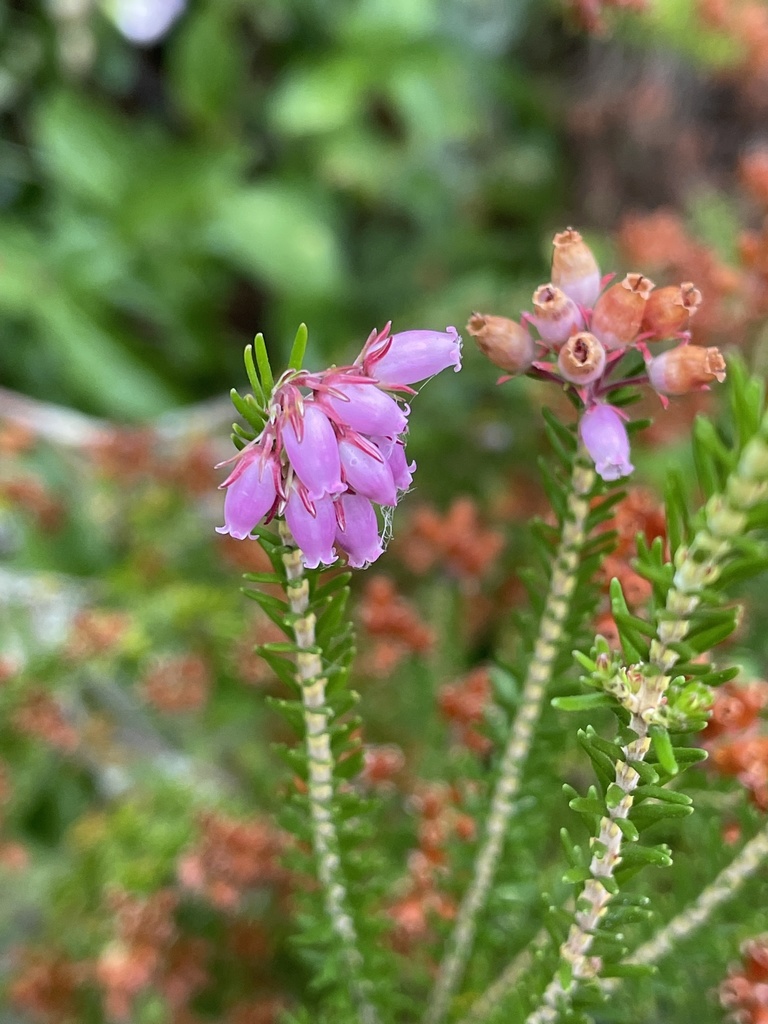
Quick facts
- Family: Ericaceae
- Difficulty: Moderate care
- Watering: every 7 days
- Light: Partial shade
- Temperature: 10–30 °C
- Toxicity: Toxic to pets
About Corsican heath
Erica terminalis, also known as Corsican Heath, is an evergreen shrub from the Ericaceae family, valued for its fine foliage and abundant pink or purple flowers that bloom in summer and autumn, precisely when other heaths are finishing. Its compact habit and late flowering make it ideal for rock gardens, borders, or as ground cover in Mediterranean gardens, providing color and texture when most plants have passed their floral peak.
Native range
Mediterranean region (especially Corsica, Sardinia, Italy, Balkans, Turkey, and Syria)
Care tips
It requires full sun for optimal flowering and prefers acidic, well-drained soils with good organic matter content. Watering should be regular, keeping the substrate moist but not waterlogged, especially during dry periods. Avoid calcareous soils and excessive fertilizers, which can damage its sensitive roots. A common mistake is planting it in alkaline soils, which causes chlorosis and poor growth.
How to save a dying Corsican heath
- Warning signs
- Yellowing, dropping leaves, dry shoots, no blooms. May indicate alkaline soil or lack of acidic water.
- First aid
- Repot in acidic substrate (pH 4.5-5.5) with peat or bark. Water with rainwater or acidified water. Prune dry branches.
- What kills it
- Lime in soil or irrigation water, causing chlorosis and slow death. Does not tolerate waterlogging.
- Can it be saved?
- Yes, if you act quickly to correct soil pH and water. Requires patience and acidic conditions.