Asian pokeweed (Phytolacca acinosa)
Care, watering, light and tips for Asian pokeweed on Floravia.
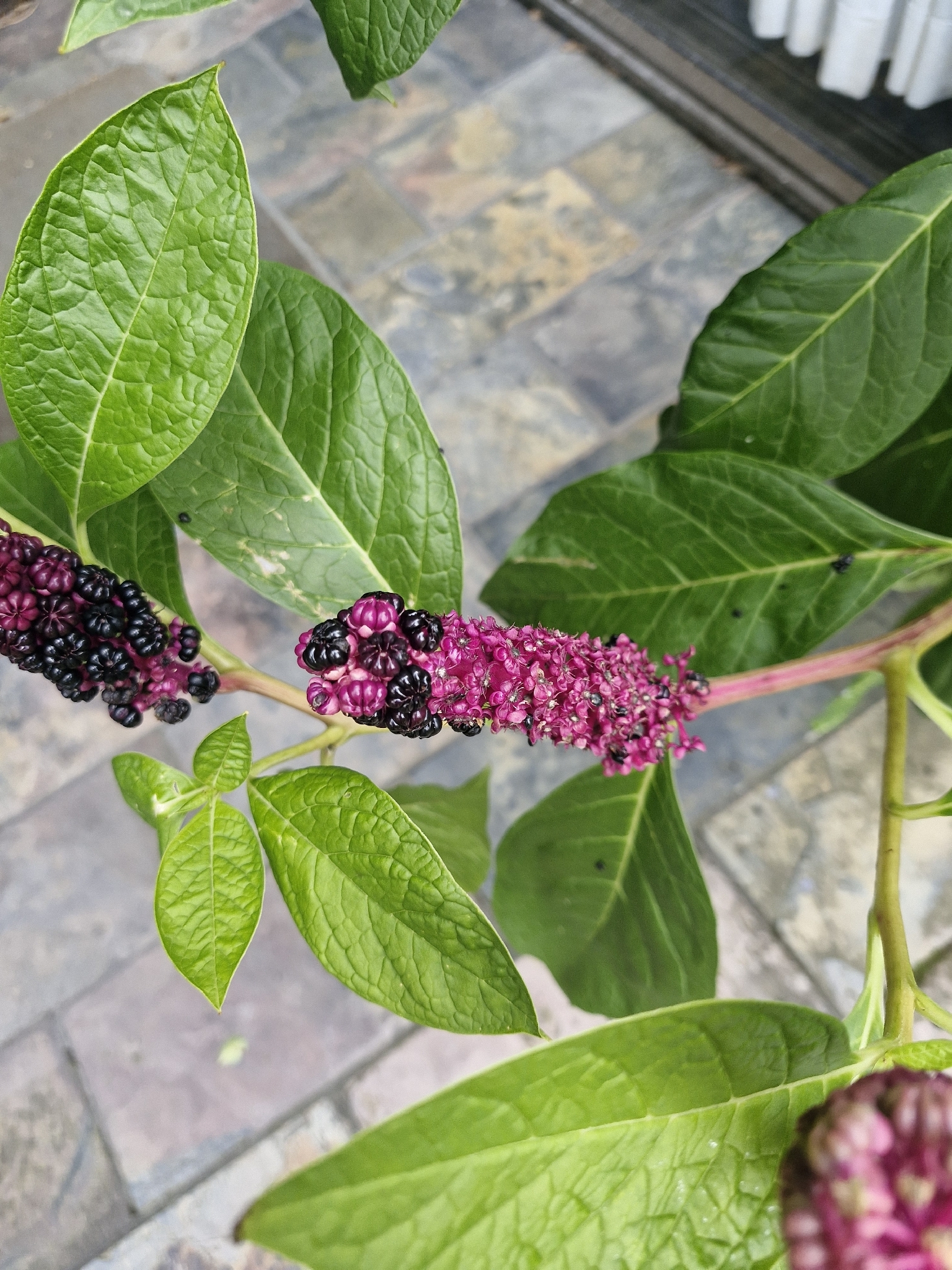
Quick facts
- Family: Phytolaccaceae
- Difficulty: Easy to care for
- Watering: every 7 days
- Light: Partial shade
- Temperature: 10–30 °C
- Toxicity: Toxic to pets
About Asian pokeweed
Phytolacca acinosa, commonly known as oriental pokeweed or inkberry, is a robust perennial herbaceous plant, valued for its attractive, glossy black berries that ripen in clusters, resembling mulberries. Native to Asia, this species can reach considerable heights and adds an exotic and ornamental touch to garden borders or naturalized areas, standing out in autumn due to the contrast of its fruits and its foliage, which often takes on reddish hues.
Native range
East Asia: China, Himalayas, Japan, Korea, Vietnam
Care tips
It prefers full sun to partial shade, thriving in well-drained, organically rich soils. Although drought-tolerant once established, regular watering during dry periods will promote vigorous growth and better fruiting. It's important to note that while its berries are attractive, they are toxic if ingested, so avoid planting in areas easily accessible to children or pets. A common mistake is not controlling its spread, as it can readily self-seed.
How to save a dying Asian pokeweed
- Warning signs
- Yellowish or pale, wilting leaves, soft stems, rot at the base. Prematurely falling or unformed fruits.
- First aid
- Repot into well-draining pot with light substrate. Prune damaged parts. Reduce watering. Place in semi-shade. Check for pests.
- What kills it
- Overwatering and heavy soil. This causes root asphyxia and rot, very common in pokeweed.
- Can it be saved?
- Yes, if rot hasn't affected the main root and stem. Quick action is key for recovery.