Rainbow pink (Dianthus chinensis)
Care, watering, light and tips for Rainbow pink on Floravia.
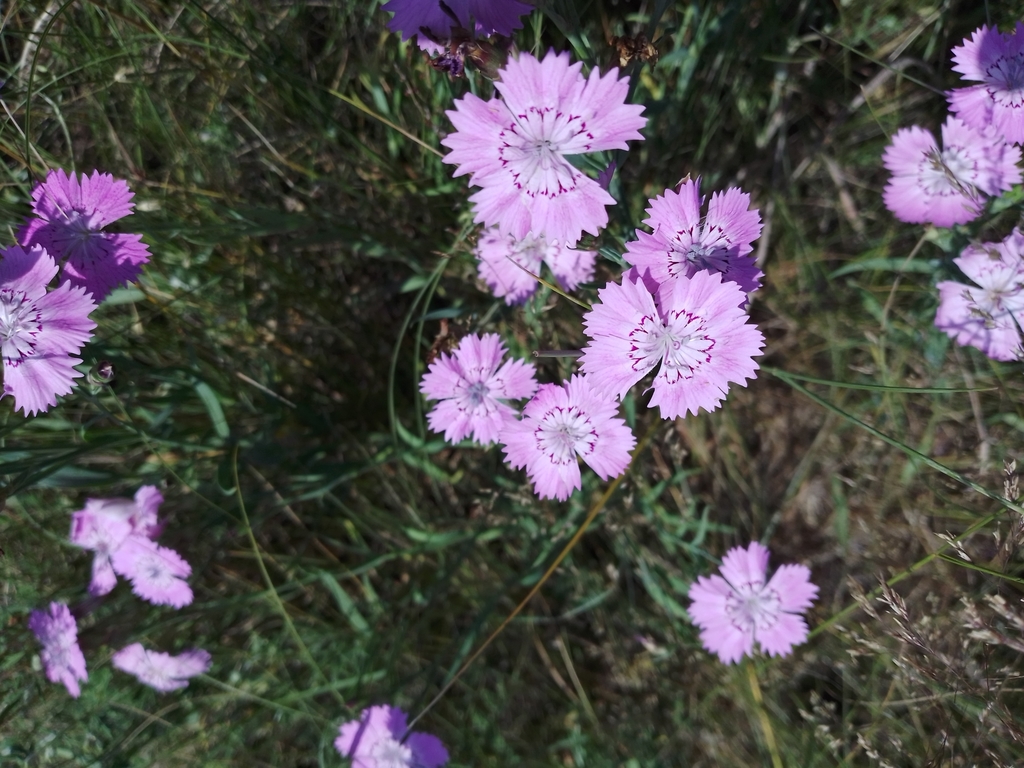
Quick facts
- Family: Caryophyllaceae
- Difficulty: Easy to care for
- Watering: every 4 days
- Light: Partial shade
- Temperature: 10–30 °C
- Toxicity: Toxic to pets
About Rainbow pink
Dianthus chinensis, commonly known as Chinese carnation or kinanellik, is a low-growing perennial herbaceous plant highly valued for its showy solitary or small clusters of flowers, which display a wide range of colors from pure white to deep red, often with fringed edges or contrasting stripes. Its carnation-like blooms flower profusely from spring to autumn, adding a vibrant splash of color to flowerbeds, borders, pots and planters, as well as rock gardens.
Native range
China and East Asia
Care tips
It requires full sun exposure for optimal flowering, although it tolerates some partial shade in very hot climates. Watering should be moderate, allowing the substrate to dry out slightly between waterings to prevent waterlogging, which is its main enemy and can lead to root rot. It prefers well-drained, slightly alkaline to neutral soils, rich in organic matter. A common mistake is overwatering or planting it in heavy, poorly drained soils.
How to save a dying Rainbow pink
- Warning signs
- Yellowish or brown, wilted leaves; soft or blackened stems. Flowers that don't open or dry quickly.
- First aid
- Check drainage and soil moisture. If potted, repot into fresh, light substrate. Prune damaged flowers and leaves to encourage new growth.
- What kills it
- Overwatering, leading to root rot. Also lack of light or heavy, poorly draining soil.
- Can it be saved?
- Yes, if rot hasn't advanced too much and healthy stems remain. Act quickly by correcting watering and substrate.