Mouse-ear chickweed (Cerastium glomeratum)
Care, watering, light and tips for Mouse-ear chickweed on Floravia.
Quick facts
- Family: Caryophyllaceae
- Difficulty: Easy to care for
- Watering: every 7 days
- Light: Partial shade
- Temperature: 10–30 °C
About Mouse-ear chickweed
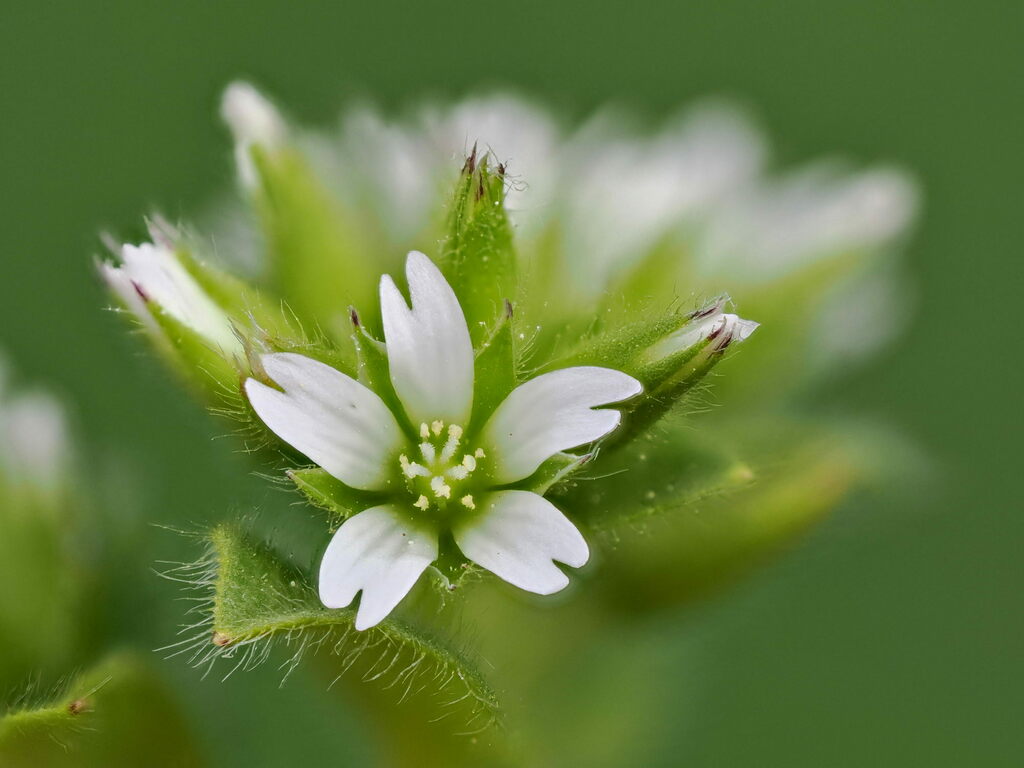
Cerastium glomeratum, commonly known as clammy chickweed or mouse-ear chickweed, is a small annual plant belonging to the Caryophyllaceae family. It is characterized by its prostrate or ascending, hairy stems and small white flowers with bifid petals clustered in dense cymes. This plant is ideal for covering small areas in rock gardens or as part of a low-maintenance wildflower meadow.
Native range
Europe and temperate Asia
Care tips
It prefers full sun to partial shade exposure and well-drained soils, although it tolerates a wide range of soil conditions. Watering should be moderate, allowing the substrate to dry slightly between waterings, as it is susceptible to waterlogging. This plant is not very demanding in terms of nutrients, so it does not require regular fertilization. A common mistake is overwatering, which can lead to root rot.
How to save a dying Mouse-ear chickweed
- Warning signs
- Soft, yellowed or blackened leaves, drooping stems.
- First aid
- Check watering. If waterlogged, remove excess. If dry, water lightly.
- What kills it
- Overwatering. It's very sensitive to waterlogging, which quickly rots its roots.
- Can it be saved?
- Yes, if you act fast. Remove heavily damaged parts and improve drainage.