Common mouse-ear chickweed (Cerastium fontanum)
Care, watering, light and tips for Common mouse-ear chickweed on Floravia.
Quick facts
- Family: Caryophyllaceae
- Difficulty: Easy to care for
- Watering: every 7 days
- Light: Partial shade
- Temperature: 10–30 °C
About Common mouse-ear chickweed
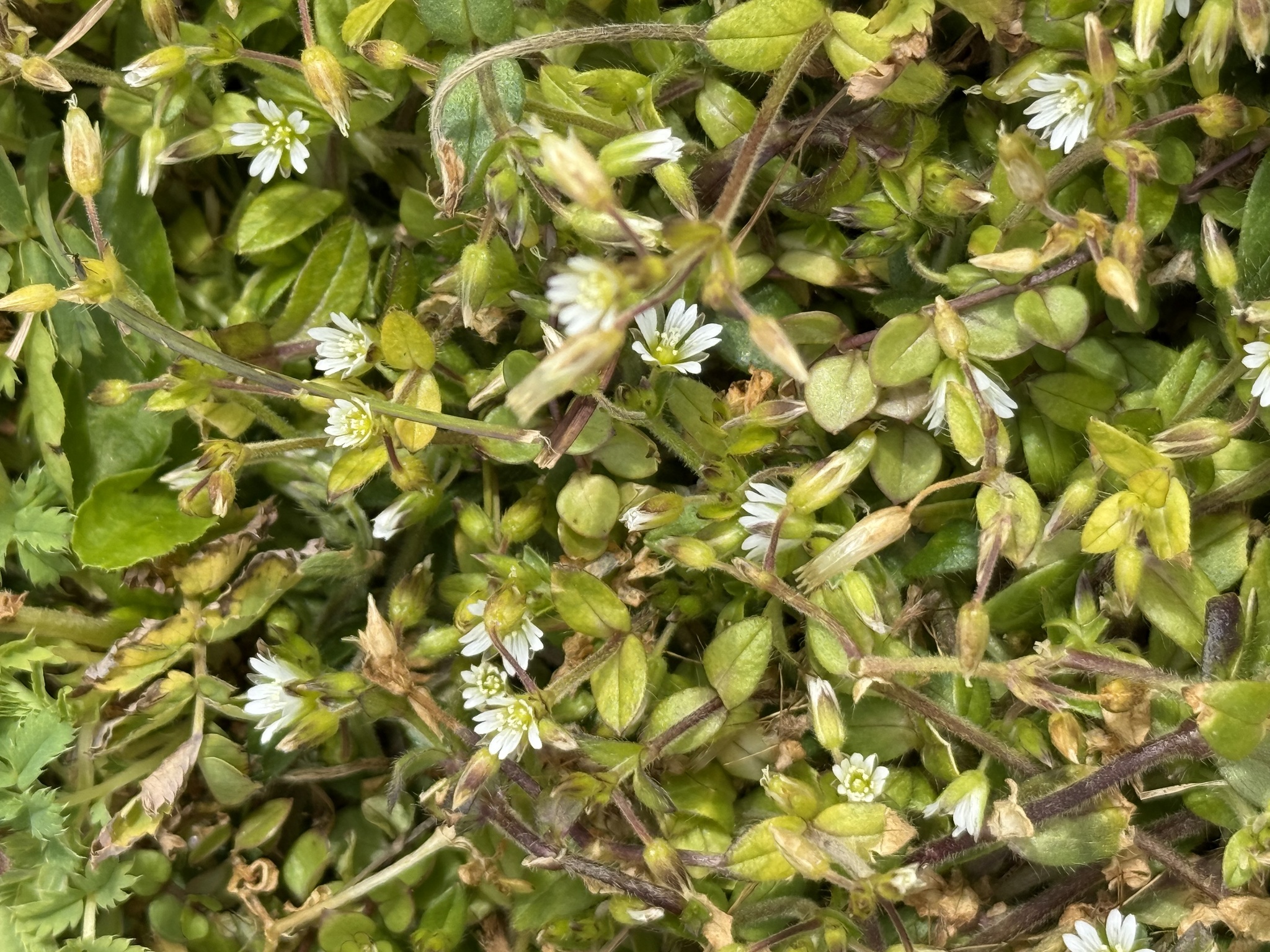
Cerastium fontanum, commonly known as common mouse-ear chickweed, is a small perennial herbaceous plant belonging to the Caryophyllaceae family. It is characterized by its prostrate or ascending stems covered with oval leaves and small white flowers with bifid petals. It is ideal for ground cover in moist areas, rock gardens, or as an understory plant in naturalistic garden settings.
Native range
Europe and temperate Asia
Care tips
It prefers locations with partial sun to full shade, especially in warmer climates to avoid water stress. Keep the substrate consistently moist but well-drained, as it is sensitive to prolonged waterlogging. Use a soil rich in organic matter with good drainage. Avoid extreme drought, which can cause the plant to dry out quickly and lose its vigor.
How to save a dying Common mouse-ear chickweed
- Warning signs
- Yellowing or browning leaves, limp growth, soft stems. May indicate overwatering or lack of light.
- First aid
- Check drainage and soil moisture. Ensure good indirect light. Consider repotting if soil is waterlogged.
- What kills it
- Constant waterlogging, leading to root rot. Also lack of light or excessive heat.
- Can it be saved?
- Yes, if you act quickly. Remove damaged parts and correct watering and light conditions. It's a resilient plant.