Common mouse-ear chickweed (Cerastium holosteoides)
Care, watering, light and tips for Common mouse-ear chickweed on Floravia.
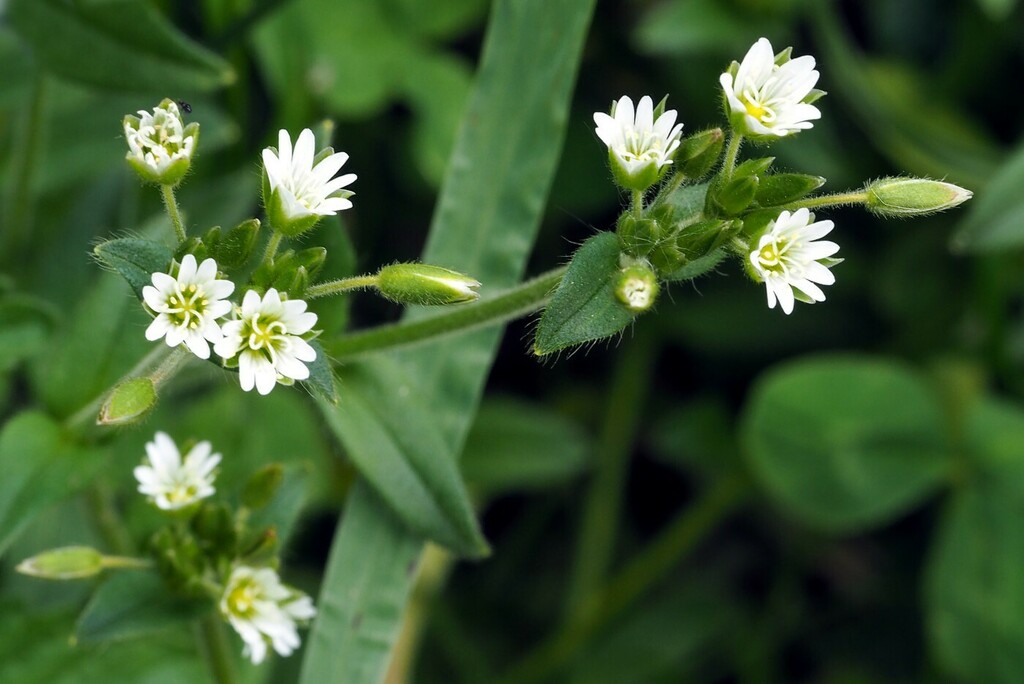
Quick facts
- Family: Caryophyllaceae
- Difficulty: Easy to care for
- Watering: every 7 days
- Light: Partial shade
- Temperature: 10–30 °C
- Toxicity: Toxic to pets
About Common mouse-ear chickweed
Cerastium holosteoides, commonly known as Eurasian Mouse-ear Chickweed, is a small perennial herbaceous plant, often considered a weed but possessing a subtle charm. It forms dense mats of creeping stems and bright green, oval leaves, adorned with tiny white star-shaped flowers. It's ideal for ground cover in low-traffic areas, rockeries, or between paving stones, adding a natural, wild touch.
Native range
Europe and temperate Asia
Care tips
It thrives in full sun to partial shade and adapts to a wide range of soils, though it prefers well-drained ones. Watering should be moderate; it is drought-tolerant once established but appreciates water during dry spells. An average garden substrate is sufficient, without the need for extensive amendments. Avoid overwatering and very compacted soils, as these can lead to root rot.
How to save a dying Common mouse-ear chickweed
- Warning signs
- Wilting, yellowing, or dark-spotted leaves. Stunted growth.
- First aid
- Check watering. If dry, water thoroughly. If waterlogged, aerate soil and reduce watering. Check for pests.
- What kills it
- Overwatering causing root rot or prolonged drought. Also excessive shade.
- Can it be saved?
- Yes, if roots aren't completely rotted and green stems remain. Act quickly.