Tarentine pink (Dianthus tarentinus)
Care, watering, light and tips for Tarentine pink on Floravia.
Quick facts
- Family: Caryophyllaceae
- Difficulty: Easy to care for
- Watering: every 7 days
- Light: Partial shade
- Temperature: 10–30 °C
- Toxicity: Toxic to pets
About Tarentine pink
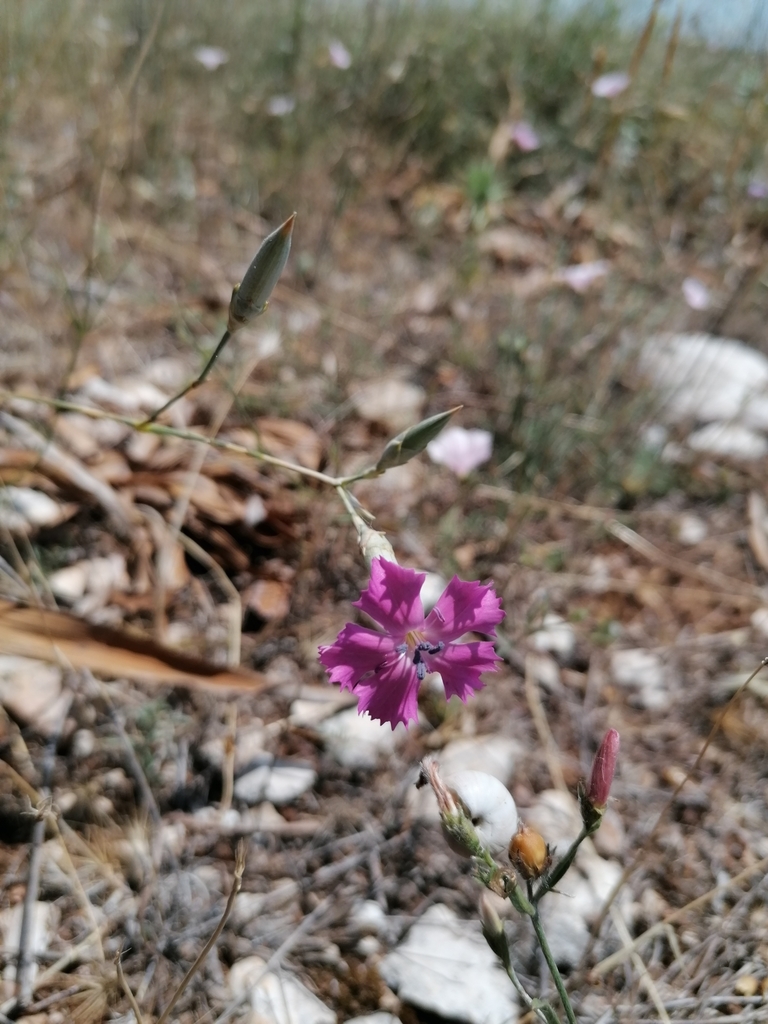
Dianthus tarentinus, also known as Tarantina Pink, is a small perennial herbaceous plant from the Caryophyllaceae family, recognized for its delicate pink or white flowers often featuring a darker eye. It forms dense cushions of grayish-green foliage, ideal for rock gardens, path edges, or as ground cover in Mediterranean gardens. Its abundant flowering and compact size make it perfect for pots and containers, adding a touch of color and subtle fragrance.
Native range
Mediterranean region, especially Italy and the Balkans
Care tips
It requires full sun for optimal flowering, although it tolerates some partial shade in very hot climates. Watering should be moderate, allowing the substrate to dry out between waterings, as it is susceptible to waterlogging; good drainage is crucial. It prefers well-drained soils, preferably alkaline or neutral, with good aeration. A common mistake is overwatering, which can lead to root rot, so water cautiously and ensure the substrate does not retain too much moisture.
How to save a dying Tarentine pink
- Warning signs
- Yellow or brown leaves from the base, soft stems, lack of flowering or quickly wilting flowers.
- First aid
- Check drainage and reduce watering. If soil is waterlogged, repot into fresh, well-draining substrate. Ensure good ventilation.
- What kills it
- Overwatering is its main enemy, especially in pots. It doesn't tolerate waterlogging or constant root wetness.
- Can it be saved?
- Yes, if roots aren't completely rotted. Act quickly by pruning damaged parts and improving watering and drainage conditions.