Yellow pitahaya (Selenicereus megalanthus)
Care, watering, light and tips for Yellow pitahaya on Floravia.
Quick facts
- Family: Cactaceae
- Difficulty: Moderate care
- Watering: every 7 days
- Light: Full sun
- Temperature: 10–40 °C
About Yellow pitahaya
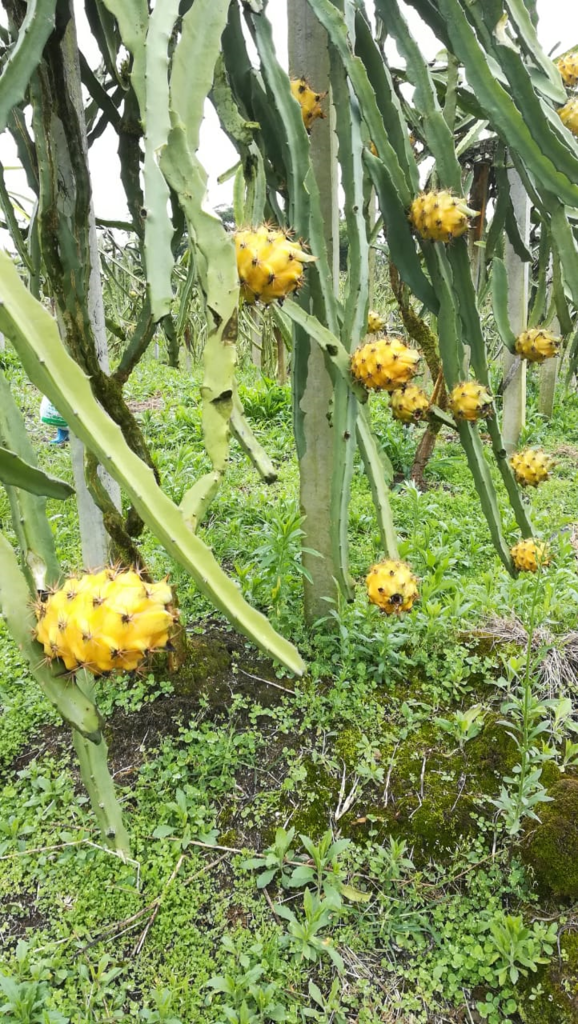
Selenicereus megalanthus, also known as yellow pitaya or yellow dragon fruit, is an epiphytic or lithophytic cactus with long, triangular stems that produces edible fruits with yellow skin and white pulp containing black seeds. Its nocturnal flowers are large and fragrant. It is ideal for hanging baskets or as a climbing plant with support, adding an exotic touch to warm patios and gardens.
Native range
Northern South America (Colombia, Ecuador, Peru)
Care tips
It requires bright light, preferably morning direct sun or filtered sun, avoiding intense midday sun exposure. Watering should be regular during growth, allowing the substrate to dry slightly between waterings, and reduced in winter. Use a well-draining substrate, rich in organic matter, similar to that used for orchids or epiphytic cacti. Avoid waterlogging, as it is susceptible to root rot.
How to save a dying Yellow pitahaya
- Warning signs
- Soft, yellowing stems or dark spots. Stunted or very slow growth. Fruits not ripening or dropping.
- First aid
- Check drainage and substrate moisture. Ensure good ventilation and indirect sun. Prune damaged parts with sterilized tool.
- What kills it
- Overwatering, especially in winter. Heavy, water-retaining soil. Lack of adequate light or cold drafts.
- Can it be saved?
- Yes, if you act fast. If rot is extensive at the base, it can be difficult. It's a resilient plant.