Stenocereus queretaroensis
Care, watering, light and tips for Stenocereus queretaroensis on Floravia.
Quick facts
- Family: Cactaceae
- Difficulty: Easy to care for
- Watering: every 21 days
- Light: Full sun
- Temperature: 10–40 °C
About Stenocereus queretaroensis
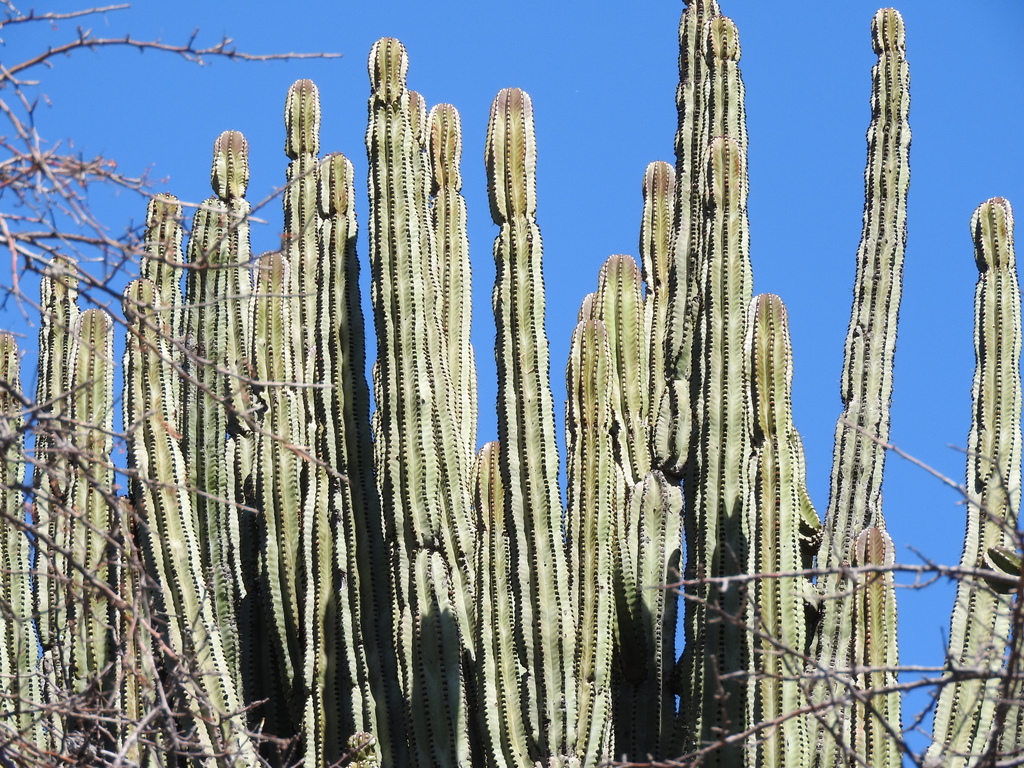
The Querétaro Pitaya (Stenocereus queretaroensis) is a branched columnar cactus, native to Mexico, renowned for its edible fruits with sweet and colorful pulp. Its robust, spiny stems can reach several meters in height, creating an imposing silhouette. It's ideal for desert gardens, xeriscaping, or as a prominent specimen in arid landscapes where its nocturnal blooms and fruits offer unique appeal.
Native range
Mexico (Querétaro, Guanajuato, Michoacán, San Luis Potosí, Jalisco, Oaxaca, Puebla, Hidalgo, State of Mexico)
Care tips
It requires full, direct sunlight for optimal growth and good fruit production. Watering should be sparse, allowing the substrate to dry out completely between waterings, especially in winter to prevent root rot. Use a very well-draining substrate, specific for cacti, composed of coarse sand, perlite, and little organic matter. A common mistake to avoid is overwatering, which is the main cause of death for this species.
How to save a dying Stenocereus queretaroensis
- Warning signs
- Soft, yellowish or blackened stems from the base, severe wrinkling and lack of turgor. Soft or rotten roots.
- First aid
- Remove plant from substrate. Examine roots and stem, cut soft or rotten parts with sterilized knife. Let wounds dry 2-7 days. Replant in dry, well-draining substrate. Do not water.
- What kills it
- Overwatering, especially in winter or with low temperatures. Substrate that retains too much moisture. Lack of drainage.
- Can it be saved?
- Yes, if rot hasn't affected more than 50% of the main stem and healthy tissue remains. Acting fast is key.