Eastern prickly pear (Opuntia humifusa)
Care, watering, light and tips for Eastern prickly pear on Floravia.
Quick facts
- Family: Cactaceae
- Difficulty: Easy to care for
- Watering: every 20 days
- Light: Full sun
- Temperature: 10–40 °C
About Eastern prickly pear
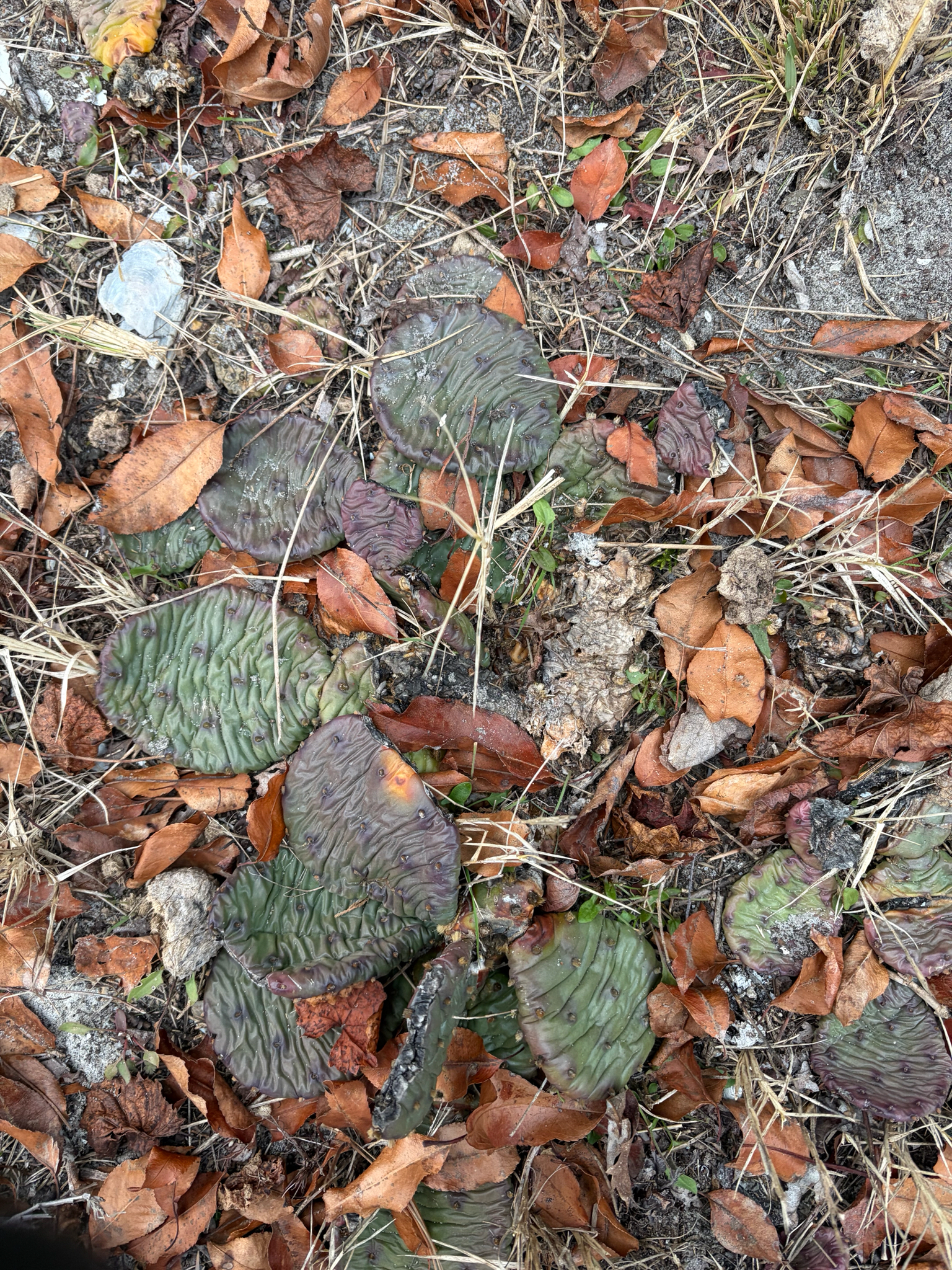
Opuntia humifusa, commonly known as Eastern Prickly Pear or Devil's Tongue, is a low-growing, spreading cactus forming dense mats of flattened, oval pads. Its striking yellow flowers, followed by edible red fruits, make it ideal for rock gardens, xeriscapes, or as ground cover in temperate climates. Its adaptability and hardiness make it an excellent choice for low-maintenance landscapes.
Native range
Eastern North America, from Canada to the southern United States.
Care tips
It requires full sun for optimal growth and abundant flowering. Watering should be sparse, allowing the substrate to dry out completely between waterings; it is very susceptible to overwatering, especially in winter. Use a very well-draining substrate, specific for cacti and succulents. Absolutely avoid waterlogging and excessive humidity, as this will lead to root rot.
How to save a dying Eastern prickly pear
- Warning signs
- Soft, yellowing segments or dark spots. Severe dehydration (shriveled).
- First aid
- Remove damaged segments. Check drainage. If dry, water sparingly. If overwatered, let dry.
- What kills it
- Overwatering and poor drainage, rotting roots and segment bases.
- Can it be saved?
- Yes, if healthy segments remain. Cut them, let them callus, and replant.