Prickly pear (Opuntia tuna)
Care, watering, light and tips for Prickly pear on Floravia.
Quick facts
- Family: Cactaceae
- Difficulty: Easy to care for
- Watering: every 21 days
- Light: Full sun
- Temperature: 10–40 °C
About Prickly pear
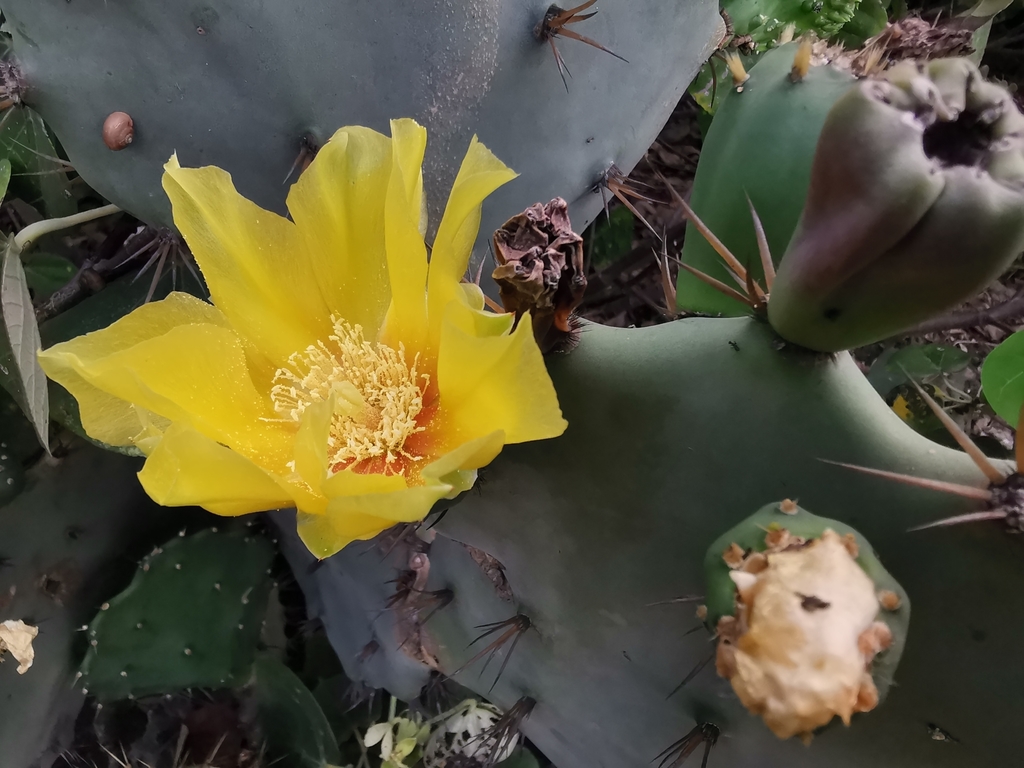
Opuntia tuna, also known as Prickly Pear or Tuna Cactus, is a shrubby or arborescent cactus native to Mexico, characterized by its oval, spiny pads (cladodes) that produce yellow flowers and edible reddish fruits. It can grow quite tall, forming impressive hedges or solitary specimens. It's ideal for xeriscapes, rock gardens, or as an ornamental plant in warm, dry climates, adding an exotic and structural touch to the landscape.
Native range
Mexico
Care tips
It requires full sun exposure for optimal growth and abundant flowering. Watering should be infrequent, allowing the substrate to dry out completely between waterings, especially in winter to prevent rot. Use a very well-draining substrate, specifically for cacti and succulents, with a good proportion of sand or perlite. A common mistake is overwatering, which is the main cause of death for this plant.
How to save a dying Prickly pear
- Warning signs
- Soft, yellowish or blackish discoloration, rot at the base. Severe dehydration: wrinkled, flaccid pads.
- First aid
- Inspect roots and cut rotten parts with sterilized tool. Let wounds dry before repotting in dry, well-draining substrate.
- What kills it
- Overwatering, especially in winter. Poorly draining soil. Insufficient direct sun hours.
- Can it be saved?
- Yes, if rot is not too advanced and there's healthy tissue to propagate. Cut and root healthy pads.