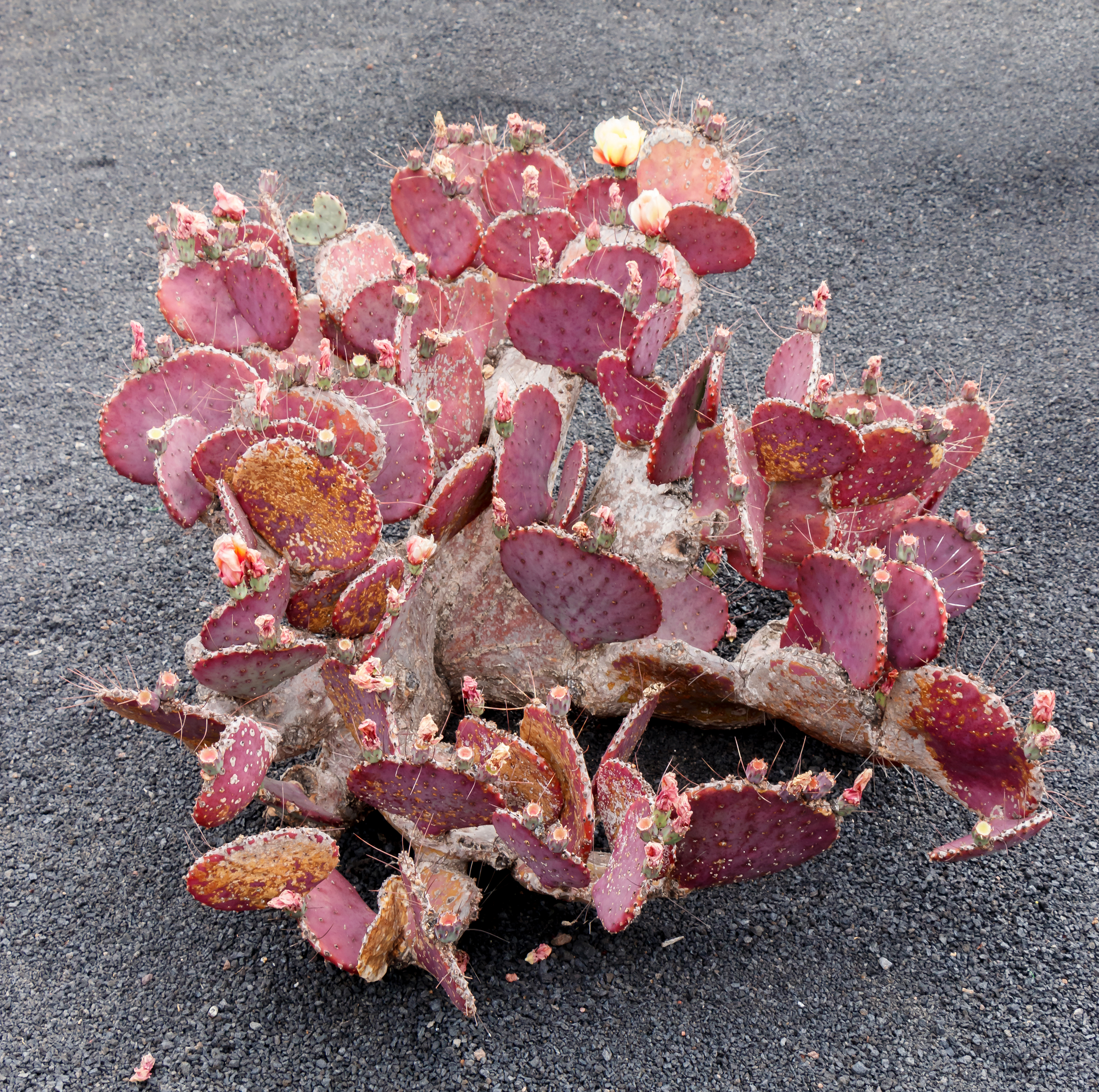
Purple prickly pear (Opuntia macrocentra)
Care, watering, light and tips for Purple prickly pear on Floravia.
Quick facts
- Family: Cactaceae
- Difficulty: Easy to care for
- Watering: every 21 days
- Light: Full sun
- Temperature: 10–40 °C
About Purple prickly pear
Opuntia macrocentra, commonly known as Purple Prickly-pear, is a captivating cactus native to the southwestern United States and northern Mexico, renowned for its pads (cladodes) that develop intense purple hues under sun stress or cold temperatures. Its shrubby form and the contrast of its yellow or reddish spines against the pad's color make it a stunning centerpiece in xeriscape gardens, rockeries, or large pots in sunny patios. It also produces bright yellow flowers, adding an extra splash of color in spring.
Native range
Southwestern United States and northern Mexico
Care tips
For Opuntia macrocentra, a location with full sun for most of the day is crucial for it to develop its characteristic purple hues. Watering should be infrequent, allowing the substrate to dry out completely between waterings; it is very susceptible to excess moisture, especially in winter. Use a very well-draining substrate, specific for cacti and succulents, with a high proportion of coarse sand and grit. A common mistake to avoid is overwatering, which can quickly lead to root and pad rot.
How to save a dying Purple prickly pear
- Warning signs
- Soft, wrinkled, and flaccid pads, sometimes with dark, moist spots. Loss of intense purple color, turning greenish or yellowish.
- First aid
- Remove affected pads with disinfected tool. Let wounds air dry. Repot in fresh, well-draining substrate. Do not water for a while.
- What kills it
- Overwatering is its main executioner. Poor drainage or water-retentive soil will rot its roots.
- Can it be saved?
- Yes! If rot hasn't reached the base or many pads, it will recover. Propagate a healthy pad to ensure its survival.