Peyote (Lophophora williamsii)
Care, watering, light and tips for Peyote on Floravia.
Quick facts
- Family: Cactaceae
- Difficulty: Easy to care for
- Watering: every 20 days
- Light: Full sun
- Temperature: 10–40 °C
- Toxicity: Toxic to pets
About Peyote
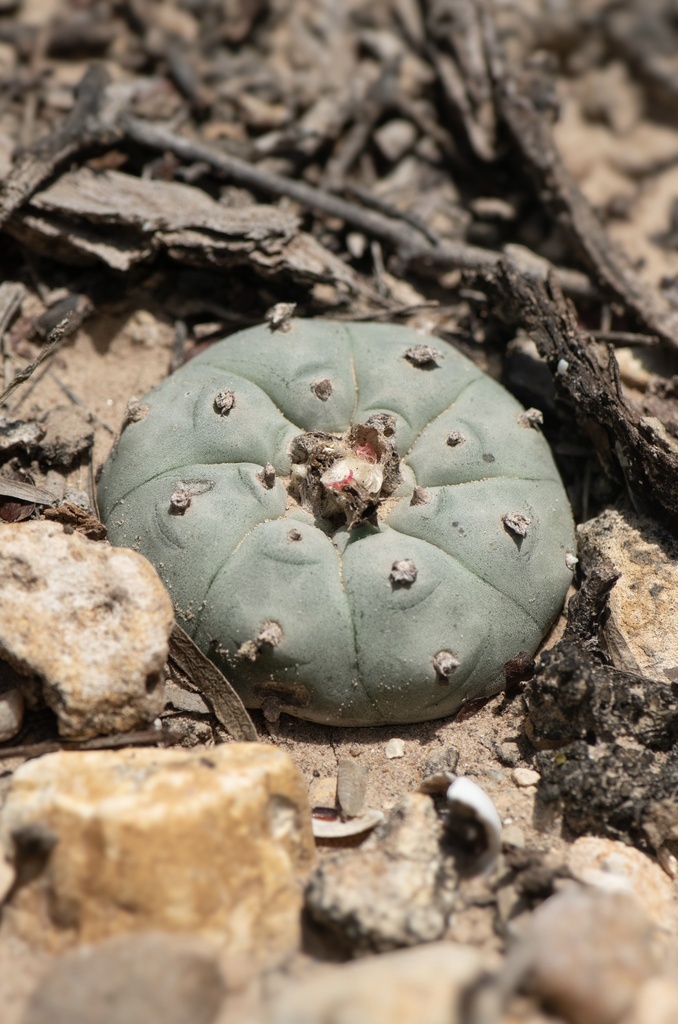
Lophophora williamsii, commonly known as Peyote, is a small, spineless, slow-growing cactus with a globular shape and a bluish-green to grayish-green color. Its unique appearance and unassuming nature make it ideal for cactus and succulent collections in small pots, where its subtle beauty can be appreciated. It is a plant with a rich cultural and ethnobotanical history.
Native range
Northern Mexico and Southern United States (Texas)
Care tips
It requires direct and intense sunlight for optimal growth, but protecting it from the strongest midday summer sun can be beneficial. Watering should be sparse and infrequent, allowing the substrate to dry out completely between waterings; it is crucial to avoid overwatering to prevent root rot. Use a very well-draining substrate, specific for cacti and succulents. A common mistake is overwatering, which quickly leads to rot.
How to save a dying Peyote
- Warning signs
- Generalized softening, yellow/brown discoloration, excessive wrinkling not recovering with watering.
- First aid
- Stop watering, check roots for rot, repot to dry, well-draining substrate if needed, improve ventilation.
- What kills it
- Overwatering, especially in retentive substrates or winter. Also poor drainage and low light.
- Can it be saved?
- Yes, if rot hasn't fully affected the main body. Quick action is crucial.