Depressed prickly pear (Opuntia depressa)
Care, watering, light and tips for Depressed prickly pear on Floravia.
Quick facts
- Family: Cactaceae
- Difficulty: Easy to care for
- Watering: every 20 days
- Light: Full sun
- Temperature: 10–40 °C
About Depressed prickly pear
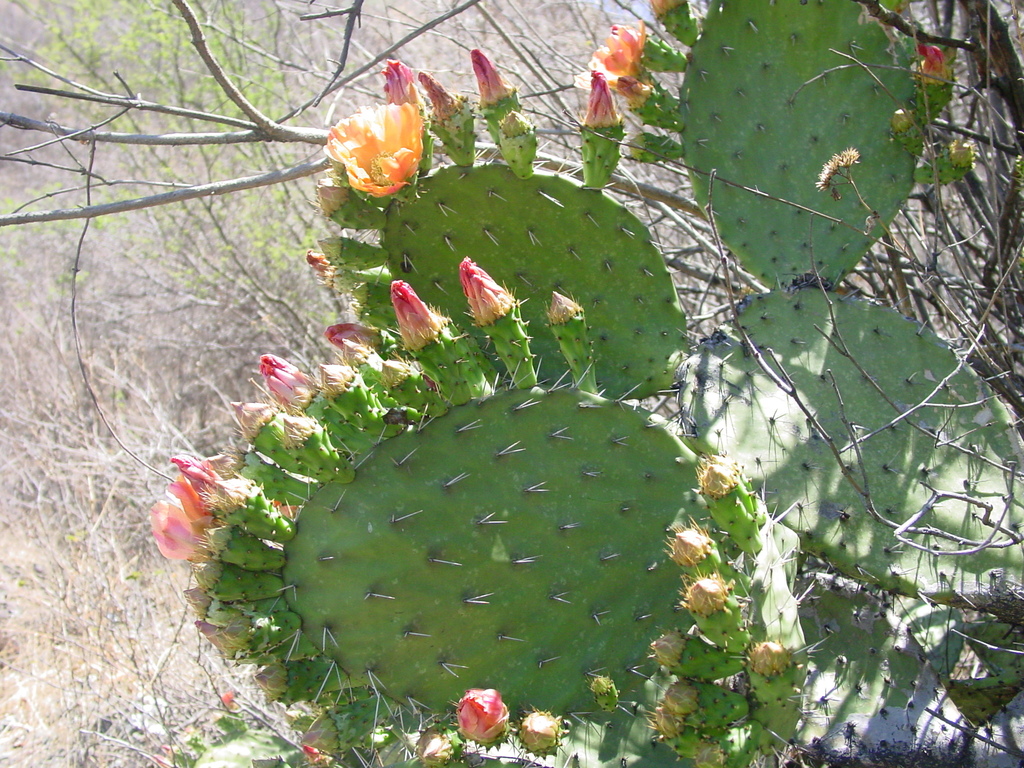
Opuntia depressa, commonly known as Creeping Prickly Pear, is a low-growing, spreading cactus forming dense mats of flattened, oval pads. Its bluish-green pads may develop small spines and glochids. It is ideal for ground cover in xeriscapes, rock gardens, or as a trailing plant in wide pots, adding a unique texture to the landscape.
Native range
Mexico and the southern United States
Care tips
It requires full sun for optimal growth and abundant flowering. Watering should be sporadic and deep, allowing the substrate to dry out completely between waterings, especially in winter. Use a very well-draining substrate, specific for cacti and succulents. A common mistake is overwatering, which can lead to root and pad rot.
How to save a dying Depressed prickly pear
- Warning signs
- Soft, wrinkled, yellowing stems or dark spots. Stunted growth. Rot at the base.
- First aid
- Remove soft or rotten parts with a clean knife. Let the wound dry. Check substrate and drainage.
- What kills it
- Overwatering, especially in winter. Heavy substrate retaining too much moisture. Lack of light.
- Can it be saved?
- Yes, if rot hasn't affected the whole plant. It's very hardy and recovers easily.