Prickly pear (Opuntia maxima)
Care, watering, light and tips for Prickly pear on Floravia.
Quick facts
- Family: Cactaceae
- Difficulty: Easy to care for
- Watering: every 20 days
- Light: Full sun
- Temperature: 10–40 °C
About Prickly pear
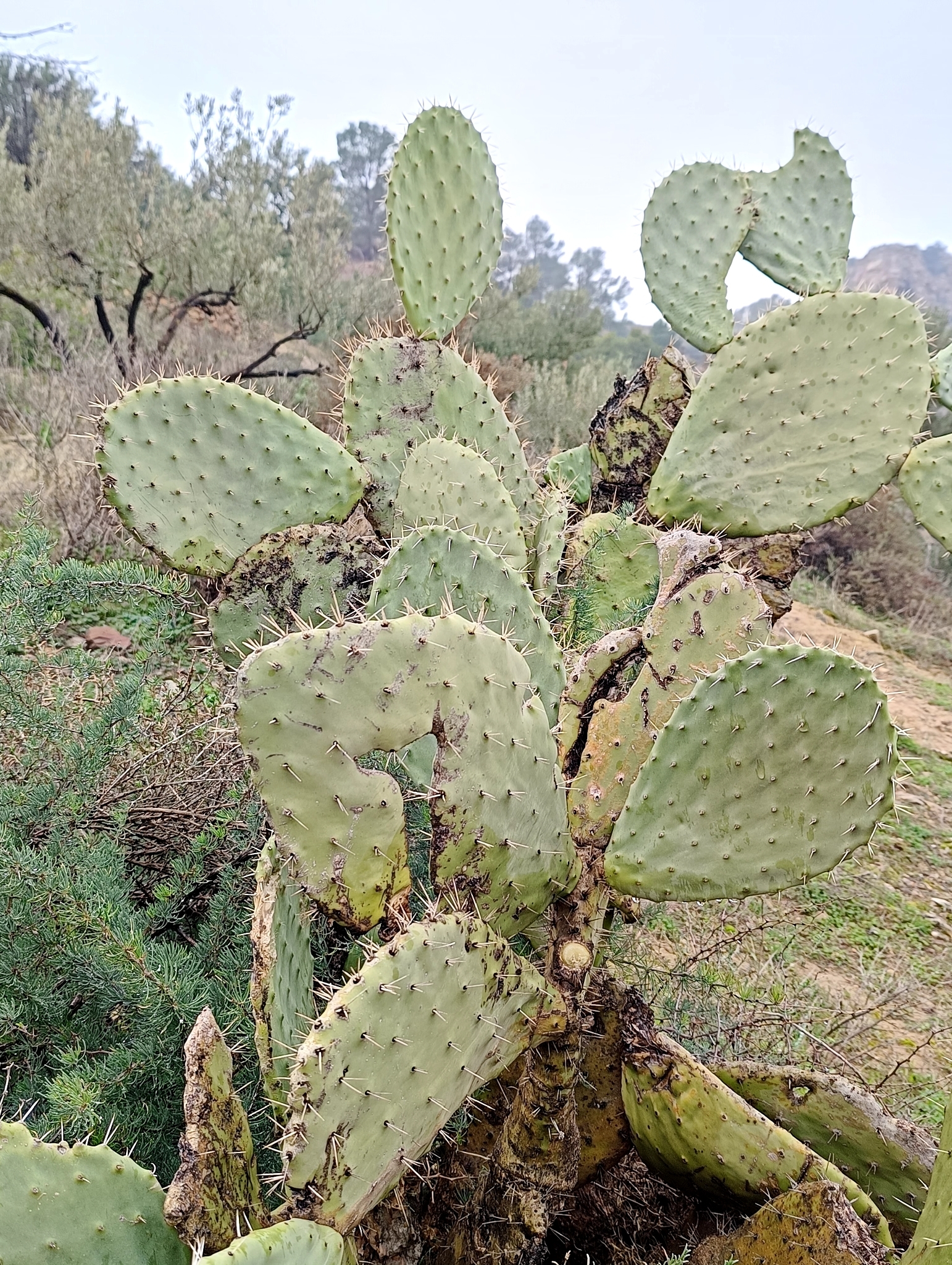
Opuntia maxima, commonly known as prickly pear, is a large arboreal cactus capable of forming dense thickets. It is characterized by its large, oval, spiny pads (cladodes) that produce yellow flowers and edible red or purple fruits. It is ideal for xeriscaping, desert landscaping, or as a defensive hedge in hot, dry climates.
Native range
North America (southern United States and Mexico)
Care tips
It requires direct sun exposure for most of the day for optimal growth and abundant flowering. Watering should be scarce, allowing the substrate to dry completely between waterings, especially in winter to prevent rot. It prefers well-drained, sandy or stony soils, with low organic matter content. A common mistake is overwatering, which is the main cause of death in this species.
How to save a dying Prickly pear
- Warning signs
- Soft, wrinkled, or yellowing pads; black or brown spots.
- First aid
- Remove affected pads. Check drainage and soil. Drastically reduce watering.
- What kills it
- Overwatering and water-retentive soil, leading to root rot.
- Can it be saved?
- Yes, if rot isn't too advanced. Propagate healthy pads as backup.