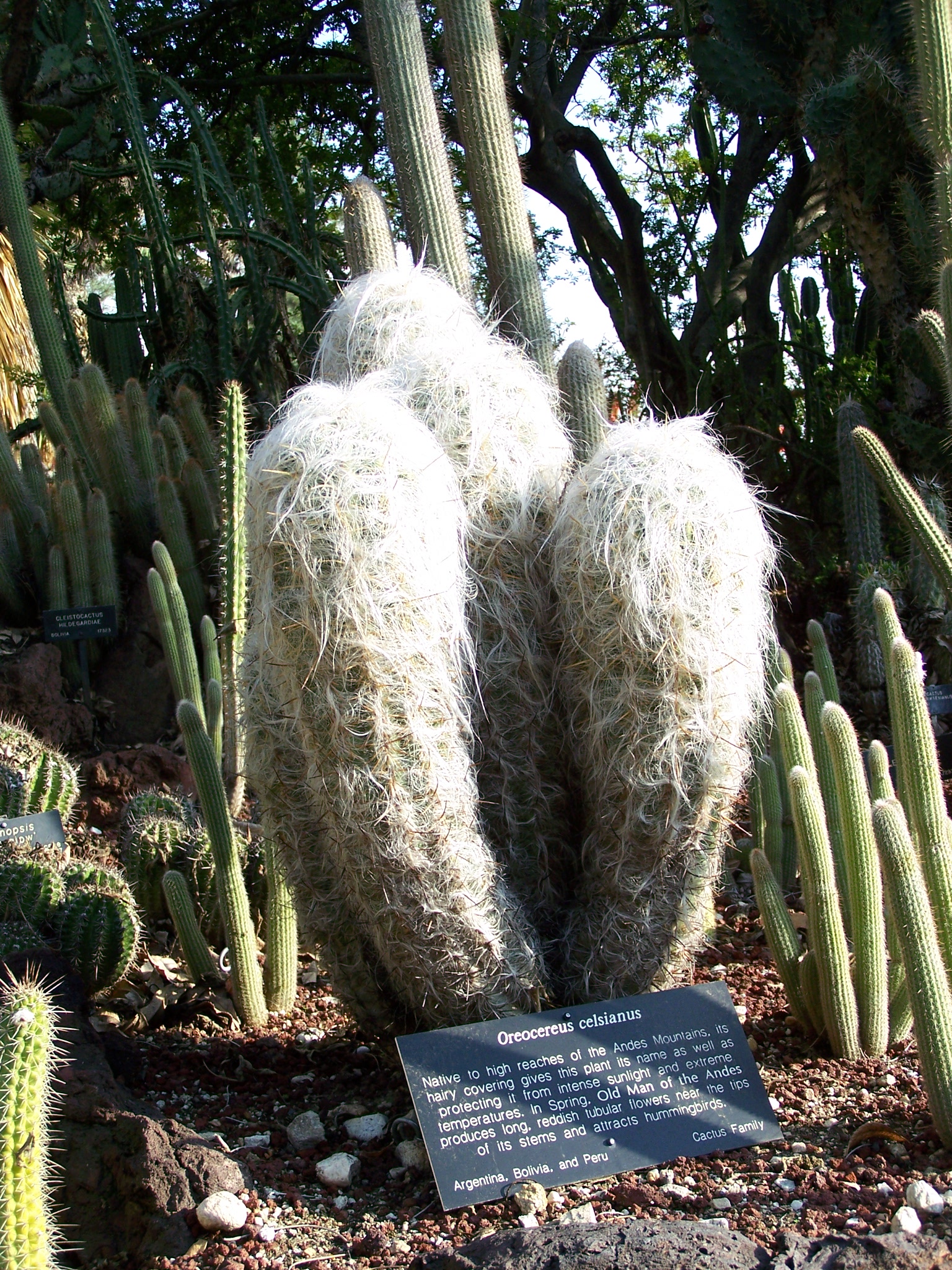
Old man of the Andes (Oreocereus celsianus)
Care, watering, light and tips for Old man of the Andes on Floravia.
Quick facts
- Family: Cactaceae
- Difficulty: Easy to care for
- Watering: every 14 days
- Light: Full sun
- Temperature: 10–40 °C
About Old man of the Andes
Oreocereus celsianus, known as the 'old man of the Andes', is a large and striking columnar cactus, covered in dense, long white hair that gives it a majestic appearance and protects it from the Andean cold. Its stems can reach several meters in height and branch from the base, creating an imposing presence in desert or rock gardens. It is ideal for cactus collections or as a focal point in arid landscapes.
Native range
Central Andes of Peru, Bolivia, Chile, and Argentina
Care tips
It requires full sun exposure for optimal growth and proper flowering. Watering should be sparse, allowing the substrate to dry out completely between waterings, and almost nonexistent in winter to prevent rot. Use a very well-draining substrate, specific for cacti and succulents. A common mistake is overwatering, which can be fatal for this species adapted to arid conditions.
How to save a dying Old man of the Andes
- Warning signs
- Soft, dark base (rot), shriveled/sucked-in dry stem (severe dehydration). Lanugo falls off easily.
- First aid
- For rot, cut affected part with sterilized knife, let wound dry. For dehydration, soak pot in warm water.
- What kills it
- Overwatering (especially in winter) and poor drainage. Also extreme cold and prolonged frosts.
- Can it be saved?
- Yes, if rot hasn't reached growing tip or dehydration isn't irreversible. Act quickly.