Western pricklypear (Opuntia occidentalis)
Care, watering, light and tips for Western pricklypear on Floravia.
Quick facts
- Family: Cactaceae
- Difficulty: Easy to care for
- Watering: every 15 days
- Light: Full sun
- Temperature: 10–40 °C
About Western pricklypear
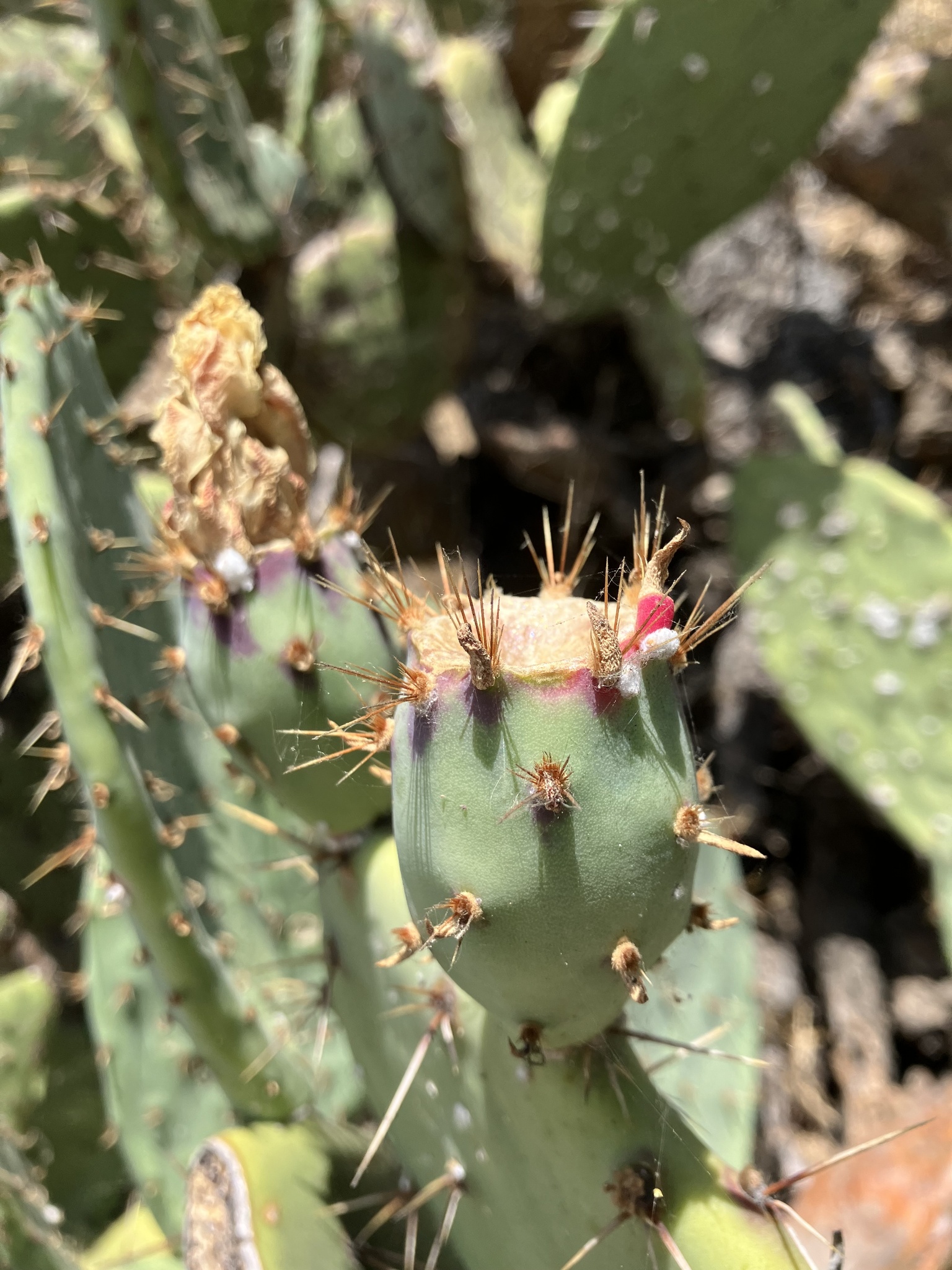
Opuntia occidentalis, commonly known as western pricklypear, is a branching cactus that forms dense shrubs, capable of reaching several meters in height and width. Its pads (cladodes) are bluish-green, oval, and covered with variable spines, which can be long and robust or shorter and finer, in addition to the tiny glochids. This plant is ideal for xeriscapes, rock gardens, or as a focal point in arid landscapes, providing a desert-like and resilient aesthetic.
Native range
Southwestern United States and northwestern Mexico
Care tips
It requires full, direct sun for most of the day for optimal growth and abundant flowering. Watering should be sporadic and deep, allowing the substrate to dry out completely between waterings; it is crucial to avoid overwatering to prevent root rot. Use a very well-draining substrate, preferably a specific mix for cacti and succulents. The most common mistake to avoid is overwatering, especially in winter, as this species is very susceptible to root rot.
How to save a dying Western pricklypear
- Warning signs
- Soft, yellowing pads or dark, sunken spots. Pads falling off.
- First aid
- Remove affected pads. If rotten, cut to healthy tissue and let it callus. Drastically reduce watering.
- What kills it
- Overwatering, especially in winter or low light. A substrate that retains too much moisture is fatal.
- Can it be saved?
- Yes, if rot hasn't reached the main base or root. Act quickly.