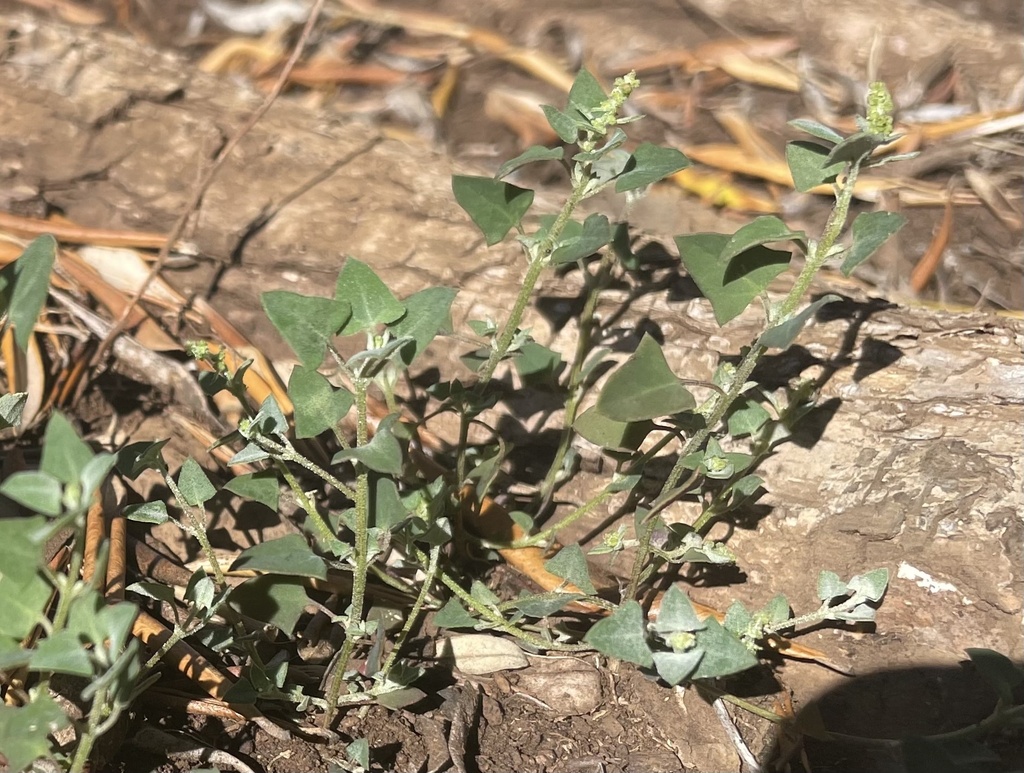
Stinking goosefoot (Chenopodium hircinum)
Care, watering, light and tips for Stinking goosefoot on Floravia.
Quick facts
- Family: Amaranthaceae
- Difficulty: Moderate care
- Watering: every 7 days
- Light: Partial shade
- Temperature: 10–30 °C
- Toxicity: Toxic to pets
About Stinking goosefoot
Chenopodium hircinum, also known as bukkemelde, is an annual herb belonging to the Amaranthaceae family. It is characterized by its lobed or toothed leaves and often prostrate or ascending growth, with a distinctive, sometimes goat-like aroma. Although often considered a weed, it can be a useful forage plant in certain regions and its rustic appearance makes it suitable for wild gardens or as ground cover in undemanding areas.
Native range
South America, especially in the Andean region
Care tips
This species prefers full sun to partial shade and is adaptable to a wide range of soils, although it thrives best in well-drained, nutrient-rich soil. Watering should be moderate, allowing the soil to dry slightly between waterings, as it is quite drought-tolerant once established. Avoid overwatering, which can lead to root rot. A common mistake is over-fertilizing, as it is a low-maintenance plant that does not require much additional nutrition.
How to save a dying Stinking goosefoot
- Warning signs
- Drooping, yellowing, or necrotic-spotted leaves. Slow or no growth.
- First aid
- Move to partial shade, ensure good drainage. Check roots for rot or pests.
- What kills it
- Overwatering in heavy soils. Also, intense direct sun exposure without acclimatization.
- Can it be saved?
- Yes, if acted upon quickly. It's resilient, but prolonged waterlogging is fatal.