Cotton thistle (Onopordum acanthium)
Care, watering, light and tips for Cotton thistle on Floravia.
Quick facts
- Family: Asteraceae
- Difficulty: Easy to care for
- Watering: every 3 days
- Light: Full sun
- Temperature: 0–35 °C
About Cotton thistle
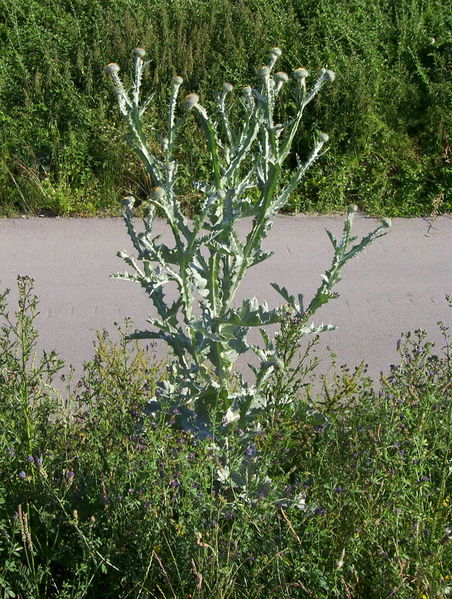
Onopordum acanthium, commonly known as Scotch thistle or cotton thistle, is a striking biennial plant characterized by its winged, spiny stems and large, purple flower heads. It can grow up to 3 meters tall, making it a spectacular focal point in naturalistic, xeriscape gardens, or as a standalone specimen. Its robust presence and hardiness make it ideal for low-maintenance landscapes seeking a wild, dramatic touch.
Native range
Europe and temperate Asia
Care tips
It thrives in full sun and well-drained, even poor or rocky soils, adapting well to dry conditions. Watering should be moderate, allowing the soil to dry out completely between waterings, as it is highly susceptible to waterlogging. A common mistake is planting it in rich, moist soils, which can lead to excessive growth and rot issues; it requires little to no fertilizer. Exercise caution with its spines when handling.
How to save a dying Cotton thistle
- Warning signs
- Yellowish or brown leaves, wilted and lacking vigor. No flowering or prematurely dried flowers.
- First aid
- Transplant to full sun with well-drained soil. Water deeply and moderately, avoiding waterlogging.
- What kills it
- Excessive shade or heavy, wet soil leading to root rot. Lack of space for its large size.
- Can it be saved?
- Yes! It's a tough plant. Act fast to correct its environment and watering to see it thrive again.