Common fleabane (Pulicaria dysenterica)
Care, watering, light and tips for Common fleabane on Floravia.
Quick facts
- Family: Asteraceae
- Difficulty: Easy to care for
- Watering: every 3 days
- Light: Full sun
- Temperature: 0–35 °C
About Common fleabane
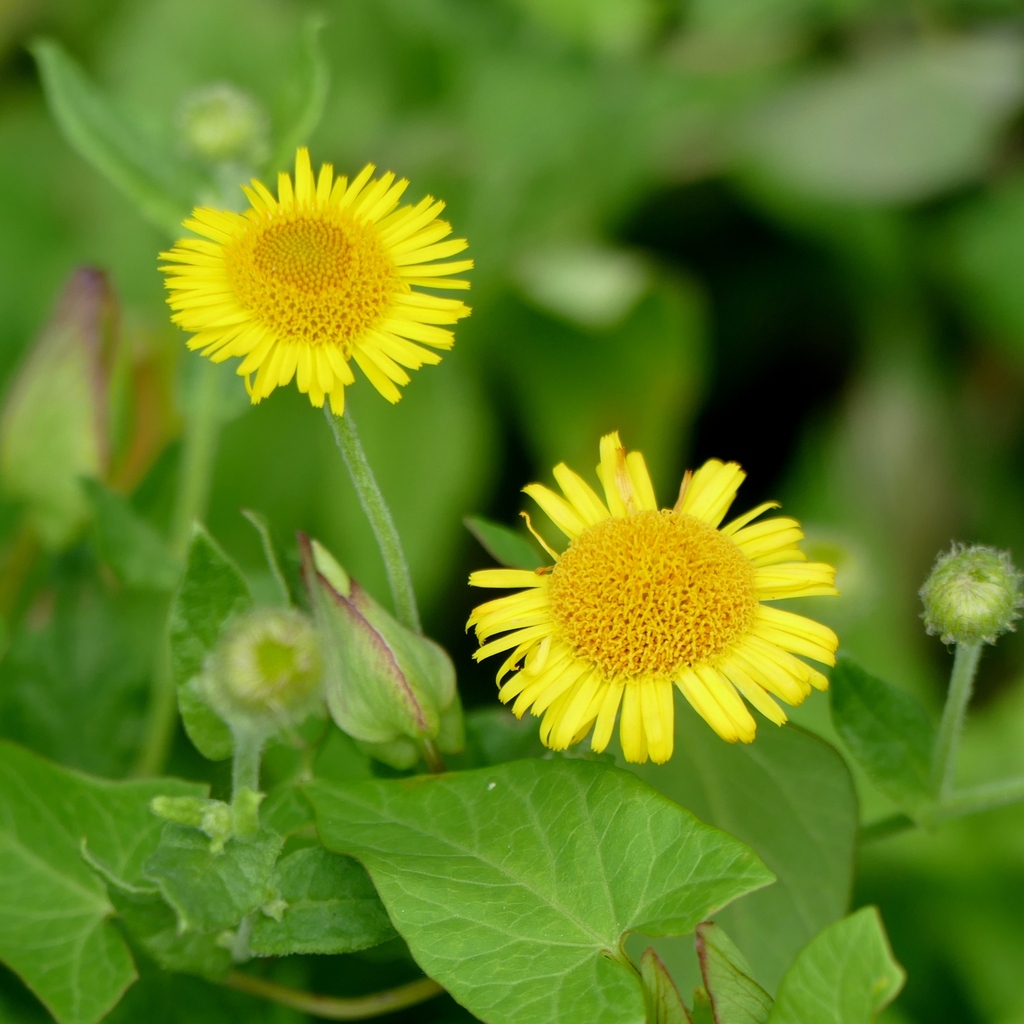
Pulicaria dysenterica, known as Fleabane or Common Fleabane, is a perennial herbaceous plant belonging to the Asteraceae family, characterized by its showy yellow, daisy-like flowers. It blooms profusely from late summer to autumn, creating a golden carpet that attracts pollinators. It is ideal for naturalistic gardens, pond edges, or damp areas where a wild touch and late-season color are desired.
Native range
Europe and Western Asia
Care tips
This species prefers full sun to partial shade and consistently moist, even waterlogged soils, making it perfect for waterside planting. It adapts well to a wide range of substrates, provided they retain moisture and are rich in organic matter. A common mistake is planting it in dry soils or full sun without adequate irrigation, which will result in poor growth and sparse flowering. It doesn't require much fertilization, but an annual application of compost will improve its vigor.
How to save a dying Common fleabane
- Warning signs
- Yellowing or wilting leaves, soft and blackened stems. May indicate overwatering or root rot.
- First aid
- Reduce watering, ensure good soil drainage. Prune severely affected parts to prevent disease spread.
- What kills it
- Constant waterlogging, as it prefers moist but well-drained soil. Lack of light also weakens it.
- Can it be saved?
- Yes, if acted upon quickly. Good drainage and adequate sun exposure are key for its recovery.