Western ragweed (Ambrosia psilostachya)
Care, watering, light and tips for Western ragweed on Floravia.
Quick facts
- Family: Asteraceae
- Difficulty: Demanding
- Watering: every 3 days
- Light: Full sun
- Temperature: 0–35 °C
- Toxicity: Toxic to pets
About Western ragweed
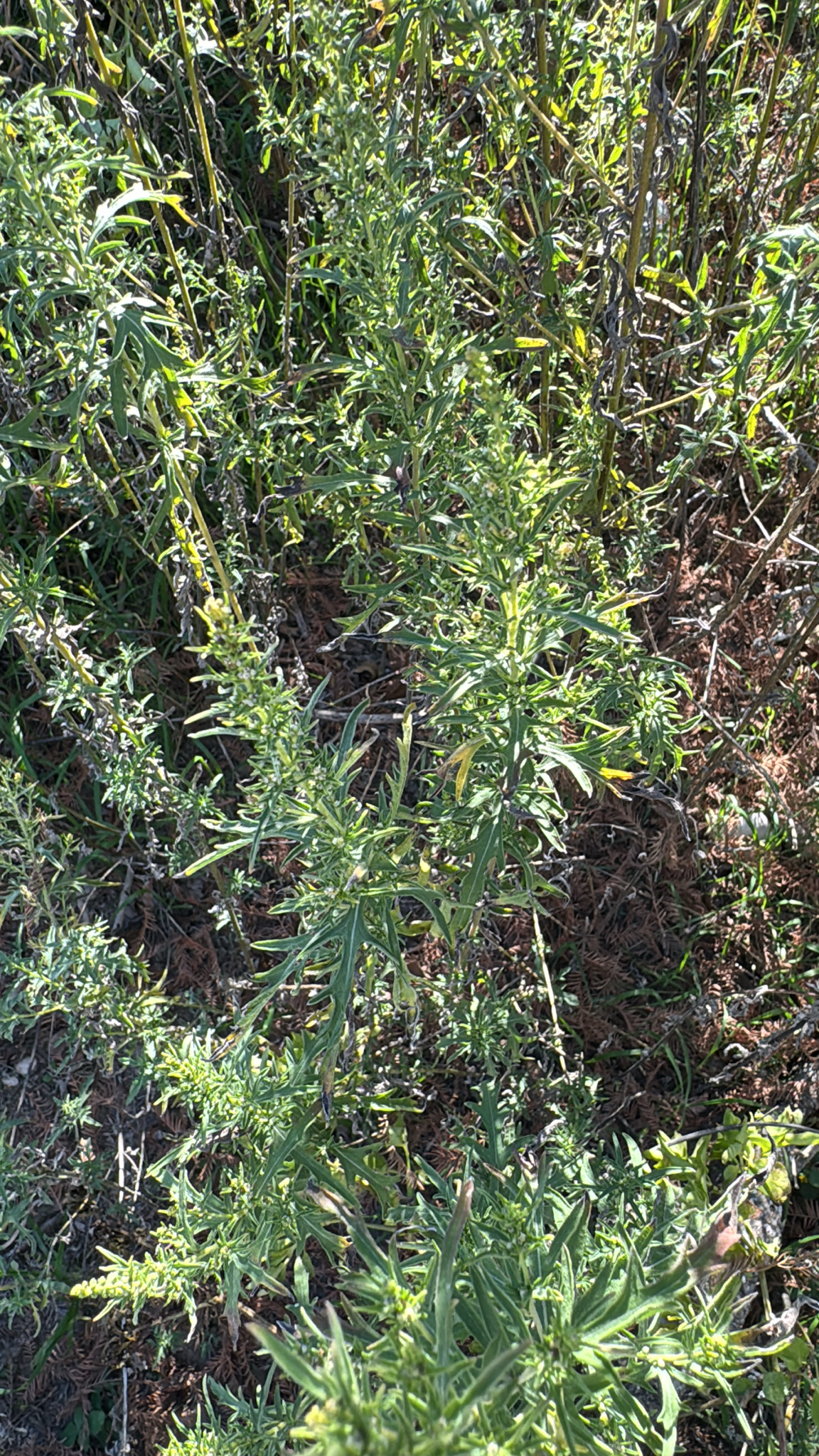
Ambrosia psilostachya, commonly known as western ragweed, is a perennial herbaceous plant native to North America, valued for its hardiness and colonizing ability. It develops branched stems with deeply lobed, grayish-green leaves and produces small, greenish flowers arranged in terminal spikes. While often considered a weed, it can be useful in restoring degraded soils or in rustic wildlife gardens where its vigorous nature is not an issue.
Native range
Central and eastern North America
Care tips
This plant is extremely adaptable and thrives in full sun in almost any soil type, even poor and dry ones. Watering is practically unnecessary once established, as it tolerates drought very well; excessive water can be detrimental. Its primary requirement is good drainage. A common mistake is planting it in small spaces or ornamental gardens where it can become invasive, so it is best reserved for natural or restoration areas.
How to save a dying Western ragweed
- Warning signs
- Wilted, yellowing leaves or necrotic spots. Stunted or weak growth.
- First aid
- Check drainage. If potted, consider repotting to a larger one with well-draining soil. Reduce watering if waterlogged.
- What kills it
- Excessive moisture and poor drainage, leading to root rot. It's highly drought-tolerant.
- Can it be saved?
- Yes, if acted upon quickly. Check roots; if not completely rotted, there is hope.