Creeping thistle (Cirsium arvense)
Care, watering, light and tips for Creeping thistle on Floravia.
Quick facts
- Family: Asteraceae
- Difficulty: Moderate care
- Watering: every 3 days
- Light: Full sun
- Temperature: 0–35 °C
About Creeping thistle
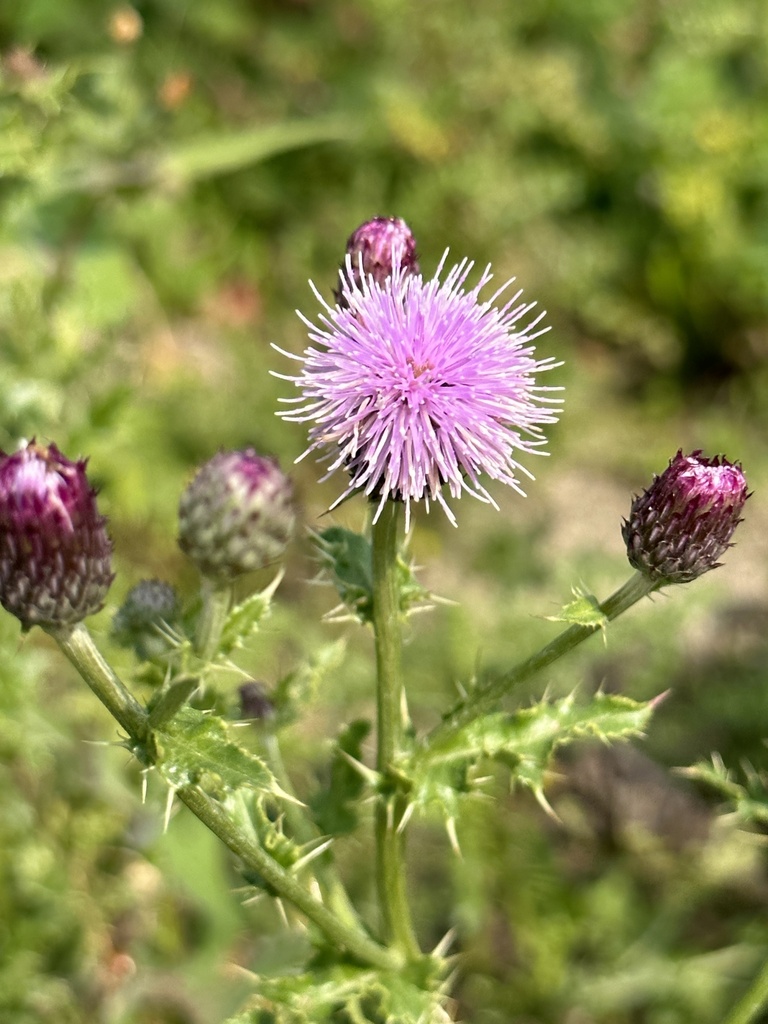
Cirsium arvense, commonly known as Canada thistle or creeping thistle, is a perennial herbaceous plant belonging to the Asteraceae family. It is characterized by its spiny stems and purple flower heads, which appear in summer. Although often considered an invasive weed, it can add a wild and rustic touch to low-maintenance gardens or naturalized areas.
Native range
Europe and temperate Asia
Care tips
It prefers full sun and is adaptable to a wide range of soils, though it thrives in well-drained, fertile ones. Watering is generally unnecessary once established, as it is very drought-tolerant. Due to its invasive nature, it is crucial to control its spread through manual removal or the use of underground barriers to prevent it from taking over the garden. A common mistake is underestimating its ability to regrow from root fragments.
How to save a dying Creeping thistle
- Warning signs
- Yellowish or brown leaves, general wilting, stunted or weak growth.
- First aid
- Ensure full sun exposure, well-drained soil, and moderate watering if potted. Remove severely affected parts.
- What kills it
- Excessive shade, constant waterlogging, or superficial eradication attempts that strengthen it.
- Can it be saved?
- Yes, if addressed promptly. It's a resilient plant, but needs optimal conditions to thrive.