Carduus defloratus
Care, watering, light and tips for Carduus defloratus on Floravia.
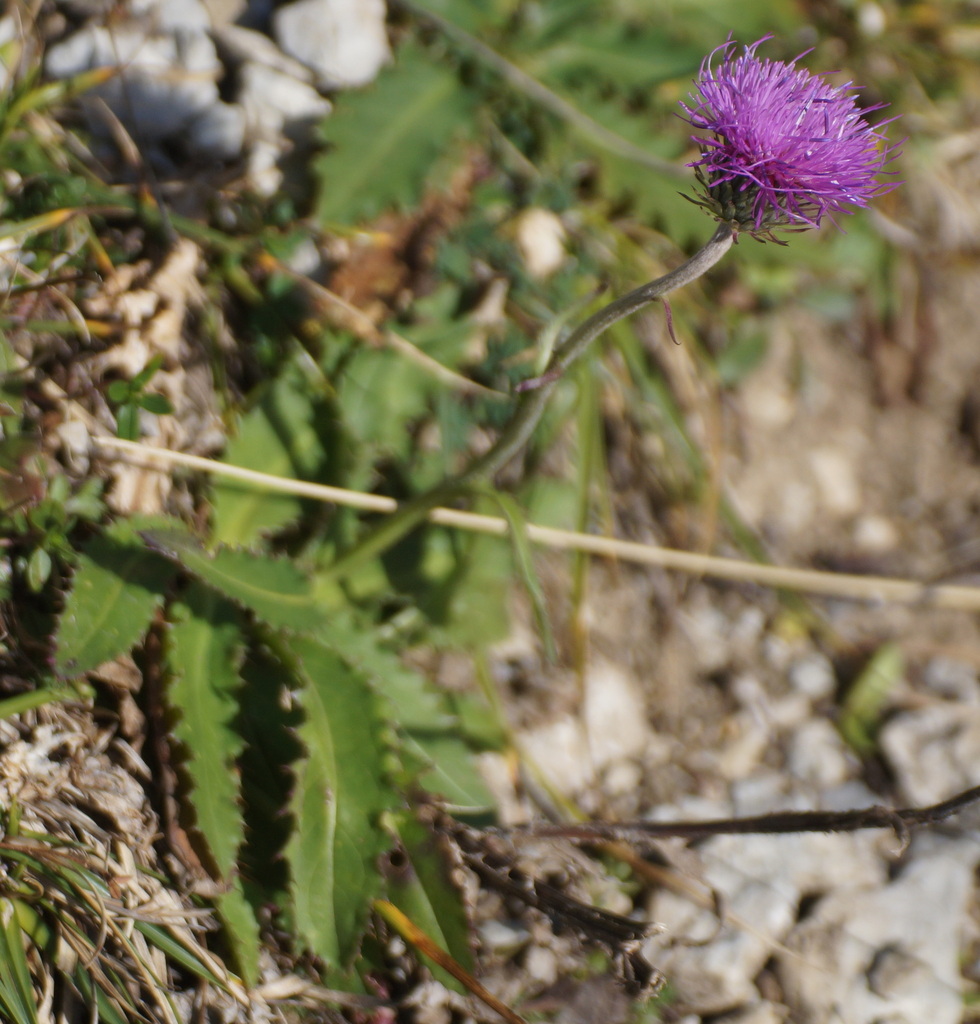
Quick facts
- Family: Asteraceae
- Difficulty: Moderate care
- Watering: every 3 days
- Light: Full sun
- Temperature: 0–35 °C
About Carduus defloratus
Carduus defloratus, commonly known as the Deflowered Thistle, is a spiny herbaceous plant native to Europe, valued for its intense purple, solitary flowers that rise on nearly leafless stems. This thistle species, unlike others, has a more elegant and less invasive appearance, making it suitable for rock gardens, sunny borders, or as part of a wildflower garden where it can attract pollinators. Its presence adds a rustic and natural touch without being overwhelming.
Native range
Central and southern Europe, from Spain to the Balkans
Care tips
It prefers full sun exposure for optimal growth and abundant flowering. Watering should be moderate, allowing the substrate to dry out between waterings, as it tolerates drought well once established. It adapts to poor, well-drained soils, even calcareous ones, making it a low-maintenance plant. A common mistake is trying to cultivate it in rich, moist soils, which can lead to rot or poor growth.
How to save a dying Carduus defloratus
- Warning signs
- Wilted, yellowing, or browning leaves from tips; lack of flowering; stunted growth.
- First aid
- Check drainage; if potted, ensure no waterlogging. If in ground, check soil compaction. Adjust watering.
- What kills it
- Excessive soil moisture (root rot); complete lack of direct sunlight.
- Can it be saved?
- Yes, if roots aren't completely rotted and it still has green leaves or viable shoots.