Spiny plumeless thistle (Carduus acanthoides)
Care, watering, light and tips for Spiny plumeless thistle on Floravia.
Quick facts
- Family: Asteraceae
- Difficulty: Demanding
- Watering: every 3 days
- Light: Full sun
- Temperature: 0–35 °C
About Spiny plumeless thistle
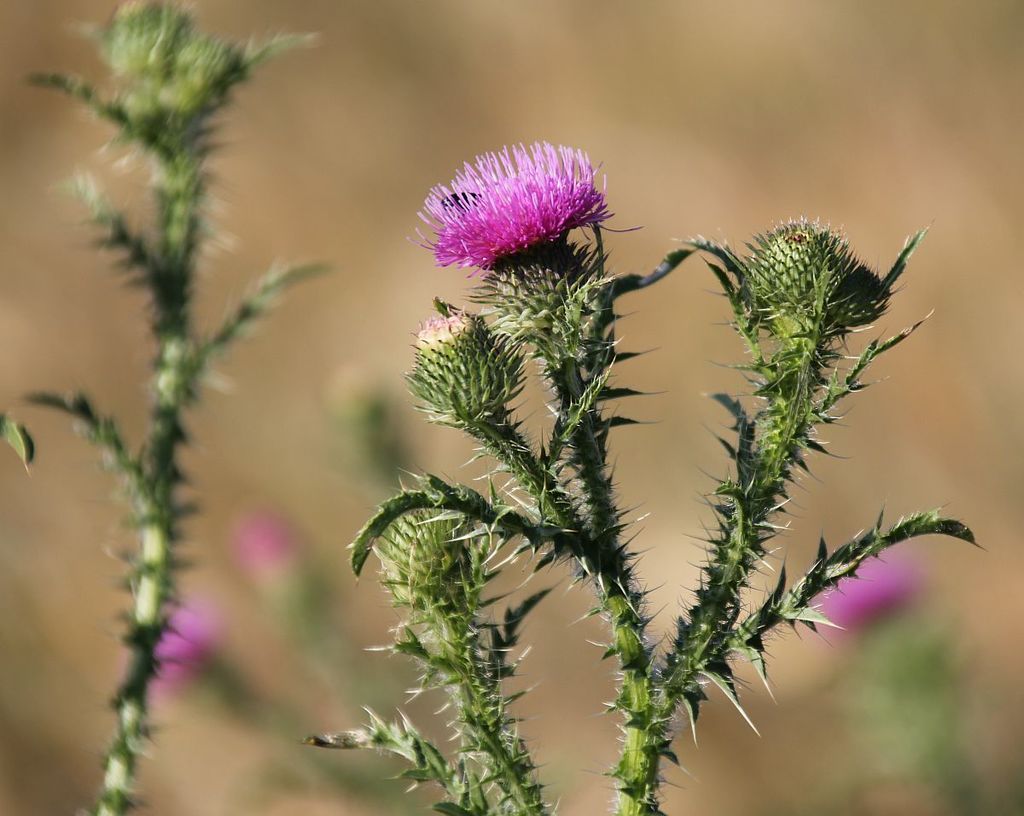
Carduus acanthoides, commonly known as spiny plumeless thistle or piggtistel in Swedish, is a robust biennial or annual herbaceous plant native to Europe and Asia. It is characterized by its spiny, branched stems, deeply lobed and similarly spiny leaves, and purple-pink flower heads that bloom in summer. Due to its invasive nature and wild appearance, it is more often used in ecological restorations or wildlife gardens than in traditional ornamental landscaping.
Native range
Europe and temperate Asia
Care tips
This plant prefers full sun and can tolerate a wide range of soils, though it thrives in well-drained and disturbed soils. It is very drought-tolerant once established, so watering is only necessary during extreme dry periods. Avoid planting this species in ornamental gardens where it may compete with desired plants, as it is known for its spreading ability and can become invasive. Early control is crucial to prevent its expansion.
How to save a dying Spiny plumeless thistle
- Warning signs
- Wilting, yellowing, or spotted leaves; soft stems. Aphids or rust may be present.
- First aid
- Remove affected parts. If overwatered, drain and reduce watering. For pests, apply biological insecticide.
- What kills it
- Excessive moisture and poor air circulation, promoting fungi and root rot. Also complete neglect.
- Can it be saved?
- Yes, if you act quickly. It's a resilient plant but needs care to recover.