Milk thistle (Silybum marianum)
Care, watering, light and tips for Milk thistle on Floravia.
Quick facts
- Family: Asteraceae
- Difficulty: Easy to care for
- Watering: every 7 days
- Light: Full sun
- Temperature: 0–35 °C
About Milk thistle
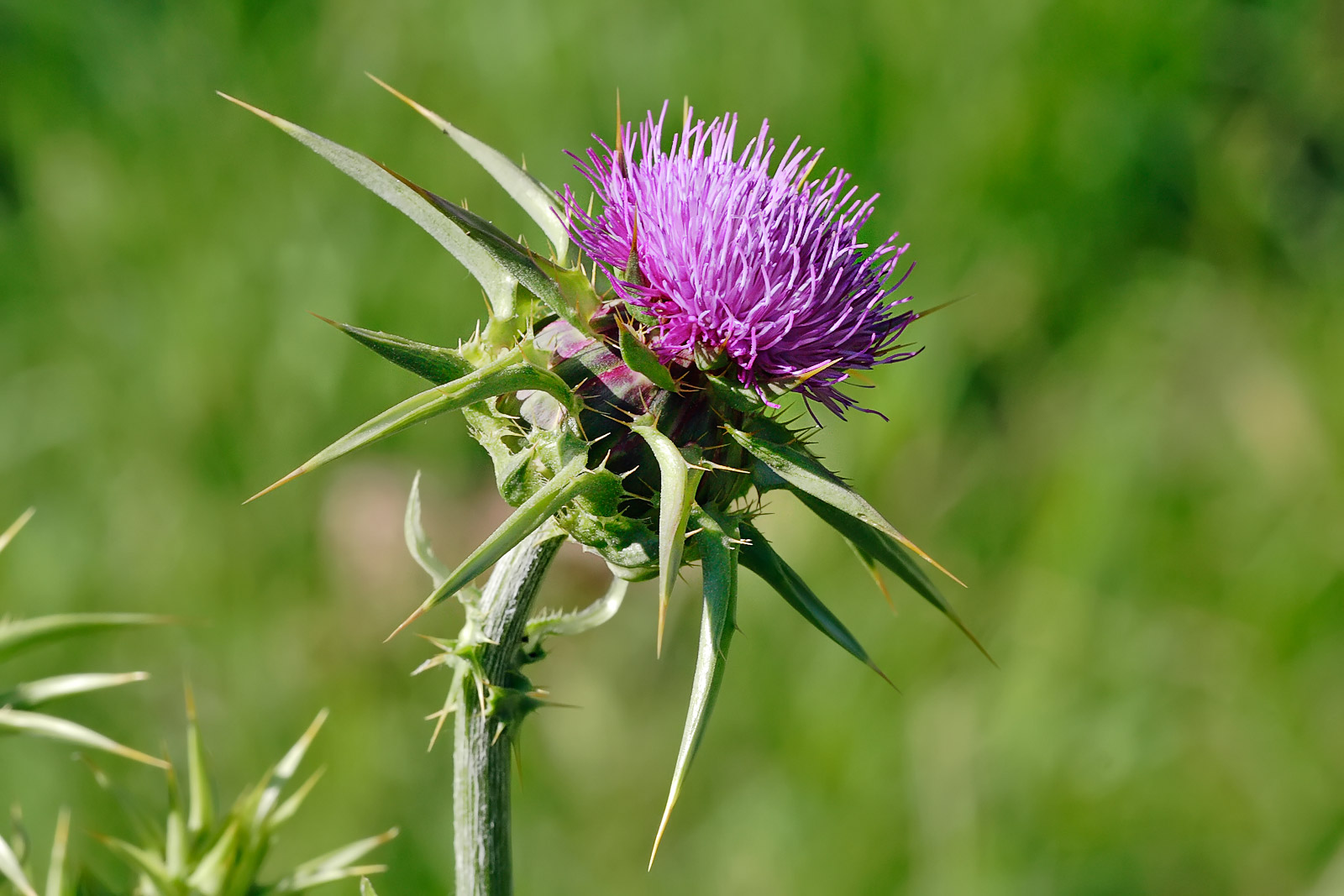
Silybum marianum, commonly known as milk thistle, is an annual or biennial herbaceous plant belonging to the Asteraceae family, recognized for its large, spiny, white-veined leaves and striking purple flowers. With its robust habit and dramatic foliage, it is ideal for wild gardens, roadside plantings, or as an ornamental plant in large pots, adding a rustic and medicinal touch. Its capitulum-shaped inflorescences attract pollinators, and its presence is distinctive in Mediterranean landscapes.
Native range
Mediterranean region of Europe, North Africa, and the Middle East
Care tips
Milk thistle thrives in full sun in well-drained soils, preferably sandy or stony, although it is quite adaptable. It requires moderate watering, allowing the substrate to dry out between waterings, as it is drought-tolerant once established. Avoid excessive soil moisture, which can lead to root rot. It does not tolerate severe frosts, so in cold climates, it is grown as an annual or adequately protected.
How to save a dying Milk thistle
- Warning signs
- Yellowing or wilting leaves, soft or blackened stems. Soft or foul-smelling roots.
- First aid
- Remove damaged leaves and stems. Check soil; if waterlogged, repot to dry, aerated soil. Ensure good ventilation.
- What kills it
- Overwatering is its worst enemy, causing root rot. Also lack of direct light or heavy soil.
- Can it be saved?
- Yes, if rot hasn't advanced too much and there's healthy tissue. Act fast with repotting and watering control.