Elecampane (Inula helenium)
Care, watering, light and tips for Elecampane on Floravia.
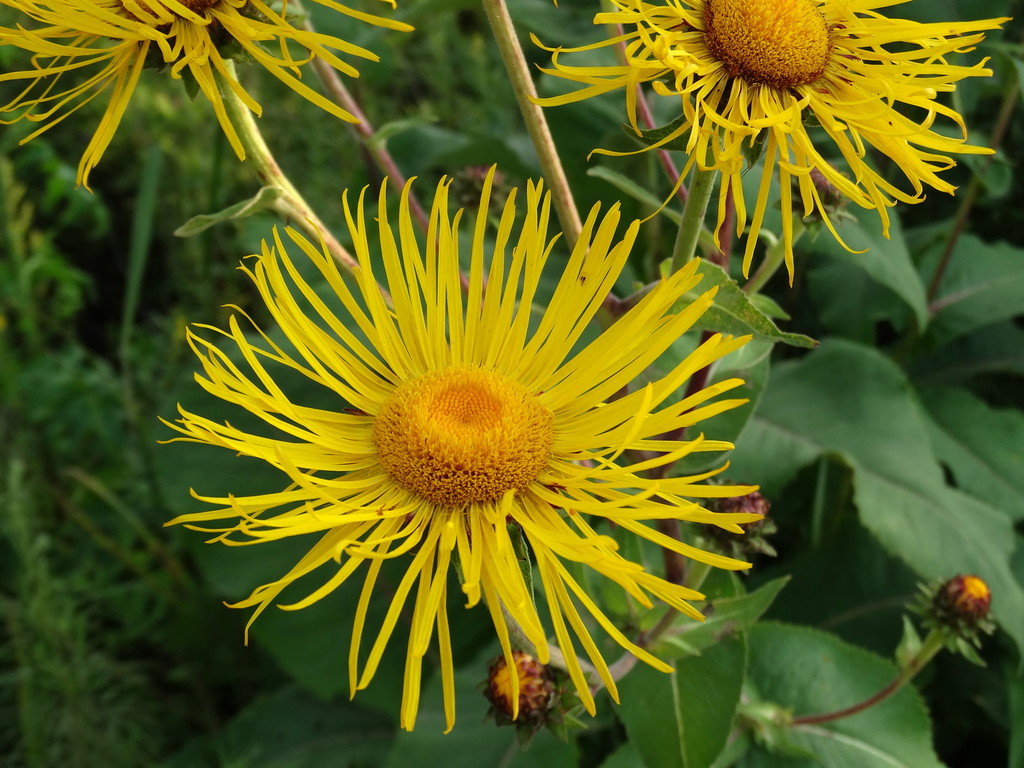
Quick facts
- Family: Asteraceae
- Difficulty: Easy to care for
- Watering: every 7 days
- Light: Full sun
- Temperature: 0–35 °C
About Elecampane
Inula helenium, also known as Elecampane, is a robust perennial plant belonging to the Asteraceae family, valued for its large, showy yellow flowers resembling giant daisies. It can reach considerable heights of up to 1.5-2.5 meters, creating an impressive visual impact in cottage gardens, woodland edges, or as part of a medicinal herb bed. Its large basal leaves and majestic stature make it ideal for adding structure and a wild touch to natural landscapes.
Native range
Europe and temperate Asia
Care tips
Elecampane thrives in full sun to light partial shade for optimal growth and abundant flowering. Watering should be regular, especially during dry spells, keeping the substrate consistently moist but not waterlogged. It adapts well to a wide range of soils, provided they are fertile, well-drained, and rich in organic matter. A common mistake is planting it in poor or very dry soils, which can limit its growth and flowering.
How to save a dying Elecampane
- Warning signs
- Yellowing or browning, wilted leaves; stunted growth. May indicate overwatering or poor drainage.
- First aid
- Check soil. If waterlogged, repot into well-draining soil. If dry, water deeply.
- What kills it
- Constant root waterlogging is its biggest enemy, causing rot. Also extreme drought.
- Can it be saved?
- Yes, if you act quickly. Good drainage and balanced watering are key for recovery.