Echinacea atrorubens
Care, watering, light and tips for Echinacea atrorubens on Floravia.
Quick facts
- Family: Asteraceae
- Difficulty: Easy to care for
- Watering: every 7 days
- Light: Full sun
- Temperature: 0–35 °C
- Toxicity: Toxic to pets
About Echinacea atrorubens
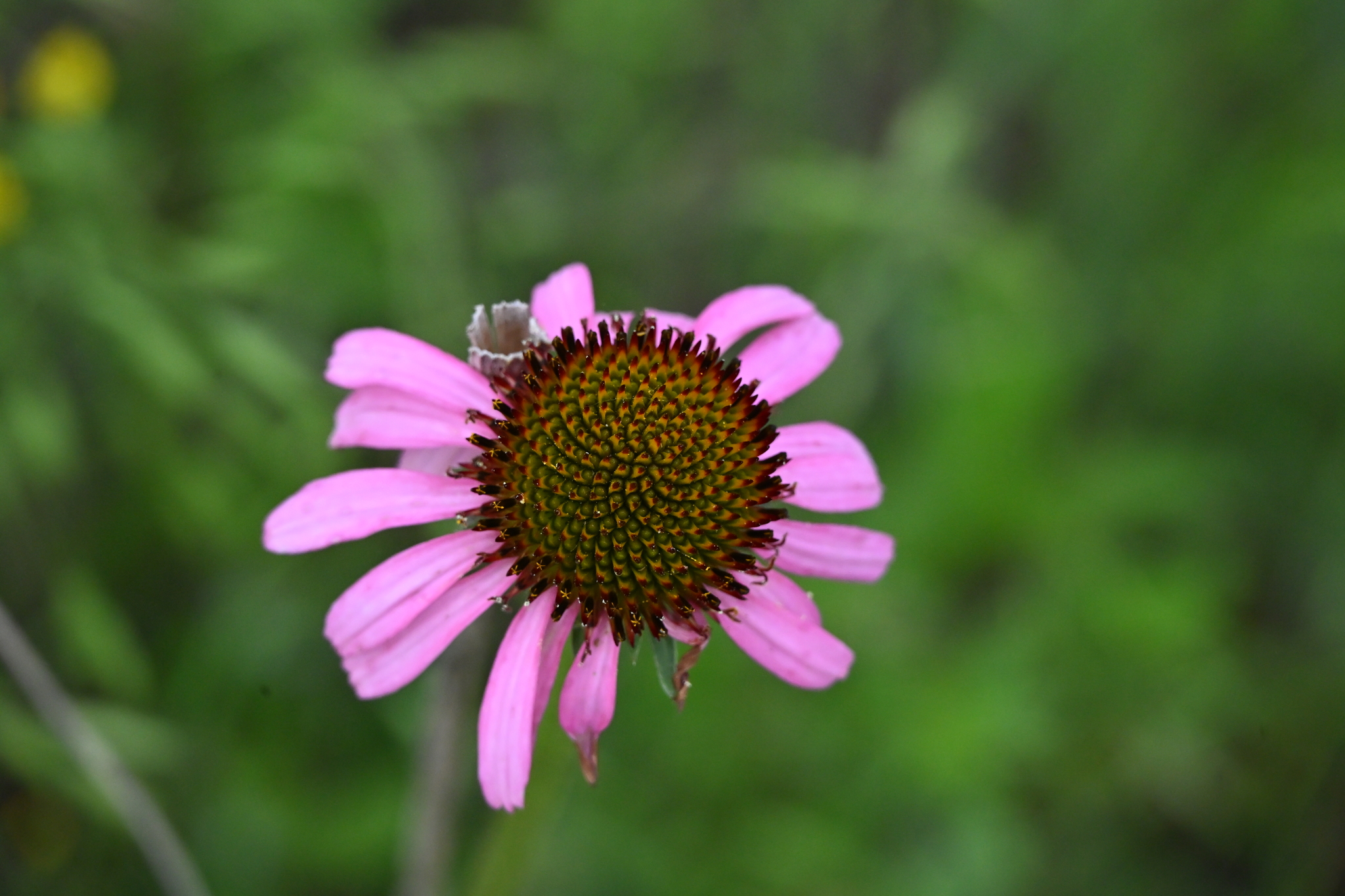
Echinacea atrorubens, commonly known as Topeka purple-coneflower, is a robust perennial herb from the Asteraceae family, native to the central prairies of North America. It is characterized by its distinctive flowers with pink to purple petals that droop downwards, surrounding a prominent dark central cone, giving it a wild and elegant appearance. It's ideal for pollinator gardens, rock gardens, or to add a naturalistic touch to borders, attracting bees and butterflies.
Native range
United States (primarily Kansas and Oklahoma)
Care tips
It prefers full sun and well-drained soils, tolerating a wide range of soil types, even poor ones. Once established, it is very drought-tolerant, so watering should be moderate, allowing the substrate to dry out between waterings. Avoid waterlogging, as it is susceptible to root rot in overly wet conditions. A common mistake is overwatering, which can weaken the plant and reduce its flowering.
How to save a dying Echinacea atrorubens
- Warning signs
- Wilting, yellowing leaves from base, soft stems, no bloom or wilted flowers.
- First aid
- Check drainage. If waterlogged, gently remove, air roots, replant in light soil.
- What kills it
- Overwatering and poor drainage, leading to root rot. Also, too much shade.
- Can it be saved?
- Yes, if roots aren't completely rotted and you act quickly.