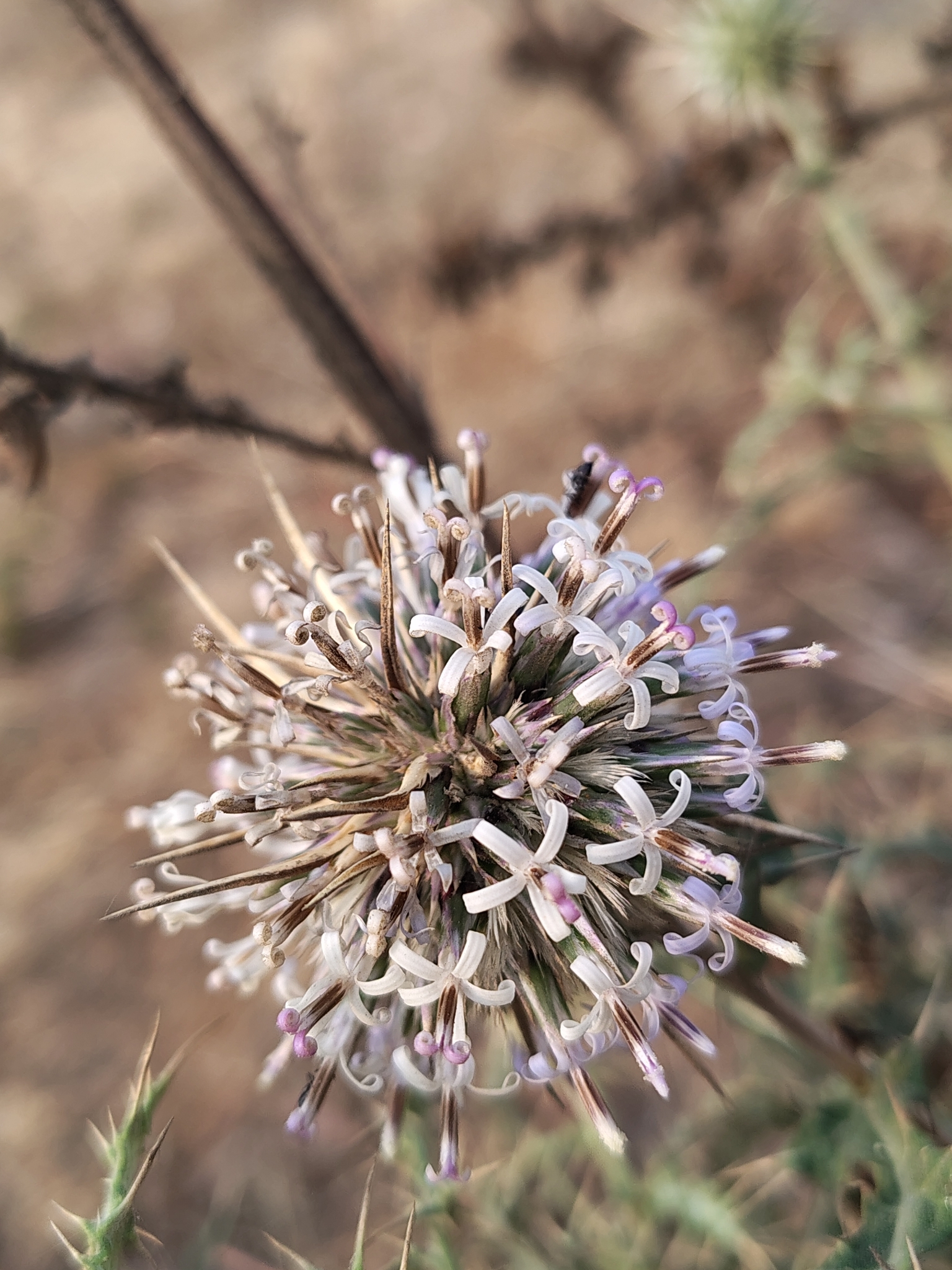
Globe thistle (Echinops echinatus)
Care, watering, light and tips for Globe thistle on Floravia.
Quick facts
- Family: Asteraceae
- Difficulty: Easy to care for
- Watering: every 7 days
- Light: Full sun
- Temperature: 0–35 °C
About Globe thistle
Echinops echinatus, commonly known as Indian globe thistle, is a sturdy perennial plant noted for its spherical, spiny white or pale blue inflorescences, resembling small hedgehog-like balls. Its leaves are lobed and spiny, with a grayish-green hue. It is ideal for wild-style gardens, rockeries, or as an accent plant in beds, attracting pollinators.
Native range
Europe and Western Asia
Care tips
It prefers full sun exposure for abundant flowering and optimal development, though it tolerates light partial shade. This plant is very drought-tolerant once established, so watering should be moderate and infrequent, avoiding waterlogging which can lead to root rot. It adapts to poor, well-drained soils, including calcareous ones, with the main mistake being excessive moisture. It does not require much fertilizer.
How to save a dying Globe thistle
- Warning signs
- Wilted, yellowed or brown leaves, especially if soil is dry and weather is hot. Soft or rotten stems if too much moisture.
- First aid
- If dry, water deeply. If waterlogged, remove from pot, check roots, and repot in well-draining soil. Place in a bright spot but protected from intense direct sun if heat is extreme.
- What kills it
- Overwatering, especially in heavy soils. It doesn't tolerate waterlogging or constant root moisture. Complete lack of water during prolonged drought is also fatal.
- Can it be saved?
- Yes, it's often very resilient. Acting quickly to dryness or early waterlogging greatly increases its chances. Checking the roots is key.